
Clean & Minimal AI Powered Fitness Routines
Download AppPosterior Chain Flexibility: Intermediate
A 25-minute intermediate mobility session for calves, hamstrings, glutes, and low back.
Posterior Chain Flexibility: Intermediate
A 25-minute intermediate mobility session for calves, hamstrings, glutes, and low back.
Warm-Up & Tissue Prep
Increase blood flow and gently mobilize the spine and posterior chain before longer holds.
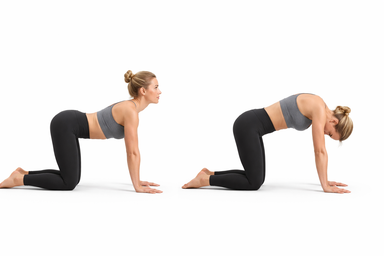
How to
A gentle spine mobility move that alternates rounding and arching your back on hands and knees.
- Start on hands and knees with wrists under shoulders and knees under hips.
- Inhale and drop your belly as you lift your chest and tailbone.
- Exhale and round your back, tucking your chin and tailbone.
- Move slowly between both positions with your breath.
- Move one vertebra at a time.
- Keep your shoulders away from your ears.
- Forcing your neck up or down.
- Rushing through the movement.
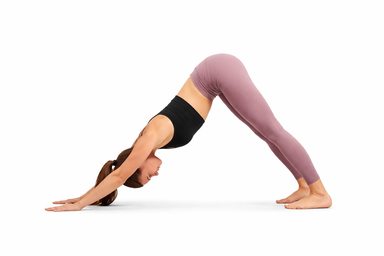
How to
A full-body isometric pose that trains shoulders, core, and hips while stretching the back line.
- Start on hands and knees, with hands under shoulders and knees under hips.
- Tuck your toes and lift your hips up and back.
- Straighten your arms and press the floor away.
- Let your heels reach toward the floor, with knees slightly bent if needed.
- Hold the pose and breathe steadily.
- Press your chest toward your thighs
- Keep your neck relaxed
- Rounding your upper back and shrugging your shoulders
- Forcing your heels down by locking your knees
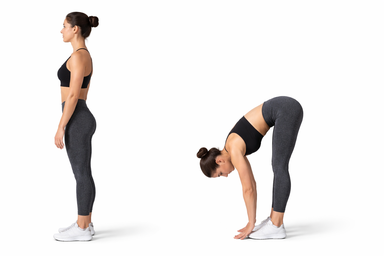
How to
A standing hamstring and back-body stretch that uses gravity to fold your torso over your legs.
- Stand with your feet hip-width apart and knees soft.
- Hinge at your hips and fold your torso toward your thighs.
- Let your head and arms hang, or rest your hands on your legs.
- Hold the fold and breathe slowly.
- To come up, bend your knees and roll up with control.
- Keep your knees soft
- Let your neck relax
- Locking your knees hard
- Forcing your hands to the floor
Calves & Hamstrings
Keep the back heel heavy in calf work; hinge from the hips for hamstrings.
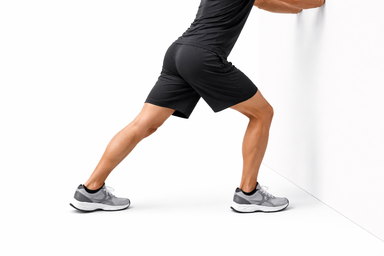
How to
A wall-supported calf stretch that targets the back of your lower leg on one side at a time.
- Stand facing a wall and place both hands on it.
- Step one foot back, keeping that heel down and toes forward.
- Bend your front knee until you feel a stretch in the back calf.
- Hold the stretch and breathe slowly.
- Release, then switch legs.
- Keep your back heel down
- Point both feet forward
- Letting the back heel lift
- Turning the back foot out
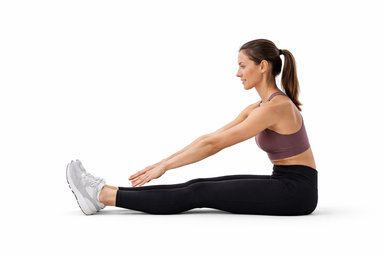
How to
A seated stretch for your hamstrings that helps you practice a relaxed forward fold.
- Sit tall with your legs extended in front of you.
- Flex your feet and keep a soft bend in your knees.
- Hinge forward from your hips and reach toward your feet.
- Hold the stretch and breathe slowly.
- Ease back up to seated when the hold is done.
- Keep your spine long
- Relax your shoulders
- Rounding hard through your back
- Forcing the reach or bouncing
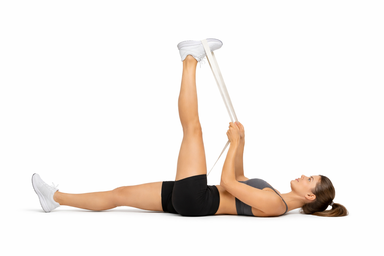
How to
A lying hamstring stretch using a strap. It stretches the back of your thigh with your leg raised.
- Lie on your back with a strap around one foot.
- Straighten that leg up and keep the other leg relaxed.
- Pull the strap gently until you feel a stretch.
- Hold the stretch and breathe slowly.
- Lower your leg, then switch sides.
- Keep your raised knee softly straight
- Keep your hips heavy on the floor
- Pulling so hard your hips lift
- Locking your knee or holding your breath
Glutes & Hip Flexors
Glute stretch supports posterior chain; hip flexor work helps reduce anterior pelvic tilt tension. — Focus on balance throughout.
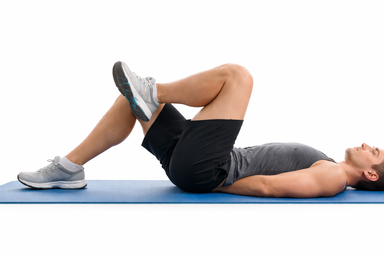
How to
A seated or lying hip stretch that targets your glutes and outer hip on one side.
- Lie on your back with both knees bent and feet flat.
- Cross one ankle over the opposite thigh, making a figure four.
- Pull the uncrossed thigh toward your chest until you feel a stretch.
- Hold and breathe, keeping your shoulders relaxed.
- Release slowly, then switch sides.
- Keep your lower back relaxed
- Flex the crossed foot
- Forcing the knee down with your hand
- Holding your breath
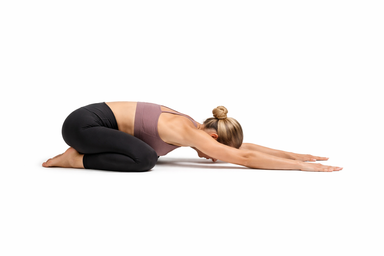
How to
A kneeling rest pose that gently stretches your back, hips, and shoulders.
- Kneel on the floor with your big toes together and knees apart.
- Sit your hips back toward your heels.
- Fold forward and reach your arms in front of you.
- Rest your forehead down and let your chest sink between your thighs.
- Hold the position and breathe slowly.
- Relax your shoulders
- Breathe into your back
- Forcing your hips down
- Holding your breath
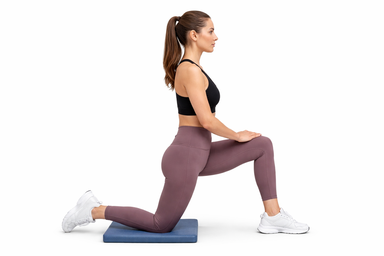
How to
A kneeling stretch for the front of your hip. It targets the hip flexors on one side at a time.
- Kneel with one knee down and the other foot in front.
- Tuck your pelvis slightly and keep your chest tall.
- Shift your hips forward until you feel a gentle stretch.
- Hold the position and breathe steadily.
- Finish the hold, then switch sides.
- Squeeze the glute on the back leg
- Keep your ribs stacked over your hips
- Arching your lower back to get deeper
- Letting the front knee cave inward
Cool-Down
Downshift the nervous system and finish with gentle spinal and hip relaxation.
How to
A kneeling rest pose that gently stretches your back, hips, and shoulders.
- Kneel on the floor with your big toes together and knees apart.
- Sit your hips back toward your heels.
- Fold forward and reach your arms in front of you.
- Rest your forehead down and let your chest sink between your thighs.
- Hold the position and breathe slowly.
- Relax your shoulders
- Breathe into your back
- Forcing your hips down
- Holding your breath
How to
A standing hamstring and back-body stretch that uses gravity to fold your torso over your legs.
- Stand with your feet hip-width apart and knees soft.
- Hinge at your hips and fold your torso toward your thighs.
- Let your head and arms hang, or rest your hands on your legs.
- Hold the fold and breathe slowly.
- To come up, bend your knees and roll up with control.
- Keep your knees soft
- Let your neck relax
- Locking your knees hard
- Forcing your hands to the floor

Stacked Lengthening, Not Random Stretching
Cat-Cow primes spinal articulation before tissue is under load, while Downward Dog creates simultaneous traction through the calves, hamstrings, and thoracolumbar fascia — the full posterior chain in one position. Each exercise builds on the last, progressively placing the nervous system at ease with greater end-range length.

Why the Posterior Chain Resists You
The hamstrings, glutes, and low back share fascial continuity, meaning tightness in your calves can directly limit hip hinge depth and lumbar mobility. Intermediate trainees often plateau here because they stretch individual muscles without addressing the chain — the Figure-Four and Supine Hamstring Stretch together target the sciatic pathway that single-muscle stretches miss.

Hold Duration Is Doing the Heavy Lifting
At the intermediate level, neurological inhibition — not muscle fiber length — is usually the limiting factor, which is why sustained holds in the Seated and Supine Hamstring Stretches matter more than depth. To personalize: if low back tension dominates, extend Child's Pose to 90 seconds and reduce time in Standing Forward Fold until lumbar guarding decreases.