
Clean & Minimal AI Powered Fitness Routines
Download AppIntermediate Calf Mobility
A 25-minute calf and ankle mobility session to improve dorsiflexion, reduce stiffness, and support better squat and running mechanics.
Intermediate Calf Mobility
A 25-minute calf and ankle mobility session to improve dorsiflexion, reduce stiffness, and support better squat and running mechanics.
Warm-Up
Increase circulation and gently explore ankle range of motion before deeper stretching and loading. — Focus on ankles and feet.
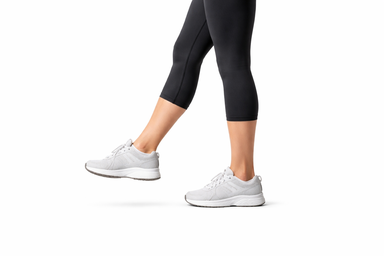
How to
A simple ankle mobility move that warms up your ankle through a full circle.
- Sit or stand tall and lift one foot slightly off the floor.
- Slowly circle your ankle in one direction.
- Reverse the circle and keep the motion smooth.
- Finish your reps, then switch legs.
- Move from your ankle, not your knee
- Keep the circles slow and controlled
- Rushing through small, choppy circles
- Letting your whole leg swing around
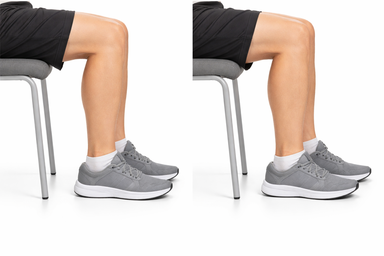
How to
A seated ankle move that lifts your toes toward your shins to train the front of your lower legs.
- Sit tall with both feet flat on the floor, hip-width apart.
- Keep your heels down and lift both sets of toes toward your shins.
- Pause briefly at the top without leaning back.
- Lower your toes to the floor with control and repeat.
- Keep your heels planted
- Move both feet together
- Lifting your heels off the floor
- Rocking your body to lift your toes
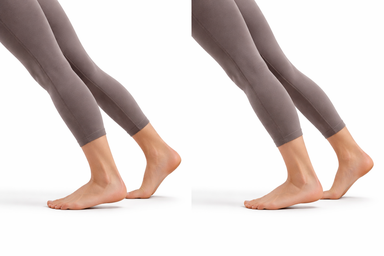
How to
A moving downward dog that stretches your calves and hamstrings while warming your shoulders.
- Start on hands and knees, then lift your hips up and back.
- Press your hands into the floor and lengthen your spine.
- Bend one knee as you press the other heel toward the floor.
- Switch sides smoothly, pedaling your feet at a steady pace.
- To finish, lower your knees back to the floor.
- Keep your spine long
- Move with steady breaths
- Rounding your back to force your heels down
- Shrugging your shoulders toward your ears
Main Work
Build usable dorsiflexion and calf capacity using mobilizations, stretches, and eccentrics. — Combines mobility work with loaded lengthening.

How to
A dynamic ankle mobility drill that moves your knee toward a wall while keeping your heel down.
- Stand facing a wall with one foot a few inches away.
- Keep your heel down and drive that knee toward the wall.
- Tap the wall lightly, then return your knee over your foot.
- Move in and out with control for your reps.
- Finish your reps, then switch legs.
- Keep your heel planted
- Track your knee over your toes
- Letting your heel lift off the floor
- Collapsing your knee inward
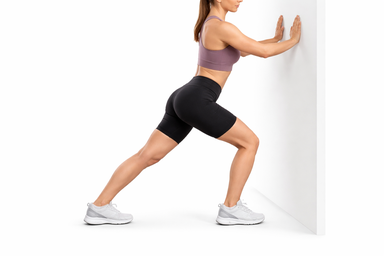
How to
A wall calf stretch with a bent knee that targets your soleus.
- Face a wall and place both hands on it.
- Step one foot back and bend both knees.
- Keep the back heel down and lean in.
- Hold and breathe, then switch sides.
- Keep your back heel flat
- Bend the back knee
- Lifting the back heel
- Letting the back knee cave inward
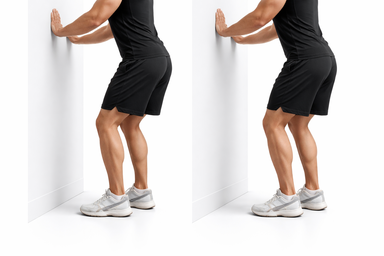
How to
A wall-supported toe raise that trains the muscles along the front of your shins.
- Stand with your back against a wall and feet hip-width apart.
- Keep your heels on the floor and legs mostly straight.
- Lift your toes toward your shins as high as you can.
- Lower your toes back to the floor with control.
- Repeat for your reps.
- Keep your heels planted.
- Move only at your ankles.
- Letting your heels lift off the floor.
- Rocking your hips away from the wall.
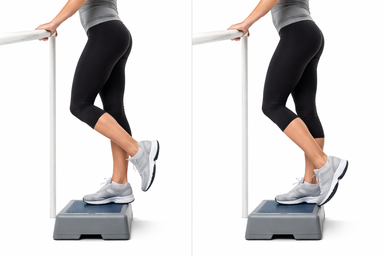
How to
A slow lowering calf raise on a step that trains your calves through a deep range of motion.
- Stand on a step with the balls of both feet on the edge.
- Hold a rail or wall lightly for balance.
- Rise onto your toes with both feet.
- Lower your heels slowly below the step edge.
- Lift back up and repeat with control.
- Move slowly on the way down
- Keep your knees softly straight
- Dropping your heels too fast
- Rocking forward instead of lifting tall
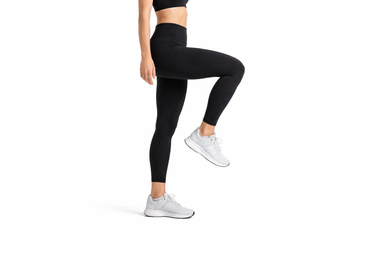
How to
A one-leg standing hold that trains balance and stability in your foot, ankle, and hips.
- Stand tall with feet hip-width apart and arms relaxed.
- Shift your weight onto one foot and lift the other foot off the floor.
- Hold steady, keep your torso tall, and breathe slowly.
- Lower your foot with control, then switch legs.
- Keep your hips level
- Look at one spot ahead
- Letting your hips twist or drop
- Holding your breath
Cool-Down
Longer holds to downshift and keep the gains from the main work. — Restore length and relax.
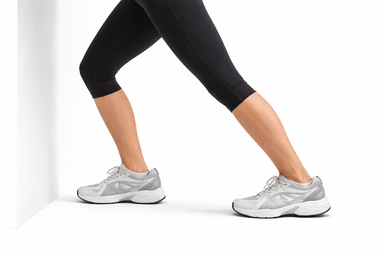
How to
A standing wall calf stretch for the upper calf on one leg.
- Stand facing a wall with your hands on it at chest height.
- Step one foot back and keep that knee straight.
- Bend your front knee and press your back heel toward the floor.
- Hold the stretch and breathe steadily.
- Finish your hold, then switch legs.
- Keep your back toes pointing forward
- Keep your back knee straight
- Letting the back heel lift
- Turning the back foot outward
How to
A wall calf stretch with a bent knee that targets your soleus.
- Face a wall and place both hands on it.
- Step one foot back and bend both knees.
- Keep the back heel down and lean in.
- Hold and breathe, then switch sides.
- Keep your back heel flat
- Bend the back knee
- Lifting the back heel
- Letting the back knee cave inward

Gastrocnemius vs. Soleus: Both Targeted
Wall Calf Stretch straight-knee targets the gastrocnemius crossing the knee joint, while the bent-knee variation isolates the deeper soleus — the primary dorsiflexion restrictor in squats. Knee-to-Wall mobilization then takes that new range into active, weight-bearing positions where it actually transfers.

Dorsiflexion: The Hidden Squat Limiter
Restricted ankle dorsiflexion forces compensations upstream — heel rise, knee cave, and lumbar flexion — long before your hips or quads become the limiting factor. Runners face the same wall: reduced dorsiflexion shortens stride length and overloads the Achilles with every footstrike.

Eccentric Loading Rewires Tissue Stiffness
The Eccentric Calf Raise on Step isn't just strengthening — it's mechanically remodeling tendon and fascial tissue through controlled lengthening under load, the most effective stimulus for long-term flexibility gains. Pair it with Tibialis Raises to balance anterior-posterior tension, then adjust your step depth based on current range to stay at your true end-range threshold.