
Clean & Minimal AI Powered Fitness Routines
Download AppIntermediate Hip Flexor Strength
A focused hip flexor strength session with core and glute support work (~25 min).
Intermediate Hip Flexor Strength
A focused hip flexor strength session with core and glute support work (~25 min).
Warm-Up
Open the hips and activate glutes/core to support hip flexor work. — Mobility and activation focus.
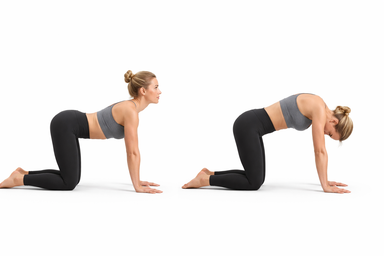
How to
A gentle spine mobility move that alternates rounding and arching your back on hands and knees.
- Start on hands and knees with wrists under shoulders and knees under hips.
- Inhale and drop your belly as you lift your chest and tailbone.
- Exhale and round your back, tucking your chin and tailbone.
- Move slowly between both positions with your breath.
- Move one vertebra at a time.
- Keep your shoulders away from your ears.
- Forcing your neck up or down.
- Rushing through the movement.
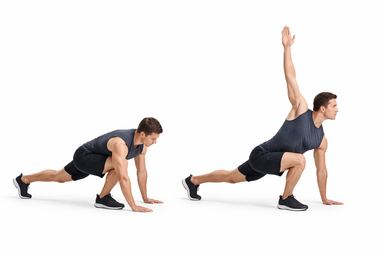
How to
A dynamic lunge stretch that opens your hips, hamstrings, and upper back as you alternate sides.
- Start in a high plank with hands under shoulders.
- Step your right foot outside your right hand.
- Drop your hips, then rotate your right arm up toward the ceiling.
- Place your hand down and step back to plank.
- Repeat on the left side, alternating sides each rep.
- Keep your front foot flat.
- Reach long through your top hand.
- Letting your front heel lift off the floor.
- Rushing the rotation without control.
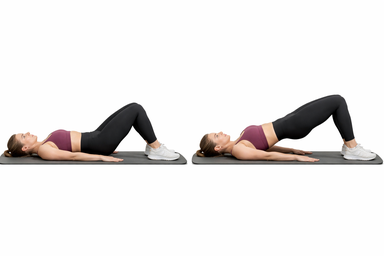
How to
A floor hip lift that trains your glutes and hamstrings with both feet planted.
- Lie on your back with knees bent and feet flat, hip-width apart.
- Brace your core and press your arms lightly into the floor.
- Drive through your heels and lift your hips until your body forms a straight line.
- Squeeze your glutes at the top, then lower with control.
- Repeat for your reps.
- Keep your ribs down
- Drive through your heels
- Arching your lower back at the top
- Pushing through your toes
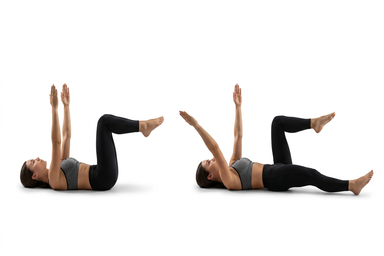
How to
A core move on your back that trains control while you move opposite arm and leg.
- Lie on your back with arms up and knees bent over hips.
- Press your lower back gently toward the floor.
- Lower one arm and the opposite leg with control.
- Return to the start, then repeat on the other side.
- Keep alternating sides for each rep.
- Move slow and stay braced
- Keep your ribs down
- Letting your lower back arch
- Rushing through the reps
Strength Circuit A
Control the lift and the lowering phase; keep pelvis level.
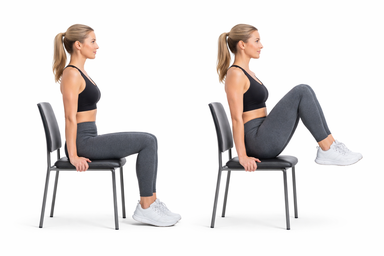
How to
A seated core move that raises your knees toward your chest to train your abs and hip flexors.
- Sit tall on the edge of a chair or bench with feet flat.
- Hold the sides of the seat and brace your core.
- Lift both knees toward your chest without leaning far back.
- Pause briefly, then lower your feet with control.
- Repeat for your reps.
- Sit tall and keep your chest lifted.
- Move slowly with control.
- Swinging your legs to lift your knees.
- Rounding your back or collapsing your chest.
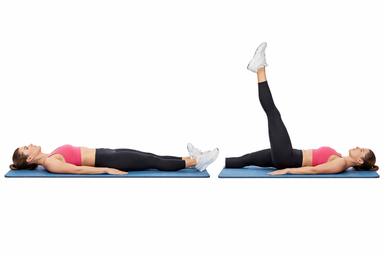
How to
A lying leg lift that trains your hip flexors and core while keeping one leg straight.
- Lie on your back with one knee bent and the other leg straight.
- Brace your core and press your lower back lightly toward the floor.
- Lift the straight leg until it matches the height of your bent knee.
- Lower it with control until your heel nearly touches the floor.
- Finish your reps, then switch legs.
- Keep the lifting leg straight
- Move slowly with control
- Arching your lower back as you lift
- Swinging the leg up with momentum
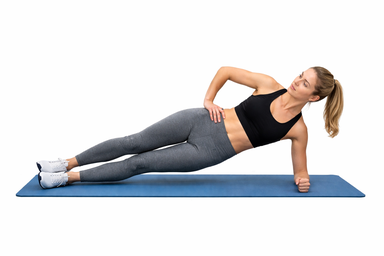
How to
A side hold that trains your obliques, hips, and shoulder stability.
- Lie on one side with your elbow under your shoulder and legs stacked.
- Lift your hips until your body forms a straight line.
- Hold the position and breathe steadily.
- Lower your hips with control.
- Finish your hold, then switch sides.
- Keep your hips stacked
- Press the floor away
- Letting your hips sag
- Rolling your chest toward the floor
Strength Circuit B
Stay tall during marches; drive the knee up without leaning back.
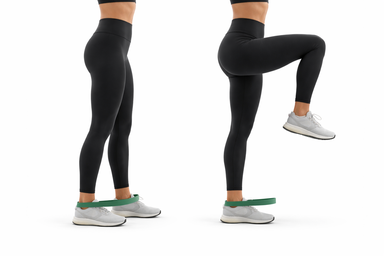
How to
A resisted standing march that trains your hip flexors, glutes, and core control.
- Loop a band around both feet and stand tall with feet hip-width apart.
- Brace your core and keep your chest up.
- Lift one knee toward hip height against the band.
- Lower with control, then lift the other knee.
- Continue alternating sides for your reps.
- Stay tall as your knee lifts.
- Control the band both ways.
- Leaning back as you march.
- Letting the band snap your foot down.
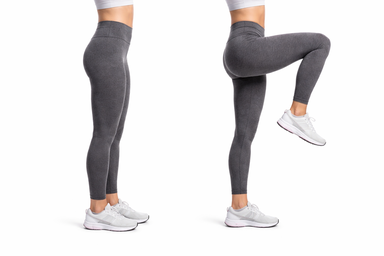
How to
A standing knee lift that warms up your hips, core, and balance.
- Stand tall with your feet hip-width apart and arms at your sides.
- Lift one knee toward hip height as the opposite arm swings forward.
- Lower that foot with control, then lift the other knee.
- Keep alternating sides at a steady marching pace.
- Stand tall through your chest
- Land softly under your hips
- Leaning back as you lift your knee
- Stomping your feet down
How to
A core move on your back that trains control while you move opposite arm and leg.
- Lie on your back with arms up and knees bent over hips.
- Press your lower back gently toward the floor.
- Lower one arm and the opposite leg with control.
- Return to the start, then repeat on the other side.
- Keep alternating sides for each rep.
- Move slow and stay braced
- Keep your ribs down
- Letting your lower back arch
- Rushing through the reps
Cool-Down
Downshift and restore hip extension with relaxed breathing. — Hip flexor relief and restoration.
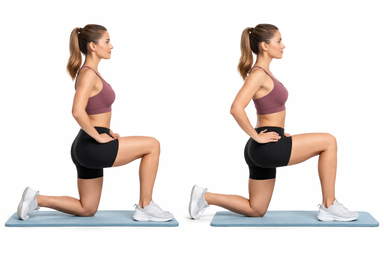
How to
A half-kneeling stretch for the front of your hip and thigh on the back leg.
- Kneel with one knee down and the other foot in front.
- Stack your ribs over your hips and gently tuck your pelvis.
- Shift your hips forward until you feel a stretch in the back-leg hip.
- Hold the stretch and breathe slowly.
- Finish the hold, then switch sides.
- Squeeze the back-leg glute.
- Keep your chest tall.
- Arching your lower back to get lower.
- Letting the front knee collapse inward.

Psoas-First Programming Logic
Seated Knee Raises and Supine Straight Leg Raises target the iliopsoas at its two primary functions—hip flexion under load and lumbar stabilization—while Dead Bug forces the psoas to resist spinal extension, building the deep strength that surface-level leg raises miss entirely.

Why Hip Flexors Fail Under Real Demand
Chronically shortened from sitting yet expected to fire explosively in running, climbing, or lifting, the hip flexors are uniquely prone to weakness-disguised-as-tightness. The Banded March and Standing March here train hip flexion through full range against resistance, addressing the active insufficiency that causes anterior pelvic tilt and stride collapse.

Tension, Then Length—In That Order
The sequence of loading before stretching is deliberate: fatiguing the iliopsoas through Knee Raises and Leg Raises before the Half-Kneeling Hip Flexor Stretch allows the muscle to release at a longer resting length, producing lasting mobility gains. To personalize, add a 1-second pause at peak flexion in the Seated Knee Raise when the movement feels effortless.