
Clean & Minimal AI Powered Fitness Routines
Download AppBack to the Living World — First Session
A calm, controlled first workout using your room, free weights, and pull-up bar—kept below symptom threshold (no failure, no breath-holding).
Back to the Living World — First Session
A calm, controlled first workout using your room, free weights, and pull-up bar—kept below symptom threshold (no failure, no breath-holding).
Warm-Up
Nervous system downshift and spine-friendly mobilization. Gently wake up hips and core without fatigue. Move slowly, breathe through the nose if comfortable, and avoid rushing transitions.
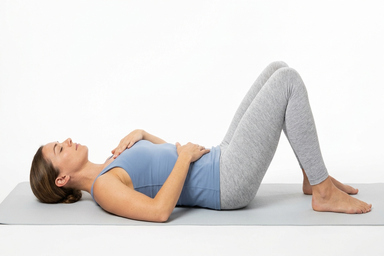
How to
A slow breathing drill that trains relaxed belly breathing and helps you control your breath.
- Lie on your back or sit tall with one hand on your belly.
- Inhale through your nose and let your belly rise.
- Exhale slowly and let your belly fall.
- Keep your chest and shoulders quiet.
- Continue for the set time with smooth breaths.
- Breathe low into your belly
- Keep your shoulders relaxed
- Shrugging your shoulders as you inhale
- Forcing the breath or holding tension
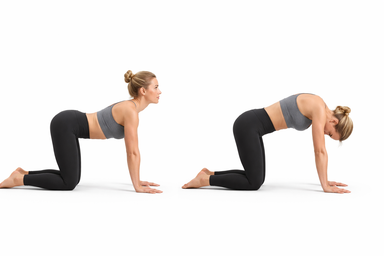
How to
A gentle spine mobility move that alternates rounding and arching your back on hands and knees.
- Start on hands and knees with wrists under shoulders and knees under hips.
- Inhale and drop your belly as you lift your chest and tailbone.
- Exhale and round your back, tucking your chin and tailbone.
- Move slowly between both positions with your breath.
- Move one vertebra at a time.
- Keep your shoulders away from your ears.
- Forcing your neck up or down.
- Rushing through the movement.
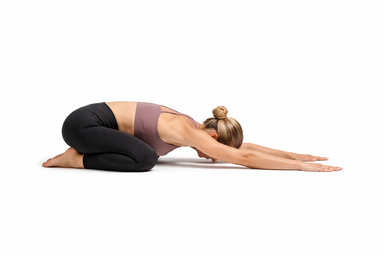
How to
A kneeling rest pose that gently stretches your back, hips, and shoulders.
- Kneel on the floor with your big toes together and knees apart.
- Sit your hips back toward your heels.
- Fold forward and reach your arms in front of you.
- Rest your forehead down and let your chest sink between your thighs.
- Hold the position and breathe slowly.
- Relax your shoulders
- Breathe into your back
- Forcing your hips down
- Holding your breath
Circuit A
Easy pace. Choose weights that feel smooth and controlled. Exhale on effort; no breath-holding.
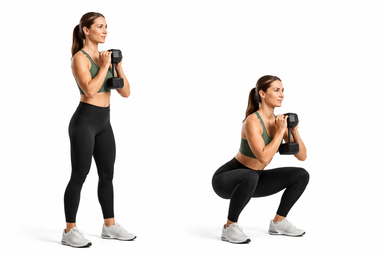
How to
A squat holding a weight at your chest. It trains your quads, glutes, and core.
- Stand with feet about shoulder-width and hold the weight at your chest.
- Brace your core and keep your chest tall.
- Bend your knees and hips to squat down under control.
- Lower until comfortable, with knees tracking over toes.
- Drive through your feet to stand back up.
- Keep your chest tall
- Knees track over toes
- Letting your knees cave inward
- Rounding your back at the bottom
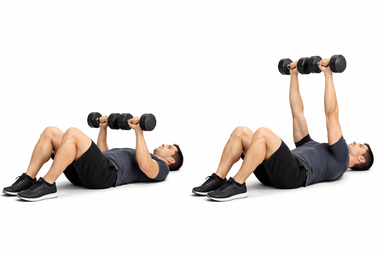
How to
A floor chest press with dumbbells that trains your chest, shoulders, and triceps.
- Lie on your back with knees bent and a dumbbell in each hand.
- Set upper arms on the floor, elbows about 45 degrees from your body.
- Press the dumbbells up until your arms are straight over your chest.
- Lower with control until your upper arms lightly touch the floor.
- Repeat for reps.
- Keep wrists stacked over elbows.
- Press both dumbbells evenly.
- Bouncing your arms off the floor.
- Letting elbows flare straight out.
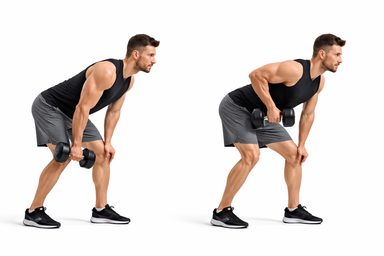
How to
A single-arm pulling move that trains your back, shoulders, and arms.
- Hold a dumbbell in one hand and hinge forward with your other hand supported.
- Let the weight hang under your shoulder with your back flat.
- Pull your elbow up and back toward your ribs.
- Lower the weight with control until your arm is straight.
- Finish your reps, then switch sides.
- Keep your chest facing the floor.
- Pull with your elbow, not your hand.
- Twisting your torso as you row.
- Shrugging your shoulder toward your ear.
How to
A squat holding a weight at your chest. It trains your quads, glutes, and core.
- Stand with feet about shoulder-width and hold the weight at your chest.
- Brace your core and keep your chest tall.
- Bend your knees and hips to squat down under control.
- Lower until comfortable, with knees tracking over toes.
- Drive through your feet to stand back up.
- Keep your chest tall
- Knees track over toes
- Letting your knees cave inward
- Rounding your back at the bottom
Pull-Up Bar + Core Stability
Keep shoulders down and away from ears. Stop if you feel neck strain or head pressure.
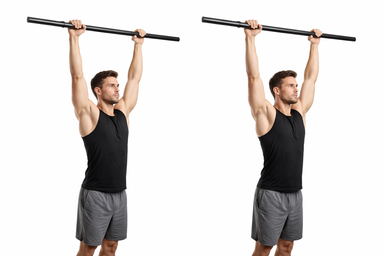
How to
A small pull-up prep that trains shoulder blade control and upper back strength from a dead hang.
- Hang from a bar with hands overhand and arms straight.
- Brace your body and let your shoulders rise toward your ears.
- Pull your shoulder blades down to lift your chest slightly.
- Keep your elbows straight as you pause at the top.
- Lower under control back to the hang and repeat.
- Move from your shoulder blades.
- Keep your ribs down.
- Bending your elbows to turn it into a pull-up.
- Swinging your body between reps.
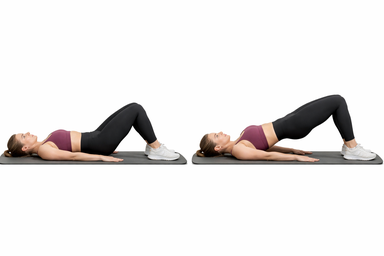
How to
A floor hip lift that trains your glutes and hamstrings with both feet planted.
- Lie on your back with knees bent and feet flat, hip-width apart.
- Brace your core and press your arms lightly into the floor.
- Drive through your heels and lift your hips until your body forms a straight line.
- Squeeze your glutes at the top, then lower with control.
- Repeat for your reps.
- Keep your ribs down
- Drive through your heels
- Arching your lower back at the top
- Pushing through your toes
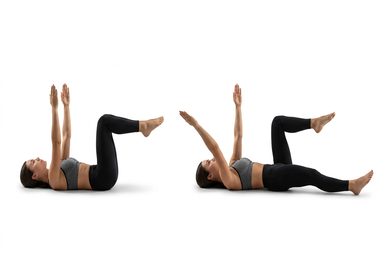
How to
A core move on your back that trains control while you move opposite arm and leg.
- Lie on your back with arms up and knees bent over hips.
- Press your lower back gently toward the floor.
- Lower one arm and the opposite leg with control.
- Return to the start, then repeat on the other side.
- Keep alternating sides for each rep.
- Move slow and stay braced
- Keep your ribs down
- Letting your lower back arch
- Rushing through the reps
Cool-Down
Bring heart rate down and reduce stiffness without aggressive stretching. Downshift and support back comfort. Breathe slowly; stop stretching before any sharp or radiating sensation.
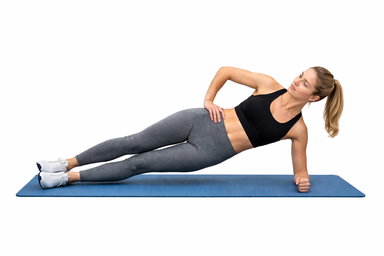
How to
A side hold that trains your obliques, hips, and shoulder stability.
- Lie on one side with your elbow under your shoulder and legs stacked.
- Lift your hips until your body forms a straight line.
- Hold the position and breathe steadily.
- Lower your hips with control.
- Finish your hold, then switch sides.
- Keep your hips stacked
- Press the floor away
- Letting your hips sag
- Rolling your chest toward the floor
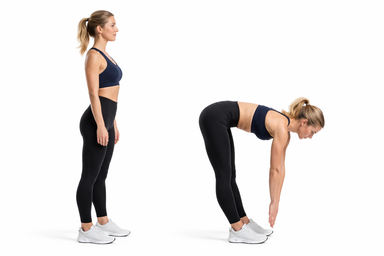
How to
A held stretch for the back of your thigh that targets your hamstrings.
- Sit tall with your target leg straight and toes up.
- Hinge at your hips and reach toward your foot.
- Stop when you feel a gentle stretch behind your thigh.
- Hold the stretch and breathe slowly.
- Release slowly, then switch sides if stretching one leg.
- Keep your back long.
- Hinge from your hips.
- Rounding your back to reach farther.
- Bouncing in the stretch.
How to
A slow breathing drill that trains relaxed belly breathing and helps you control your breath.
- Lie on your back or sit tall with one hand on your belly.
- Inhale through your nose and let your belly rise.
- Exhale slowly and let your belly fall.
- Keep your chest and shoulders quiet.
- Continue for the set time with smooth breaths.
- Breathe low into your belly
- Keep your shoulders relaxed
- Shrugging your shoulders as you inhale
- Forcing the breath or holding tension

Why Every Exercise Earns Its Place Here
Glute bridges and dead bugs directly target the posterior chain and deep spinal stabilizers—the muscles most responsible for protecting lumbar discs under load. Goblet squat positioning keeps your thoracic spine upright, offloading the lower back while still training quad and hip strength. Nothing here compresses the spine unnecessarily.

What Low-Back Recovery Actually Demands
The nervous system often stays in a guarded, threat-sensitive state long after pain subsides—which is why breath-holding or pushing to failure can reset your progress overnight. Diaphragmatic breathing isn't filler; it directly down-regulates sympathetic tone and restores intra-abdominal pressure control, the hidden foundation of every safe lift.

Staying Below Threshold Is the Whole Strategy
This session uses sub-maximal loading and bilateral symmetry (floor press, glute bridge) before introducing unilateral demand (one-arm row, side plank) to build motor control progressively without overloading healing tissue. Your cue: if your lower back tenses during any rep, that's your rep limit for today—log it, and use it as your baseline to beat next session.