
Clean & Minimal AI Powered Fitness Routines
Download App25-Minute Intermediate Backpacking Prep
A 25-minute session to build hiking strength, stability, and uphill endurance.
25-Minute Intermediate Backpacking Prep
A 25-minute session to build hiking strength, stability, and uphill endurance.
Warm-Up
Raise heart rate and open hips/ankles for hiking mechanics. Mobility and activation focus.
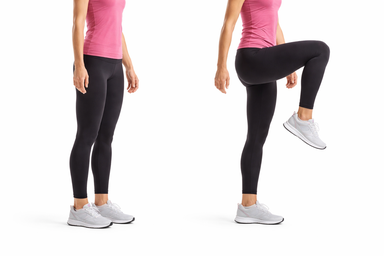
How to
A low-impact cardio move that warms up your legs and hips while raising your heart rate.
- Stand tall with your feet hip-width apart and arms at your sides.
- Lift one knee to hip height as you swing the opposite arm forward.
- Lower that foot, then lift the other knee and switch arms.
- Keep alternating sides at a steady pace.
- Slow down and plant both feet to finish.
- Stand tall with your chest up
- Land softly under your hips
- Leaning back as you lift your knees
- Stomping your feet on each step
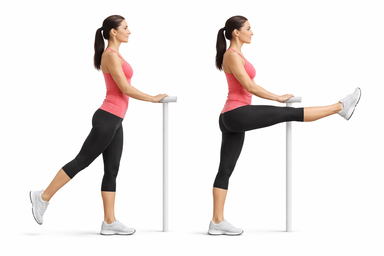
How to
A dynamic leg swing that warms up your hips, hamstrings, and glutes while challenging balance.
- Stand tall and hold a wall or rail for light support if needed.
- Lift one leg slightly off the floor with a soft knee.
- Swing it forward and back with control.
- Set it down, then switch legs on the next rep.
- Keep your torso tall.
- Swing from the hip, not the low back.
- Leaning back as the leg swings forward.
- Forcing the range of motion.
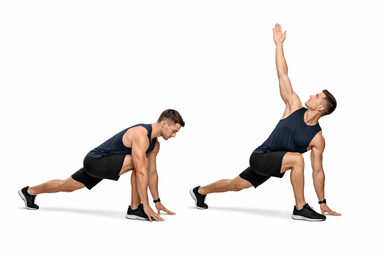
How to
A deep lunge stretch with rotation that opens your hips, groin, and upper back.
- Start in a high plank with hands under your shoulders.
- Step your right foot outside your right hand.
- Sink your hips and hold while breathing slowly.
- Rotate your chest right and reach your right arm up.
- Return to plank, then repeat on the left. Alternate sides.
- Keep your front foot flat
- Reach long through your top hand
- Letting your front knee cave inward
- Rushing the hold or holding your breath
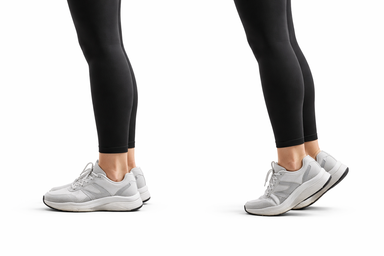
How to
A standing lower-leg move that trains your calves by lifting and lowering your heels.
- Stand tall with both feet hip-width apart.
- Press through the balls of your feet and lift your heels.
- Pause briefly at the top with control.
- Lower your heels slowly back to the floor.
- Repeat for your reps.
- Keep your ankles tracking straight.
- Move up and down with control.
- Rocking onto the outside edges of your feet.
- Bouncing at the bottom of each rep.
Main Set
Leg strength for climbs/descents and core stability for pack carry. Climb and stability circuit.
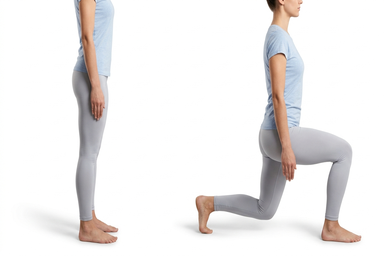
How to
A backward-stepping lunge that trains your quads, glutes, and balance.
- Stand tall with your feet hip-width apart.
- Step one foot back and lower until both knees bend.
- Push through your front foot to stand back up.
- Finish your reps, then switch legs.
- Keep your chest tall.
- Track your front knee over your toes.
- Letting your front knee cave inward.
- Pushing off the back foot to stand.
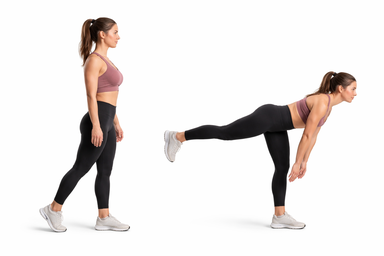
How to
A hip hinge on one leg that trains your hamstrings and glutes while challenging balance.
- Stand tall with weight on one foot and a soft bend in that knee.
- Hinge at your hips as your other leg reaches back behind you.
- Lower your torso until you feel a stretch, keeping your back flat.
- Drive through your standing foot to return to standing.
- Finish your reps, then switch legs.
- Keep your hips square
- Reach long from head to heel
- Rounding your back as you lower
- Opening your hips toward the side
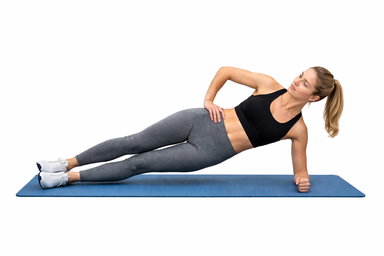
How to
A side hold that trains your obliques, hips, and shoulder stability.
- Lie on one side with your elbow under your shoulder and legs stacked.
- Lift your hips until your body forms a straight line.
- Hold the position and breathe steadily.
- Lower your hips with control.
- Finish your hold, then switch sides.
- Keep your hips stacked
- Press the floor away
- Letting your hips sag
- Rolling your chest toward the floor
Cool-Down
Bring breathing down and finish with steady trunk endurance. Core and reset focus.
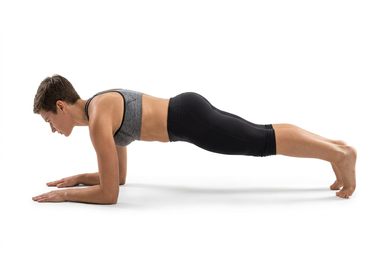
How to
A core hold that trains your abs, shoulders, and glutes while you keep a straight body line.
- Place your forearms on the floor with elbows under shoulders.
- Step both feet back and lift into a straight line from head to heels.
- Brace your abs and squeeze your glutes.
- Hold the position and breathe steadily.
- Lower your knees to the floor to finish.
- Keep your ribs pulled down
- Push the floor away
- Letting your hips sag
- Lifting your hips too high

Loaded Carry Muscles, No Pack Required
Step-ups and reverse lunges target the glutes, quads, and soleus under the same hip-extended, forward-lean demand as climbing switchbacks. Single-leg deadlifts then isolate the posterior chain unilaterally, training the exact balance deficit that emerges when one foot lands on uneven trail.

What Miles With a Pack Actually Break Down
Backpacking fatigue isn't just cardiovascular—it's cumulative hip instability and calf failure on descent. The ankle-to-hip chain degrades over mileage, which is why calf raises and single-leg work here target the slow-twitch endurance fibers that keep your stride controlled at hour six.

Circuit Sequencing as Altitude Simulation
Flowing from step-ups directly into reverse lunges without full recovery mimics the oxygen debt of sustained uphill grades, training your aerobic system to clear lactate under muscular load. To personalize, add a weighted vest to step-ups once bodyweight reps feel controlled at tempo—that's your pack-weight threshold test.