
Clean & Minimal AI Powered Fitness Routines
Download AppIntermediate Bouldering Session
A focused 25-minute bouldering routine: warm-up, limit attempts, and technique-focused volume.
Intermediate Bouldering Session
A focused 25-minute bouldering routine: warm-up, limit attempts, and technique-focused volume.
General Mobility
Smooth, controlled movement. Keep breathing steady.
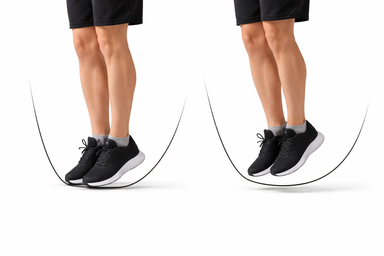
How to
A light bouncing cardio move that trains rhythm, calves, and coordination.
- Stand tall with the rope behind your heels and handles at your sides.
- Turn the rope with small wrist circles.
- Hop lightly as the rope passes under your feet.
- Land softly on the balls of your feet and keep a steady rhythm.
- Stop the rope and step out when your set is done.
- Stay tall and relaxed
- Keep jumps low
- Swinging from your shoulders
- Jumping too high or landing heavy
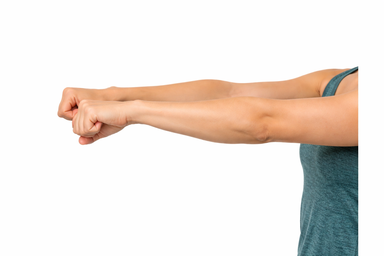
How to
A gentle wrist mobility drill that moves both wrists through circles to warm your forearms and hands.
- Stand or sit tall with your arms relaxed and elbows bent.
- Make slow circles with both wrists in one direction.
- Keep the movement smooth and controlled.
- Reverse direction and circle both wrists the other way.
- Move through a comfortable range
- Keep your shoulders relaxed
- Forcing a painful range
- Moving too fast or jerky
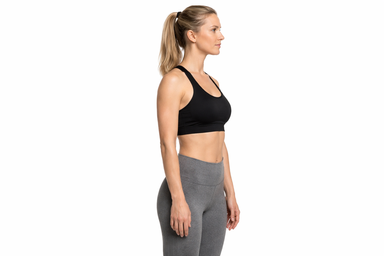
How to
A standing arm circle drill that warms up your shoulders and upper back.
- Stand tall with your arms out to the sides at shoulder height.
- Make small, smooth circles with both arms.
- Keep your chest tall and your ribs down as you move.
- Reverse direction if needed, then lower your arms.
- Keep your shoulders relaxed
- Move with control
- Shrugging your shoulders toward your ears
- Arching your back to move your arms
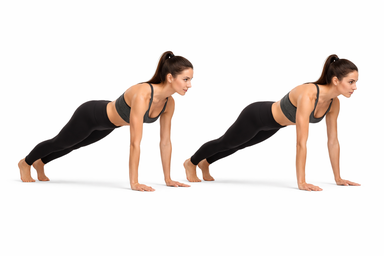
How to
A straight-arm push-up variation that trains shoulder blade control and upper back stability.
- Start in a high plank with hands under shoulders and arms straight.
- Let your chest sink slightly as your shoulder blades move together.
- Push the floor away to spread your shoulder blades apart.
- Keep your body in one straight line as you repeat.
- Keep your elbows straight
- Move only at your shoulder blades
- Bending your elbows like a regular push-up
- Letting your hips sag or pike
Finger Warm-Up
Keep hangs comfortable; then do an easy traverse focusing on quiet feet.
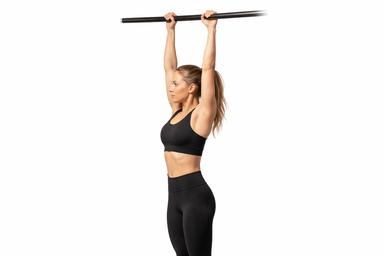
How to
A two-hand hang from an overhead bar that trains grip and upper-body hanging strength.
- Grip a sturdy overhead bar with both hands.
- Step or jump up so your arms are straight and feet are off the floor.
- Let your body hang long, with your ribs down.
- Hold for the set time and breathe slowly.
- Step down with control.
- Keep your grip firm.
- Stay still from shoulders to feet.
- Swinging or kicking your legs.
- Holding your breath during the hold.
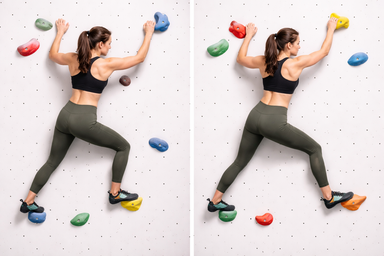
How to
A sideways climbing move that trains grip, shoulders, and core while you move from hold to hold.
- Start on a wall with both hands and feet on holds.
- Move one hand or foot to the next hold sideways.
- Keep moving left and right in a smooth flow.
- Stay controlled and keep your hips close to the wall.
- Keep your hips close to the wall
- Move one limb at a time
- Reaching too far and losing balance
- Letting your hips swing away from the wall
Limit Attempts
Pick 1 hard problem (around your max). Try 2 high-quality attempts per round. Rest fully.
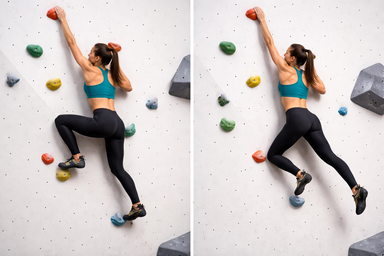
How to
A near-max bouldering try that trains power, coordination, and problem solving on hard moves.
- Choose a hard move or short sequence and study the holds.
- Set pads and clear the landing before you start.
- Pull on with control, then commit to one strong attempt.
- Try the move with full effort while keeping your feet active.
- Drop or downclimb safely, rest, then repeat if planned.
- Use your legs before you pull
- Commit to the move
- Rushing on before checking the landing
- Making many tired attempts without rest
Technique Volume
Choose easier climbs (2–4 grades below max). Focus on foot placement, hip position, and straight arms.
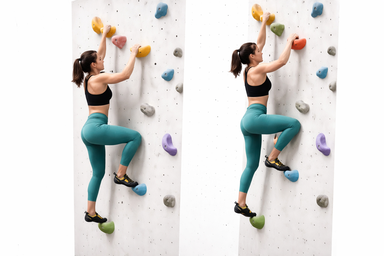
How to
A controlled bouldering climb that trains grip, pulling strength, footwork, and body control.
- Start on the wall with both hands and feet set on easy holds.
- Look ahead and plan your next hand and foot moves.
- Push through your legs and move one hand or foot at a time.
- Keep your hips close to the wall as you climb.
- Climb down with control or drop only from a safe height.
- Use your feet before your arms
- Keep your hips close
- Overgripping every hold
- Pulling only with your arms

Finger Flexors to Full-Body Recruitment
Dead hangs prime the flexor digitorum profundus and superficialis under passive load before limit attempts demand explosive recruitment. Scapular push-ups activate the serratus anterior, ensuring your shoulder girdle stabilizes dynamically on compression moves. Jump rope elevates core temperature and fast-twitch readiness without pre-fatiguing the grip.

Why Bouldering Breaks Every Climber
Bouldering concentrates maximum force through A2 pulley structures in 3-10 second bursts, making tendon conditioning the true limiter — not strength. Traverses build positional endurance and footwork precision that limit attempts demand but rarely teach on their own. The mental reset between hard attempts is as physiologically real as the rest interval.

Max Effort Before Volume, Always
Limit attempts precede technique volume here intentionally — central nervous system output peaks early in a session, so your hardest moves get your sharpest neuromuscular recruitment. Technique-focused bouldering at lower intensity then drives motor pattern refinement without fatigue-induced compensation. To personalize, extend limit attempt rest to 4 minutes if you notice grip opening or footwork