
Clean & Minimal AI Powered Fitness Routines
Download App25-Minute CKD-Friendly Intermediate Fitness
Low-impact cardio + full-body strength with controlled intensity (RPE ~5–6).
25-Minute CKD-Friendly Intermediate Fitness
Low-impact cardio + full-body strength with controlled intensity (RPE ~5–6).
Warm-Up
Gradually raise heart rate and loosen shoulders/hips. 5 minutes.
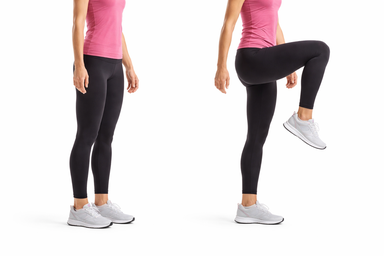
How to
A low-impact cardio move that warms up your legs and hips while raising your heart rate.
- Stand tall with your feet hip-width apart and arms at your sides.
- Lift one knee to hip height as you swing the opposite arm forward.
- Lower that foot, then lift the other knee and switch arms.
- Keep alternating sides at a steady pace.
- Slow down and plant both feet to finish.
- Stand tall with your chest up
- Land softly under your hips
- Leaning back as you lift your knees
- Stomping your feet on each step
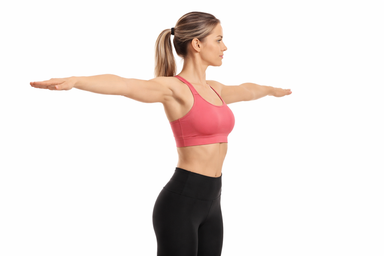
How to
A simple shoulder warm-up that moves both arms in circles and trains shoulder control.
- Stand tall with your feet about hip-width apart.
- Raise both arms out to your sides at shoulder height.
- Make small, controlled circles with both arms.
- Keep circling for the set time, then reverse direction if told.
- Lower your arms to finish.
- Keep your ribs down
- Move smoothly, not fast
- Shrugging your shoulders toward your ears
- Arching your back to keep the arms up
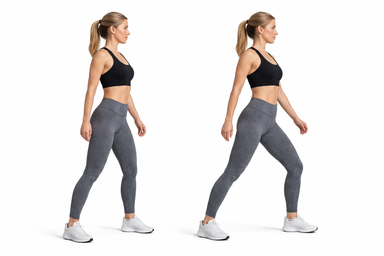
How to
A side-to-side stepping move that warms up your hips, glutes, and legs.
- Stand tall with feet hip-width apart and arms relaxed.
- Step one foot out to the side, then follow with the other foot.
- Step back the other way and keep alternating sides.
- Stay light on your feet and keep a steady rhythm.
- Keep your chest up
- Step softly with control
- Letting your knees cave inward
- Dragging your feet instead of stepping
Circuit A
Moderate pace. Use a chair for support on step-ups if needed.
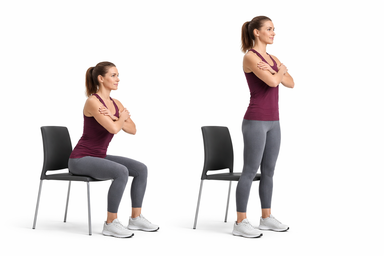
How to
A chair-based squat pattern that trains your thighs and glutes for standing strength.
- Sit near the front of a chair with feet flat and hip-width apart.
- Lean slightly forward and brace your core.
- Press through both feet and stand tall.
- Push your hips back and sit down with control.
- Keep your knees tracking over your toes
- Stand tall at the top
- Letting your knees cave inward
- Dropping hard onto the chair
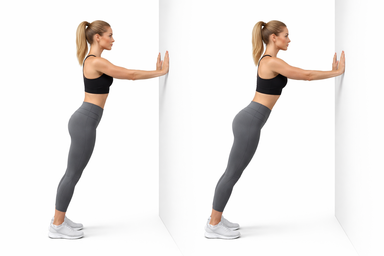
How to
A standing push-up against a wall that trains your chest, shoulders, and triceps.
- Stand facing a wall and place your hands at chest height.
- Step your feet back so your body forms a straight line.
- Bend your elbows and lower your chest toward the wall.
- Press the wall away to return to the start.
- Repeat for your planned reps.
- Keep your body straight
- Keep elbows about 45 degrees
- Letting your hips sag
- Shrugging your shoulders toward your ears
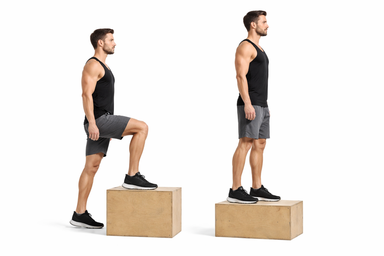
How to
A single-leg climb onto a step that trains your quads, glutes, and balance.
- Stand facing a sturdy step with one foot fully on top.
- Lean slightly forward and drive through the front foot to stand up.
- Bring your back foot onto the step with control.
- Step back down with the same back foot, then lower the front foot.
- Finish your reps, then switch legs.
- Keep your chest tall
- Drive through your whole front foot
- Pushing off too much with the back foot
- Letting your front knee cave inward
Circuit B
Core and posterior chain. Keep hips level on bird dog.
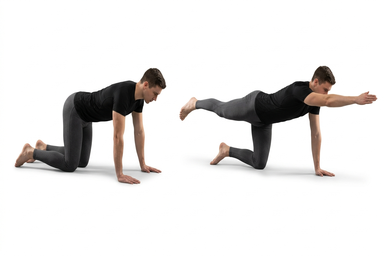
How to
A core stability move from all fours that trains your abs, back, glutes, and balance.
- Start on hands and knees with your hands under shoulders and knees under hips.
- Brace your core and keep your back flat.
- Reach one arm forward and the opposite leg back until they are straight.
- Pause briefly, then bring your hand and knee back under you.
- Repeat on the other side, alternating each rep.
- Keep your hips square
- Move slow and controlled
- Arching or sagging your lower back
- Rotating your hips as you reach
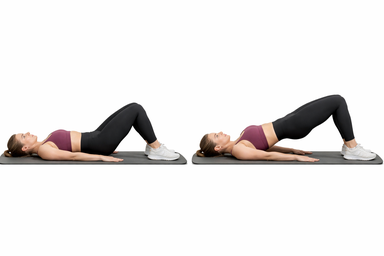
How to
A floor hip lift that trains your glutes and hamstrings with both feet planted.
- Lie on your back with knees bent and feet flat, hip-width apart.
- Brace your core and press your arms lightly into the floor.
- Drive through your heels and lift your hips until your body forms a straight line.
- Squeeze your glutes at the top, then lower with control.
- Repeat for your reps.
- Keep your ribs down
- Drive through your heels
- Arching your lower back at the top
- Pushing through your toes
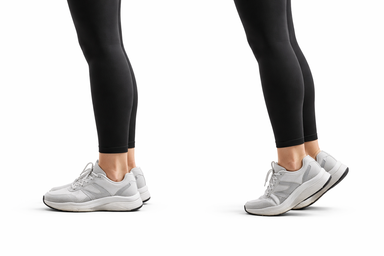
How to
A standing lower-leg move that trains your calves by lifting and lowering your heels.
- Stand tall with both feet hip-width apart.
- Press through the balls of your feet and lift your heels.
- Pause briefly at the top with control.
- Lower your heels slowly back to the floor.
- Repeat for your reps.
- Keep your ankles tracking straight.
- Move up and down with control.
- Rocking onto the outside edges of your feet.
- Bouncing at the bottom of each rep.
Cool-Down
Bring breathing down and relax the trunk/shoulders. 3 minutes.
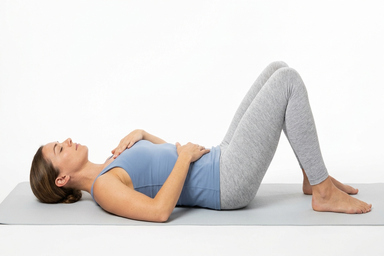
How to
A slow breathing drill that trains relaxed belly breathing and helps you control your breath.
- Lie on your back or sit tall with one hand on your belly.
- Inhale through your nose and let your belly rise.
- Exhale slowly and let your belly fall.
- Keep your chest and shoulders quiet.
- Continue for the set time with smooth breaths.
- Breathe low into your belly
- Keep your shoulders relaxed
- Shrugging your shoulders as you inhale
- Forcing the breath or holding tension

Muscle Demand Without Metabolic Stress
Sit to Stand and Glute Bridge target the posterior chain and quadriceps through controlled, closed-chain movement that builds functional strength without spiking creatinine-producing muscle breakdown. Wall Push-Ups and Bird Dog recruit stabilizing musculature at low enough intensity to avoid the acidic metabolic byproducts that compromised kidneys struggle to clear.

Why CKD Changes Every Rep
Chronic kidney disease alters phosphate regulation, erythropoietin production, and fluid balance — meaning fatigue arrives faster and cardiovascular response is less predictable. The RPE 5–6 ceiling here isn't conservative, it's precise: it keeps you below the threshold where blood pressure spikes and protein catabolism accelerates, two factors that directly affect kidney filtration load.

Periodization Built Around Recovery Capacity
The 5-minute warm-up primes synovial fluid and gradually elevates heart rate before Step-Ups and Calf Raises demand lower-limb coordination, reducing injury risk in populations with potential peripheral neuropathy. To personalize, track your perceived exertion on Sit to Stand each session — when 10 reps feels like RPE 4, add one rep before progressing load.