
Clean & Minimal AI Powered Fitness Routines
Download AppIntermediate Trail Running
A ~25-minute trail run with a progressive warm-up, steady effort, and a short cool-down.
Intermediate Trail Running
A ~25-minute trail run with a progressive warm-up, steady effort, and a short cool-down.
Warm-Up
Gradually raise heart rate and prepare ankles/calves for uneven terrain. Duration: 5:00
How to
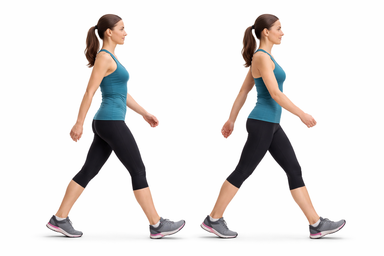
A simple walking movement that trains your legs and builds steady full-body rhythm.
- Stand tall with your feet under your hips.
- Step forward with one foot and roll from heel to toe.
- Swing the opposite arm naturally as you step.
- Push off your back foot and step forward with the other foot.
- Keep alternating steps at a steady pace.
- Stand tall
- Let your arms swing naturally
- Looking down the whole time
- Taking steps that feel too long

How to
A steady running movement that raises your heart rate and trains your legs and endurance.
- Stand tall with your feet under your hips and arms bent.
- Start with small, quick steps at an easy pace.
- Land softly under your body and keep your chest lifted.
- Swing your arms naturally as your legs move.
- Keep jogging for the planned time or distance.
- Stay light on your feet
- Breathe at a steady rhythm
- Overstriding with your foot far in front
- Hunching your shoulders as you jog
Main Run
Sustained trail running with controlled surges to build strength and endurance. Duration: 18:00

How to
A steady forward run that trains your legs and cardio fitness.
- Stand tall and look ahead.
- Start with short, quick steps and build your pace.
- Land lightly under your hips.
- Swing your arms forward and back.
- Keep a steady rhythm until the set ends.
- Stay tall through your chest
- Land softly
- Overstriding with your foot far ahead
- Hunching your shoulders
Cool-Down
Bring heart rate down and reset breathing before finishing. Duration: 2:00
How to
A simple walking movement that trains your legs and builds steady full-body rhythm.
- Stand tall with your feet under your hips.
- Step forward with one foot and roll from heel to toe.
- Swing the opposite arm naturally as you step.
- Push off your back foot and step forward with the other foot.
- Keep alternating steps at a steady pace.
- Stand tall
- Let your arms swing naturally
- Looking down the whole time
- Taking steps that feel too long

Terrain Adaptation Through Pace Layering
The Walk-to-Hard Run progression recruits slow-twitch Type I fibers first, then fast-twitch Type IIa fibers as intensity climbs — mirroring the unpredictable effort spikes trail terrain demands. This neuromuscular sequencing primes ankle stabilizers and posterior chain muscles before peak loading occurs.

Why Trail Running Taxes You Differently
Unlike road running, trail demands constant proprioceptive recalibration from glutes, peroneals, and tibialis anterior to manage uneven surfaces — fatigue accumulates faster even at moderate paces. The 18-minute main block targets your aerobic threshold while preserving enough neuromuscular reserve to handle technical footing safely.

Compressing Periodization Into 25 Minutes
The 5-minute warm-up, 18-minute progressive effort, and 2-minute cool-down mirror a micro-periodization model — each phase has a distinct physiological purpose rather than arbitrary timing. To personalize, extend the Hard Run segment by 90 seconds each week while keeping warm-up and cool-down fixed, creating progressive overload without compressing recovery.