
Clean & Minimal AI Powered Fitness Routines
Download AppIntermediate Cardiac Rehabilitation
A moderate, low-impact cardiac rehab session focused on safe aerobic work and controlled strength.
Intermediate Cardiac Rehabilitation
A moderate, low-impact cardiac rehab session focused on safe aerobic work and controlled strength.
Warm-Up
Gradually raise heart rate and loosen joints with easy, rhythmic movement. 6 minutes.
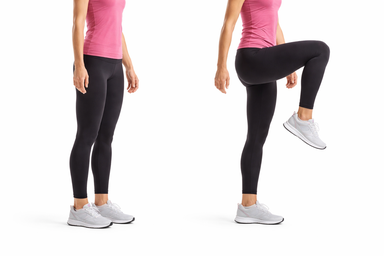
How to
A low-impact cardio move that warms up your legs and hips while raising your heart rate.
- Stand tall with your feet hip-width apart and arms at your sides.
- Lift one knee to hip height as you swing the opposite arm forward.
- Lower that foot, then lift the other knee and switch arms.
- Keep alternating sides at a steady pace.
- Slow down and plant both feet to finish.
- Stand tall with your chest up
- Land softly under your hips
- Leaning back as you lift your knees
- Stomping your feet on each step
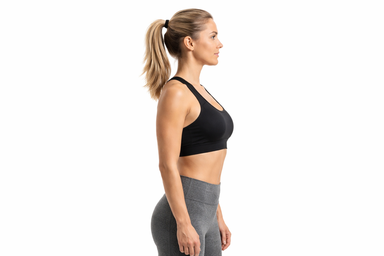
How to
A simple shoulder mobility move that warms up your upper back, neck, and shoulders.
- Stand tall with your arms relaxed at your sides.
- Lift both shoulders up toward your ears.
- Roll them back and down in a smooth circle.
- Repeat for reps, then reverse the direction if needed.
- Move slowly and smoothly.
- Keep your neck relaxed.
- Shrugging with tension in your neck.
- Rushing through small, jerky circles.
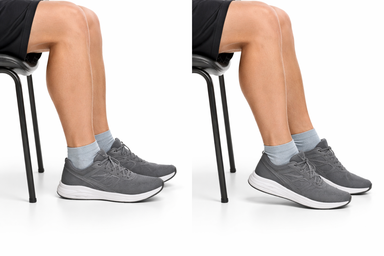
How to
A simple ankle movement that warms your calves and shins and moves both ankles through flex and point.
- Sit or lie down with both legs extended and relaxed.
- Pull your toes toward your shins on both feet.
- Point your toes away from you on both feet.
- Move smoothly back and forth for the set.
- Keep your knees still
- Use a full, smooth range
- Bouncing or jerking the ankles
- Letting your legs tense up
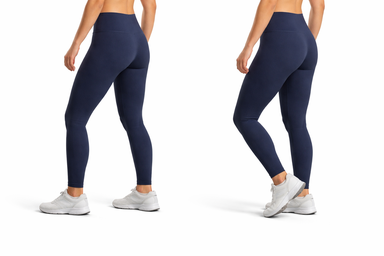
How to
A low-impact side-to-side step that warms up your legs and raises your heart rate.
- Stand tall with your feet hip-width apart and arms relaxed.
- Step to one side with your right foot.
- Tap your left foot next to it, then step back the other way.
- Tap your right foot in and keep alternating side to side.
- Stay light on your feet
- Keep your chest lifted
- Leaning your torso side to side
- Letting your knees cave inward
Main Session
Moderate, low-impact aerobic and light functional strength. Maintain a steady, controlled effort. 16 minutes.
How to
A low-impact side-to-side step that warms up your legs and raises your heart rate.
- Stand tall with your feet hip-width apart and arms relaxed.
- Step to one side with your right foot.
- Tap your left foot next to it, then step back the other way.
- Tap your right foot in and keep alternating side to side.
- Stay light on your feet
- Keep your chest lifted
- Leaning your torso side to side
- Letting your knees cave inward
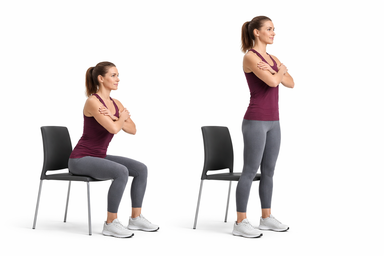
How to
A chair-based squat pattern that trains your thighs and glutes for standing strength.
- Sit near the front of a chair with feet flat and hip-width apart.
- Lean slightly forward and brace your core.
- Press through both feet and stand tall.
- Push your hips back and sit down with control.
- Keep your knees tracking over your toes
- Stand tall at the top
- Letting your knees cave inward
- Dropping hard onto the chair
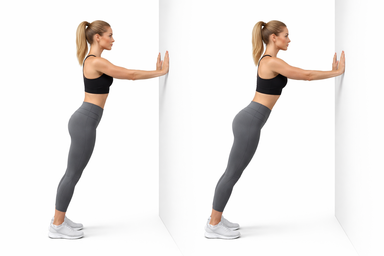
How to
A standing push-up against a wall that trains your chest, shoulders, and triceps.
- Stand facing a wall and place your hands at chest height.
- Step your feet back so your body forms a straight line.
- Bend your elbows and lower your chest toward the wall.
- Press the wall away to return to the start.
- Repeat for your planned reps.
- Keep your body straight
- Keep elbows about 45 degrees
- Letting your hips sag
- Shrugging your shoulders toward your ears
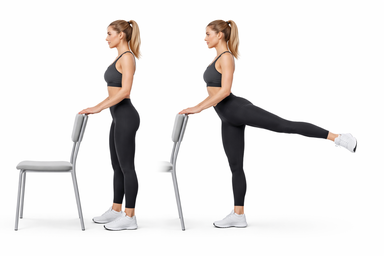
How to
A standing leg raise to the side that trains your outer hips and balance.
- Stand tall with one hand on a wall or chair for balance.
- Shift your weight onto one leg and brace your core.
- Lift the other leg out to the side without leaning your torso.
- Lower the leg with control to the start position.
- Finish your reps, then switch legs.
- Keep your toes facing forward.
- Stand tall through each rep.
- Leaning your torso to lift the leg.
- Turning your toes outward as you raise.
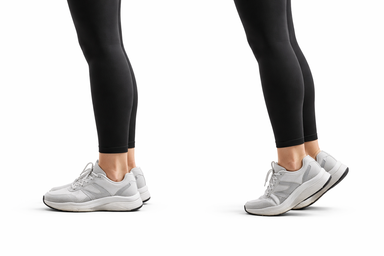
How to
A standing lower-leg move that trains your calves by lifting and lowering your heels.
- Stand tall with both feet hip-width apart.
- Press through the balls of your feet and lift your heels.
- Pause briefly at the top with control.
- Lower your heels slowly back to the floor.
- Repeat for your reps.
- Keep your ankles tracking straight.
- Move up and down with control.
- Rocking onto the outside edges of your feet.
- Bouncing at the bottom of each rep.
Cool-Down
Lower heart rate gradually and finish with gentle stretching and breathing. 3 minutes.
How to
A low-impact cardio move that warms up your legs and hips while raising your heart rate.
- Stand tall with your feet hip-width apart and arms at your sides.
- Lift one knee to hip height as you swing the opposite arm forward.
- Lower that foot, then lift the other knee and switch arms.
- Keep alternating sides at a steady pace.
- Slow down and plant both feet to finish.
- Stand tall with your chest up
- Land softly under your hips
- Leaning back as you lift your knees
- Stomping your feet on each step
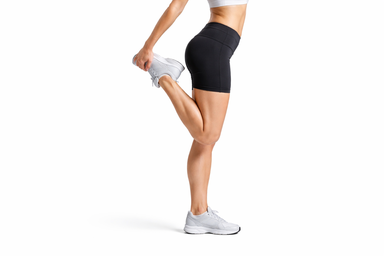
How to
A standing thigh stretch that targets the front of your hip and quad on one leg.
- Stand tall and hold a wall or chair for balance if needed.
- Bend one knee and hold your ankle or foot behind you.
- Keep your knees close and gently draw your heel toward your glute.
- Hold the stretch and breathe slowly.
- Release with control, then switch legs.
- Stand tall through your chest
- Keep your knees close
- Arching your lower back
- Pulling the knee out to the side
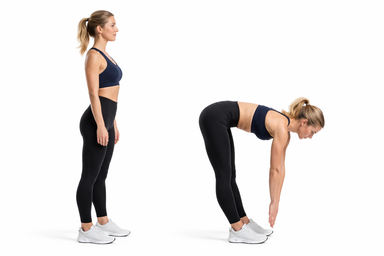
How to
A held stretch for the back of your thigh that targets your hamstrings.
- Sit tall with your target leg straight and toes up.
- Hinge at your hips and reach toward your foot.
- Stop when you feel a gentle stretch behind your thigh.
- Hold the stretch and breathe slowly.
- Release slowly, then switch sides if stretching one leg.
- Keep your back long.
- Hinge from your hips.
- Rounding your back to reach farther.
- Bouncing in the stretch.
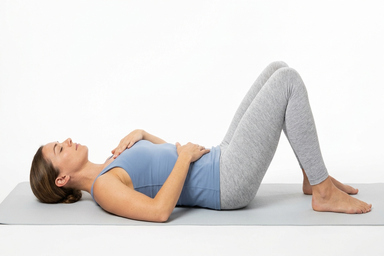
How to
A slow breathing drill that trains relaxed belly breathing and helps you control your breath.
- Lie on your back or sit tall with one hand on your belly.
- Inhale through your nose and let your belly rise.
- Exhale slowly and let your belly fall.
- Keep your chest and shoulders quiet.
- Continue for the set time with smooth breaths.
- Breathe low into your belly
- Keep your shoulders relaxed
- Shrugging your shoulders as you inhale
- Forcing the breath or holding tension

Rate-Pressure Product & Why Each Move Earns Its Pl
March in Place and Step Touch elevate heart rate incrementally, controlling rate-pressure product — the key cardiac workload metric. Sit to Stand targets quadriceps and glutes through functional loading, while Wall Push-Ups recruit anterior deltoids and pectorals without the venous pooling risk of floor-based pressing.

The Post-Cardiac Event Physiology You're Working W
Myocardial remodeling and autonomic dysregulation mean your heart's chronotropic response is slower and less predictable than before. Every transition between exercises here respects that lag — low-impact footwork patterns and bilateral, closed-chain movements minimize sudden preload shifts that challenge a recovering left ventricle.

Structured Progression Within Safe Intensity Bands
This session applies the overload principle within a conservative RPE 3–5 window, using movement complexity rather than resistance to drive adaptation. To personalize, monitor your perceived exertion during Calf Raises and Standing Hip Abduction — if both feel effortless by week three, add two reps per set as your progressive threshold marker.