
Clean & Minimal AI Powered Fitness Routines
Download App25-Minute Nurse Strength and Mobility
A 25-minute intermediate routine to support nurses with posture, core strength, and lower-body endurance.
25-Minute Nurse Strength and Mobility
A 25-minute intermediate routine to support nurses with posture, core strength, and lower-body endurance.
Warm-Up
5 minutes. Mobilize spine, hips, and ankles to prep for strength work.
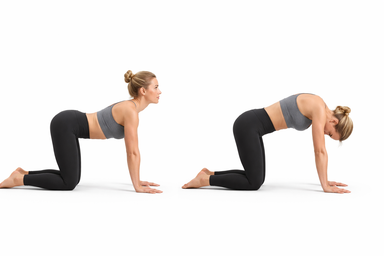
How to
A gentle spine mobility move that alternates rounding and arching your back on hands and knees.
- Start on hands and knees with wrists under shoulders and knees under hips.
- Inhale and drop your belly as you lift your chest and tailbone.
- Exhale and round your back, tucking your chin and tailbone.
- Move slowly between both positions with your breath.
- Move one vertebra at a time.
- Keep your shoulders away from your ears.
- Forcing your neck up or down.
- Rushing through the movement.
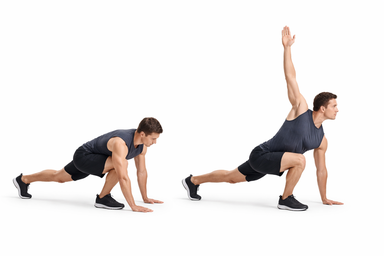
How to
A dynamic lunge stretch that opens your hips, hamstrings, and upper back as you alternate sides.
- Start in a high plank with hands under shoulders.
- Step your right foot outside your right hand.
- Drop your hips, then rotate your right arm up toward the ceiling.
- Place your hand down and step back to plank.
- Repeat on the left side, alternating sides each rep.
- Keep your front foot flat.
- Reach long through your top hand.
- Letting your front heel lift off the floor.
- Rushing the rotation without control.
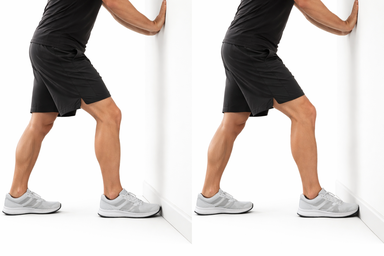
How to
A knee-over-toe ankle drill that trains ankle mobility and control.
- Start in a half-kneeling lunge with one foot flat.
- Keep your heel down and rock your knee forward over toes.
- Rock back to start with control.
- Finish your reps, then switch sides.
- Keep the heel heavy
- Move only as far as you can control
- Lifting the heel off the floor
- Letting the knee cave inward
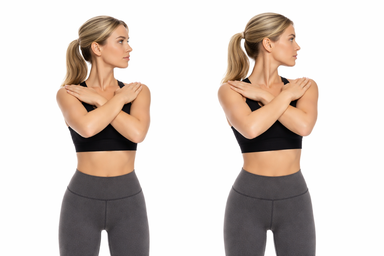
How to
A controlled upper-back rotation that trains thoracic mobility and trunk control.
- Sit or stand tall with your feet steady.
- Cross your arms over your chest or reach them forward.
- Rotate your chest to one side while your hips stay still.
- Return to center, then rotate to the other side.
- Move slowly and breathe through each turn.
- Keep your hips still
- Rotate through your upper back
- Letting your hips follow the turn
- Twisting mostly from your lower back
Circuit A
Lower body. Moderate pace. Focus on bracing and full-foot pressure.
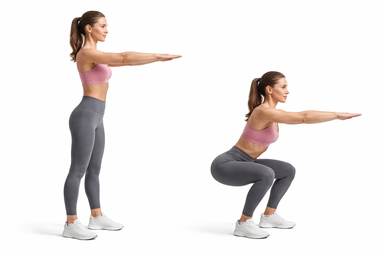
How to
A bodyweight lower-body move that trains your quads, glutes, and hips.
- Stand with feet about shoulder-width apart and toes slightly out.
- Brace your core and keep your chest tall.
- Bend your knees and hips to lower into a squat.
- Push through your feet to stand back up.
- Keep your knees tracking over your toes
- Keep your chest up
- Letting your knees cave in
- Rounding your back as you lower
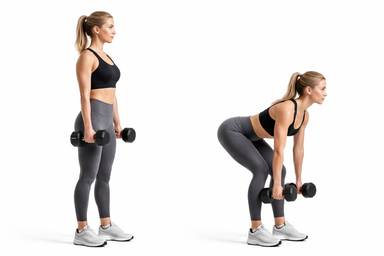
How to
A dumbbell hip hinge that trains your hamstrings, glutes, and back position control.
- Stand tall with a dumbbell in each hand, arms in front of your thighs.
- Soften your knees and brace your core.
- Push your hips back and lower the dumbbells along your legs.
- Stop when you feel a strong hamstring stretch or your back starts to round.
- Drive your hips forward and stand tall again.
- Keep the dumbbells close to your legs.
- Move from your hips, not your knees.
- Rounding your back as you lower.
- Letting the dumbbells drift away from your body.
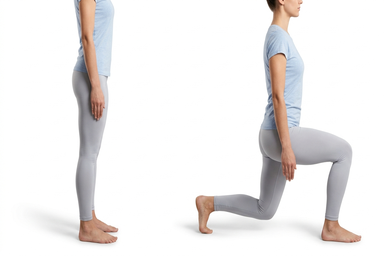
How to
A backward-stepping lunge that trains your quads, glutes, and balance.
- Stand tall with your feet hip-width apart.
- Step one foot back and lower until both knees bend.
- Push through your front foot to stand back up.
- Finish your reps, then switch legs.
- Keep your chest tall.
- Track your front knee over your toes.
- Letting your front knee cave inward.
- Pushing off the back foot to stand.
Circuit B
Core and posture. Keep shoulders down and back; move with control.
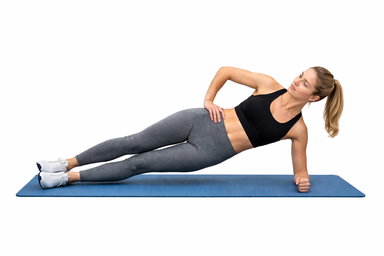
How to
A side hold that trains your obliques, hips, and shoulder stability.
- Lie on one side with your elbow under your shoulder and legs stacked.
- Lift your hips until your body forms a straight line.
- Hold the position and breathe steadily.
- Lower your hips with control.
- Finish your hold, then switch sides.
- Keep your hips stacked
- Press the floor away
- Letting your hips sag
- Rolling your chest toward the floor
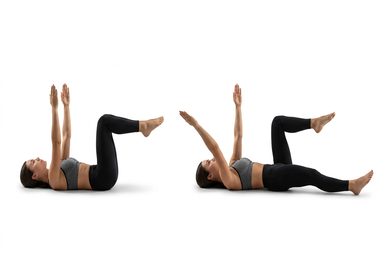
How to
A core move on your back that trains control while you move opposite arm and leg.
- Lie on your back with arms up and knees bent over hips.
- Press your lower back gently toward the floor.
- Lower one arm and the opposite leg with control.
- Return to the start, then repeat on the other side.
- Keep alternating sides for each rep.
- Move slow and stay braced
- Keep your ribs down
- Letting your lower back arch
- Rushing through the reps
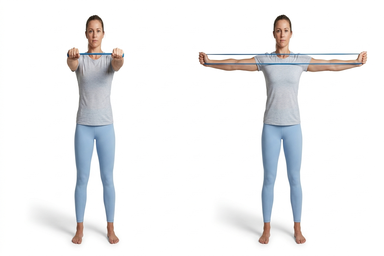
How to
A band upper-back move that trains your rear shoulders and mid-back.
- Stand tall and hold a band at chest height with both hands.
- Start with arms straight and hands shoulder-width apart.
- Pull the band apart until your hands move out to your sides.
- Pause briefly with shoulder blades squeezed together.
- Control the band back to the start and repeat.
- Keep your ribs down.
- Move from your shoulders, not your lower back.
- Shrugging your shoulders toward your ears.
- Arching your back to finish the pull.
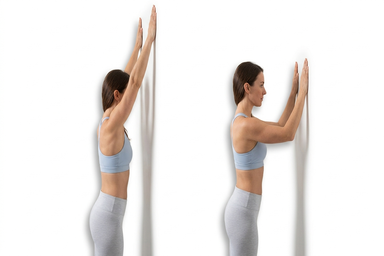
How to
A wall-based shoulder move that trains shoulder control and upper-back posture.
- Stand with your back to a wall and feet a small step out.
- Press your head, upper back, and hips gently into the wall.
- Place your arms on the wall in a goalpost shape.
- Slide your arms up the wall as far as you can control.
- Slide back down to the start and repeat.
- Keep your ribs down.
- Move slowly and stay in control.
- Arching your lower back to reach higher.
- Shrugging your shoulders toward your ears.
Cool-Down
3 minutes. Downshift breathing and open up common tight areas from long shifts.
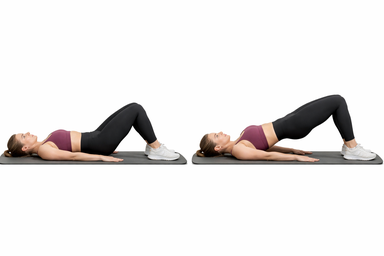
How to
A floor hip lift that trains your glutes and hamstrings with both feet planted.
- Lie on your back with knees bent and feet flat, hip-width apart.
- Brace your core and press your arms lightly into the floor.
- Drive through your heels and lift your hips until your body forms a straight line.
- Squeeze your glutes at the top, then lower with control.
- Repeat for your reps.
- Keep your ribs down
- Drive through your heels
- Arching your lower back at the top
- Pushing through your toes
How to
A controlled upper-back rotation that trains thoracic mobility and trunk control.
- Sit or stand tall with your feet steady.
- Cross your arms over your chest or reach them forward.
- Rotate your chest to one side while your hips stay still.
- Return to center, then rotate to the other side.
- Move slowly and breathe through each turn.
- Keep your hips still
- Rotate through your upper back
- Letting your hips follow the turn
- Twisting mostly from your lower back
How to
A wall-based shoulder move that trains shoulder control and upper-back posture.
- Stand with your back to a wall and feet a small step out.
- Press your head, upper back, and hips gently into the wall.
- Place your arms on the wall in a goalpost shape.
- Slide your arms up the wall as far as you can control.
- Slide back down to the start and repeat.
- Keep your ribs down.
- Move slowly and stay in control.
- Arching your lower back to reach higher.
- Shrugging your shoulders toward your ears.

Loaded Patterns That Mirror Your Shift
Romanian deadlifts and reverse lunges train the posterior chain and hip stabilizers under load, mimicking the repeated patient-transfer and bending demands nursing places on your lumbar spine. Glute bridges directly reinforce gluteus maximus activation, reducing the compensatory low-back strain that accumulates across a 12-hour shift.

Why Nurses Lose Posture By Hour Six
Prolonged standing and forward-reaching tasks chronically shorten your hip flexors and anterior shoulders while switching off your deep spinal stabilizers. Band pull-aparts and wall slides directly counter this by reactivating lower trapezius and posterior rotator cuff, the exact muscles that lose tension as fatigue sets in mid-shift.

Density Over Duration, Every Time
This 25-minute structure uses specificity and movement economy — pairing thoracic rotation and dead bug to build rotational stability without adding recovery debt to already-taxed legs. To personalize, increase Romanian deadlift load by 5 lbs when you complete all reps with a neutral spine and no lower-back fatigue the following morning.