
Clean & Minimal AI Powered Fitness Routines
Download App25-Minute Dentist Posture Reset
A 25-minute mobility + strength routine to counter forward-head posture, rounded shoulders, and upper-back stiffness common in dental work.
25-Minute Dentist Posture Reset
A 25-minute mobility + strength routine to counter forward-head posture, rounded shoulders, and upper-back stiffness common in dental work.
Warm-Up
Increase blood flow and restore thoracic and shoulder mobility before strength work. — Spine and shoulders focus.
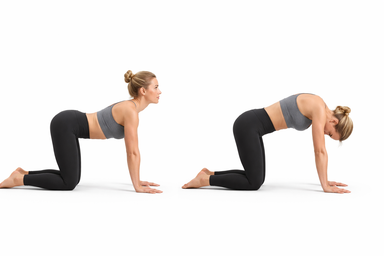
How to
A gentle spine mobility move that alternates rounding and arching your back on hands and knees.
- Start on hands and knees with wrists under shoulders and knees under hips.
- Inhale and drop your belly as you lift your chest and tailbone.
- Exhale and round your back, tucking your chin and tailbone.
- Move slowly between both positions with your breath.
- Move one vertebra at a time.
- Keep your shoulders away from your ears.
- Forcing your neck up or down.
- Rushing through the movement.
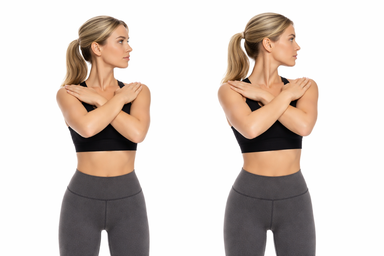
How to
A controlled upper-back rotation that trains thoracic mobility and trunk control.
- Sit or stand tall with your feet steady.
- Cross your arms over your chest or reach them forward.
- Rotate your chest to one side while your hips stay still.
- Return to center, then rotate to the other side.
- Move slowly and breathe through each turn.
- Keep your hips still
- Rotate through your upper back
- Letting your hips follow the turn
- Twisting mostly from your lower back
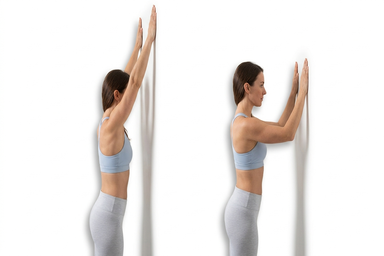
How to
A wall-based shoulder move that trains shoulder control and upper-back posture.
- Stand with your back to a wall and feet a small step out.
- Press your head, upper back, and hips gently into the wall.
- Place your arms on the wall in a goalpost shape.
- Slide your arms up the wall as far as you can control.
- Slide back down to the start and repeat.
- Keep your ribs down.
- Move slowly and stay in control.
- Arching your lower back to reach higher.
- Shrugging your shoulders toward your ears.
Circuit A
Keep neck long; shoulders down and back. Use a band tension that allows clean reps.
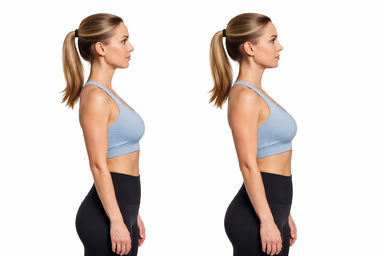
How to
A small neck position hold that trains the front of your neck and helps control head position.
- Sit or stand tall with your eyes looking straight ahead.
- Gently slide your chin straight back, like making a double chin.
- Keep your head level and your jaw relaxed.
- Hold the tuck and breathe slowly.
- Release to neutral, then repeat for the set.
- Move straight back, not down.
- Keep your shoulders relaxed.
- Tilting your head up or down.
- Forcing the tuck or clenching your jaw.
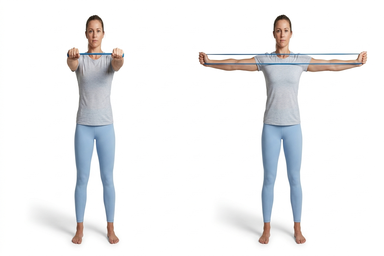
How to
A band upper-back move that trains your rear shoulders and mid-back.
- Stand tall and hold a band at chest height with both hands.
- Start with arms straight and hands shoulder-width apart.
- Pull the band apart until your hands move out to your sides.
- Pause briefly with shoulder blades squeezed together.
- Control the band back to the start and repeat.
- Keep your ribs down.
- Move from your shoulders, not your lower back.
- Shrugging your shoulders toward your ears.
- Arching your back to finish the pull.
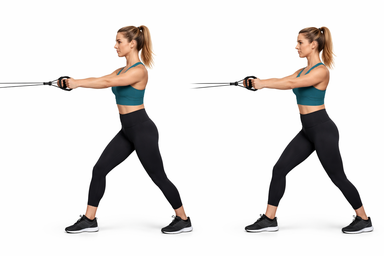
How to
A standing pull that trains your back, shoulders, and arms.
- Stand tall and hold the band at chest height.
- Brace your core and pull your elbows back.
- Squeeze your shoulder blades together.
- Slowly return with control and repeat.
- Keep your chest up
- Pull with your elbows
- Shrugging your shoulders up
- Leaning back to cheat the pull
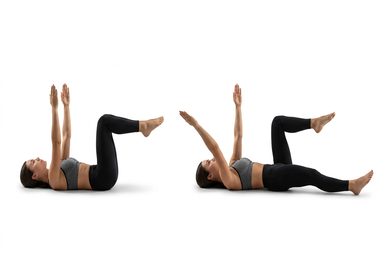
How to
A core move on your back that trains control while you move opposite arm and leg.
- Lie on your back with arms up and knees bent over hips.
- Press your lower back gently toward the floor.
- Lower one arm and the opposite leg with control.
- Return to the start, then repeat on the other side.
- Keep alternating sides for each rep.
- Move slow and stay braced
- Keep your ribs down
- Letting your lower back arch
- Rushing through the reps
Circuit B
Focus on glutes and ribcage control to reduce low-back and hip stiffness from prolonged sitting/leaning.
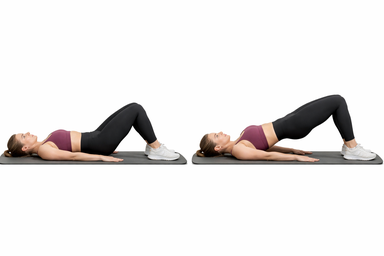
How to
A floor hip lift that trains your glutes and hamstrings with both feet planted.
- Lie on your back with knees bent and feet flat, hip-width apart.
- Brace your core and press your arms lightly into the floor.
- Drive through your heels and lift your hips until your body forms a straight line.
- Squeeze your glutes at the top, then lower with control.
- Repeat for your reps.
- Keep your ribs down
- Drive through your heels
- Arching your lower back at the top
- Pushing through your toes
How to
A wall-based shoulder move that trains shoulder control and upper-back posture.
- Stand with your back to a wall and feet a small step out.
- Press your head, upper back, and hips gently into the wall.
- Place your arms on the wall in a goalpost shape.
- Slide your arms up the wall as far as you can control.
- Slide back down to the start and repeat.
- Keep your ribs down.
- Move slowly and stay in control.
- Arching your lower back to reach higher.
- Shrugging your shoulders toward your ears.
Cool-Down
Downshift and restore wrist/forearm length after fine-motor work. — Neck and forearms focus.
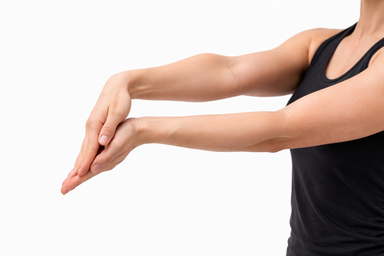
How to
A forearm stretch that targets the wrist flexors on one arm at a time.
- Extend one arm in front of you, palm up.
- Keep your elbow straight and gently pull your fingers back.
- Hold the stretch and breathe slowly.
- Release gently, then switch sides.
- Keep your shoulder relaxed
- Use gentle pressure
- Bending your elbow
- Pulling into sharp pain
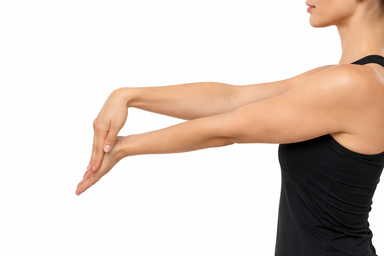
How to
A forearm stretch that targets the wrist extensors on the top of your forearm.
- Extend one arm in front with your palm down.
- Use your other hand to gently bend your wrist down.
- Keep your elbow straight and hold while breathing slowly.
- Release slowly, then switch sides.
- Use gentle pressure
- Keep your shoulder relaxed
- Forcing the wrist into pain
- Bending your elbow during the stretch

Reversing the Operatory Posture Chain
Cat-Cow and Thoracic Rotation directly mobilize the thoracic vertebrae locked into flexion during prolonged patient care, while Chin Tucks retrain the deep cervical flexors that disengage when your head drifts forward over a patient's mouth. Wall Slides then reactivate lower trapezius and serratus anterior — the exact muscles inhibited by hours of shoulder elevation and internal rotation.

What Dental Work Actually Does to Your Spine
Sustained static loading in a forward-flexed, internally rotated position progressively lengthens posterior neck extensors and rhomboids while shortening pectorals and suboccipitals — a pattern that compounds across a career. The asymmetry of single-sided instrumentation also creates rotational imbalances that most generic posture routines completely miss.

Stacking Stability Before You Mobilize
The sequence intentionally places Band Pull-Aparts and Rows after thoracic mobility work, ensuring newly available range of motion is immediately reinforced with scapular retractor strength — a specificity principle that prevents mobility gains from fading by shift's end. Dead Bug and Glute Bridge build the lumbopelvic stability that anchors your entire postural chain; if Glute Bridge feels easy,