
Clean & Minimal AI Powered Fitness Routines
Download AppIntermediate Ice Climbing Conditioning
A 25-minute strength + forearm endurance session to support ice climbing movement and grip.
Intermediate Ice Climbing Conditioning
A 25-minute strength + forearm endurance session to support ice climbing movement and grip.
Warm-Up
Raise temperature, prep shoulders and pulling mechanics. 5 minutes.
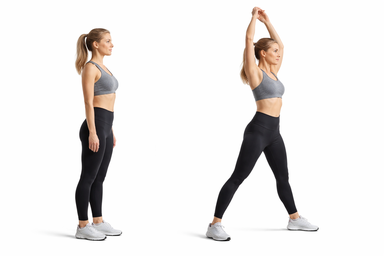
How to
A full-body cardio move that trains coordination, calves, shoulders, and hips.
- Stand tall with feet together and arms at your sides.
- Jump your feet out as you raise your arms overhead.
- Jump your feet back together as you lower your arms.
- Repeat at a steady pace, landing softly each time.
- Stay light on your toes
- Keep your chest tall
- Landing hard with locked knees
- Letting your arms swing out of control
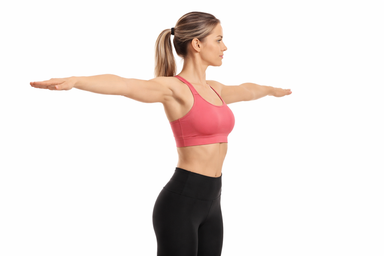
How to
A simple shoulder warm-up that moves both arms in circles and trains shoulder control.
- Stand tall with your feet about hip-width apart.
- Raise both arms out to your sides at shoulder height.
- Make small, controlled circles with both arms.
- Keep circling for the set time, then reverse direction if told.
- Lower your arms to finish.
- Keep your ribs down
- Move smoothly, not fast
- Shrugging your shoulders toward your ears
- Arching your back to keep the arms up
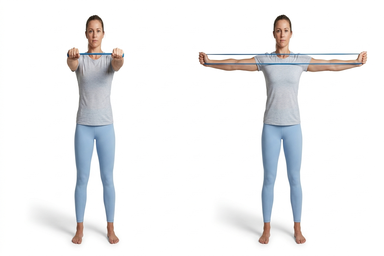
How to
A band upper-back move that trains your rear shoulders and mid-back.
- Stand tall and hold a band at chest height with both hands.
- Start with arms straight and hands shoulder-width apart.
- Pull the band apart until your hands move out to your sides.
- Pause briefly with shoulder blades squeezed together.
- Control the band back to the start and repeat.
- Keep your ribs down.
- Move from your shoulders, not your lower back.
- Shrugging your shoulders toward your ears.
- Arching your back to finish the pull.
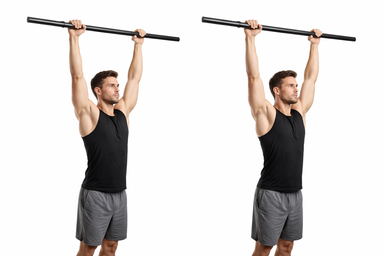
How to
A small pull-up prep that trains shoulder blade control and upper back strength from a dead hang.
- Hang from a bar with hands overhand and arms straight.
- Brace your body and let your shoulders rise toward your ears.
- Pull your shoulder blades down to lift your chest slightly.
- Keep your elbows straight as you pause at the top.
- Lower under control back to the hang and repeat.
- Move from your shoulder blades.
- Keep your ribs down.
- Bending your elbows to turn it into a pull-up.
- Swinging your body between reps.
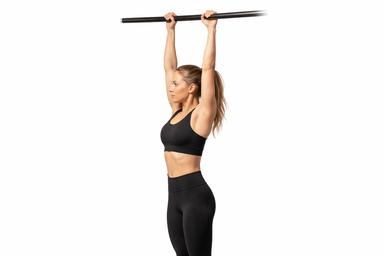
How to
A two-hand hang from an overhead bar that trains grip and upper-body hanging strength.
- Grip a sturdy overhead bar with both hands.
- Step or jump up so your arms are straight and feet are off the floor.
- Let your body hang long, with your ribs down.
- Hold for the set time and breathe slowly.
- Step down with control.
- Keep your grip firm.
- Stay still from shoulders to feet.
- Swinging or kicking your legs.
- Holding your breath during the hold.
Main Set
Grip endurance, pulling strength, and lower-body support. 18 minutes.
How to
A two-hand hang from an overhead bar that trains grip and upper-body hanging strength.
- Grip a sturdy overhead bar with both hands.
- Step or jump up so your arms are straight and feet are off the floor.
- Let your body hang long, with your ribs down.
- Hold for the set time and breathe slowly.
- Step down with control.
- Keep your grip firm.
- Stay still from shoulders to feet.
- Swinging or kicking your legs.
- Holding your breath during the hold.
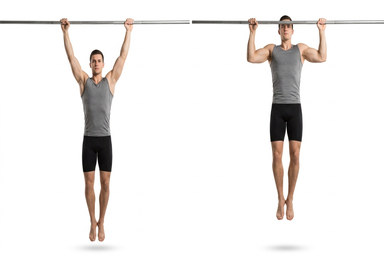
How to
A bodyweight upper-body pull that trains your back, shoulders, and arms.
- Grip the bar with hands just wider than shoulder width.
- Hang with arms straight and brace your body.
- Pull your chest toward the bar by driving elbows down.
- Pause briefly at the top with chin over the bar.
- Lower with control until your arms are straight again.
- Keep your ribs down
- Lead with your chest
- Kicking your legs to start the pull
- Shrugging your shoulders toward your ears
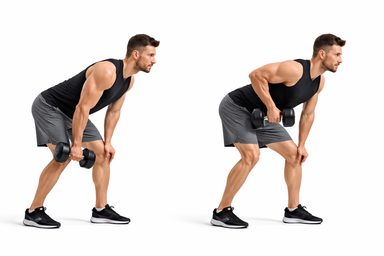
How to
A single-arm pulling move that trains your back, shoulders, and arms.
- Hold a dumbbell in one hand and hinge forward with your other hand supported.
- Let the weight hang under your shoulder with your back flat.
- Pull your elbow up and back toward your ribs.
- Lower the weight with control until your arm is straight.
- Finish your reps, then switch sides.
- Keep your chest facing the floor.
- Pull with your elbow, not your hand.
- Twisting your torso as you row.
- Shrugging your shoulder toward your ear.
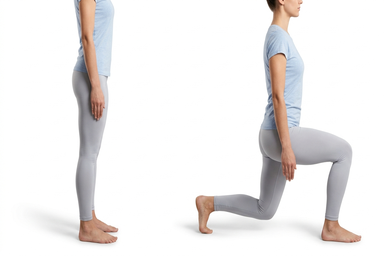
How to
A backward-stepping lunge that trains your quads, glutes, and balance.
- Stand tall with your feet hip-width apart.
- Step one foot back and lower until both knees bend.
- Push through your front foot to stand back up.
- Finish your reps, then switch legs.
- Keep your chest tall.
- Track your front knee over your toes.
- Letting your front knee cave inward.
- Pushing off the back foot to stand.
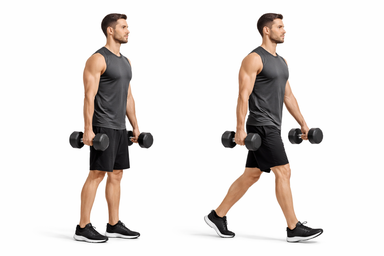
How to
A loaded walk with a dumbbell in each hand that trains grip, core, traps, and posture.
- Stand tall with a dumbbell in each hand at your sides.
- Brace your core and pull your shoulders down and back.
- Walk forward with short, controlled steps.
- Keep the weights still and your torso upright.
- Finish the distance or time, then set the dumbbells down with control.
- Walk tall, ribs down
- Keep your steps quiet
- Leaning back or to one side
- Letting the dumbbells swing
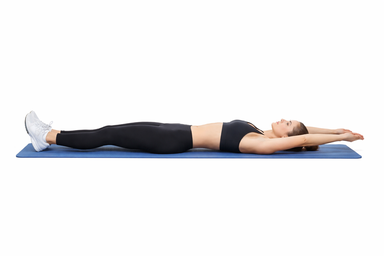
How to
A core hold that trains your abs and hip flexors while keeping your lower back pressed down.
- Lie on your back and press your lower back into the floor.
- Lift your shoulders and legs off the floor.
- Hold the shape and breathe steadily.
- Lower with control when your time is up.
- Keep your ribs down
- Press your low back flat
- Letting your lower back arch off the floor
- Holding your breath
Cool-Down
Downshift breathing and restore posture after grip/pulling work. 2 minutes.
How to
A band upper-back move that trains your rear shoulders and mid-back.
- Stand tall and hold a band at chest height with both hands.
- Start with arms straight and hands shoulder-width apart.
- Pull the band apart until your hands move out to your sides.
- Pause briefly with shoulder blades squeezed together.
- Control the band back to the start and repeat.
- Keep your ribs down.
- Move from your shoulders, not your lower back.
- Shrugging your shoulders toward your ears.
- Arching your back to finish the pull.
How to
A two-hand hang from an overhead bar that trains grip and upper-body hanging strength.
- Grip a sturdy overhead bar with both hands.
- Step or jump up so your arms are straight and feet are off the floor.
- Let your body hang long, with your ribs down.
- Hold for the set time and breathe slowly.
- Step down with control.
- Keep your grip firm.
- Stay still from shoulders to feet.
- Swinging or kicking your legs.
- Holding your breath during the hold.

Why Your Grip Chain Starts at the Scapula
Scapular Pull-Ups and Band Pull-Aparts prime the serratus anterior and lower trapezius before load hits your fingers — because ice tool control fails at the shoulder before it fails at the hand. Dead Hangs then train passive flexor digitorum endurance, the exact tissue taxed during sustained front-pointing sequences.

The Forearm-to-Full-Body Demand of Ice
Ice climbing punishes the forearm flexors asymmetrically — your dominant side accumulates lactic acid faster on vertical ice, making unilateral work non-negotiable. The One-Arm Dumbbell Row directly addresses this lateral strength imbalance, while Reverse Lunges replicate the single-leg hip loading of front-pointing on steep terrain.

Density Training for a 25-Minute Window
This session uses mechanical specificity: grip-intensive pulling (Pull-Ups, Dead Hangs) is sequenced before loaded carries (Farmer Carry) to simulate cumulative forearm fatigue across a pitch. To personalize, increase Dead Hang duration by 5 seconds weekly — progressive time-under-tension is the fastest driver of flexor tendon adaptation at your level.