
Clean & Minimal AI Powered Fitness Routines
Download AppIntermediate Hip Flexor Length
A 25-minute mobility session focused on hip flexor length, pelvic control, and front-of-hip relief.
Intermediate Hip Flexor Length
A 25-minute mobility session focused on hip flexor length, pelvic control, and front-of-hip relief.
Warm-Up
Gently mobilize the spine and pelvis to find pelvic control before deeper hip flexor work.
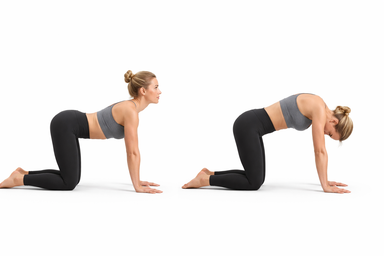
How to
A gentle spine mobility move that alternates rounding and arching your back on hands and knees.
- Start on hands and knees with wrists under shoulders and knees under hips.
- Inhale and drop your belly as you lift your chest and tailbone.
- Exhale and round your back, tucking your chin and tailbone.
- Move slowly between both positions with your breath.
- Move one vertebra at a time.
- Keep your shoulders away from your ears.
- Forcing your neck up or down.
- Rushing through the movement.
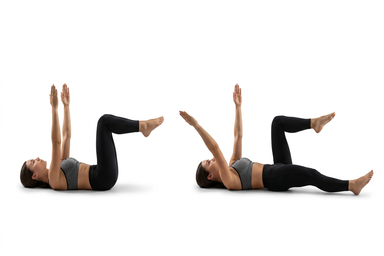
How to
A core move on your back that trains control while you move opposite arm and leg.
- Lie on your back with arms up and knees bent over hips.
- Press your lower back gently toward the floor.
- Lower one arm and the opposite leg with control.
- Return to the start, then repeat on the other side.
- Keep alternating sides for each rep.
- Move slow and stay braced
- Keep your ribs down
- Letting your lower back arch
- Rushing through the reps
Active Hip Flexor Mobility
Lightly squeeze the glute of the down-knee side; keep ribs down.
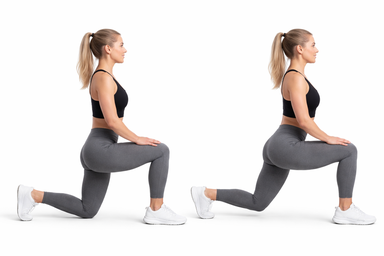
How to
A half-kneeling mobility move that targets the front of your hip with controlled rocks.
- Start in half-kneeling with one knee down and the other foot forward.
- Tuck your pelvis slightly and brace your core.
- Rock your hips forward until you feel a gentle stretch.
- Rock back to the start with control.
- Finish your reps, then switch sides.
- Keep your ribs stacked over your hips.
- Move slowly and stay tall.
- Arching your lower back as you rock forward.
- Letting your front knee cave inward.
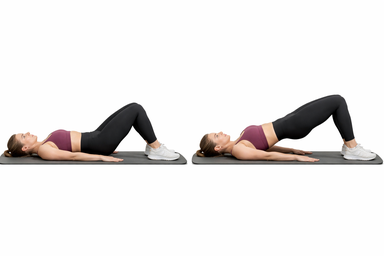
How to
A floor hip lift that trains your glutes and hamstrings with both feet planted.
- Lie on your back with knees bent and feet flat, hip-width apart.
- Brace your core and press your arms lightly into the floor.
- Drive through your heels and lift your hips until your body forms a straight line.
- Squeeze your glutes at the top, then lower with control.
- Repeat for your reps.
- Keep your ribs down
- Drive through your heels
- Arching your lower back at the top
- Pushing through your toes
Kneeling Hip Flexor Hold
Posterior pelvic tilt first, then gently glide forward until you feel the stretch in the front of the hip.
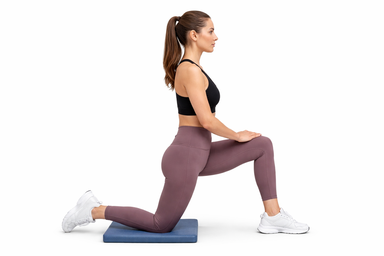
How to
A kneeling stretch for the front of your hip. It targets the hip flexors on one side at a time.
- Kneel with one knee down and the other foot in front.
- Tuck your pelvis slightly and keep your chest tall.
- Shift your hips forward until you feel a gentle stretch.
- Hold the position and breathe steadily.
- Finish the hold, then switch sides.
- Squeeze the glute on the back leg
- Keep your ribs stacked over your hips
- Arching your lower back to get deeper
- Letting the front knee cave inward
Couch Stretch Hold
Use a pillow under the knee; keep glute engaged and avoid low-back arching.
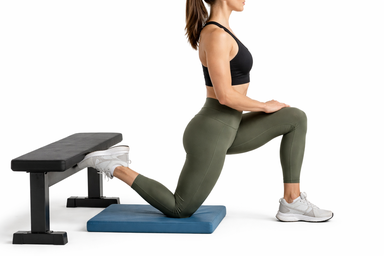
How to
A kneeling hip flexor and quad stretch using a couch or wall. It opens the front of one hip and thigh.
- Place one knee near a couch or wall with that shin up behind you.
- Step your other foot forward into a half-kneeling position.
- Lift your chest and gently tuck your pelvis under.
- Hold the stretch and breathe slowly.
- Finish the hold, then switch sides.
- Stay tall through your chest
- Keep your front foot flat
- Arching your lower back to get deeper
- Letting your front knee cave inward
Cool-Down
Finish with complementary hip stretches to reduce tension around the pelvis — focus on hip balance.
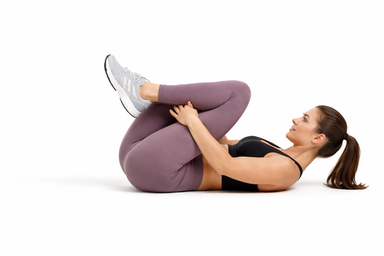
How to
A lying hip stretch that targets your glutes and outer hip on one side at a time.
- Lie on your back with knees bent and feet flat.
- Cross one ankle over the opposite thigh, making a figure four.
- Hold behind the thigh or shin and gently pull toward you.
- Hold the stretch and breathe slowly.
- Release with control, then switch sides.
- Keep your head and shoulders relaxed
- Flex the crossed foot
- Pulling so hard your hips lift off the floor
- Twisting your pelvis to one side
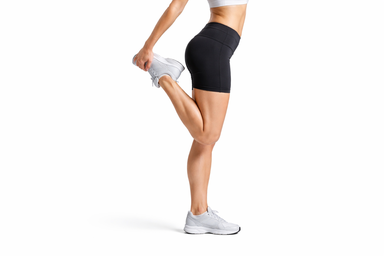
How to
A standing thigh stretch that targets the front of your hip and quad on one leg.
- Stand tall and hold a wall or chair for balance if needed.
- Bend one knee and hold your ankle or foot behind you.
- Keep your knees close and gently draw your heel toward your glute.
- Hold the stretch and breathe slowly.
- Release with control, then switch legs.
- Stand tall through your chest
- Keep your knees close
- Arching your lower back
- Pulling the knee out to the side

Lengthening the Hip Flexor Chain
The Couch Stretch and Half-Kneeling Hip Flexor Rock target the rectus femoris and iliopsoas through end-range loading, where passive holds transition into active oscillation to remodel fascial stiffness. The Standing Quad Stretch then reinforces length gains under a vertical load, training the tissue to retain its new range.

Why Tight Hip Flexors Are So Stubborn
Hip flexors shorten adaptively from prolonged sitting, pulling the pelvis into anterior tilt and compressing the lumbar spine — a pattern your nervous system actively protects. True length change requires both passive tissue work and neuromuscular re-education, which is why this session pairs holds with active movements like the Dead Bug.

Active vs. Passive Range: The Key Distinction
The Glute Bridge and Dead Bug aren't just fillers — they train reciprocal inhibition, signaling the hip flexors to release by activating their antagonists under load. Start the Half-Kneeling Rock with a posterior pelvic tilt cue (tuck the tailbone) to isolate the iliopsoas stretch and prevent lumbar compensation from masking your true hip flexor range.