
Clean & Minimal AI Powered Fitness Routines
Download AppIntermediate Shoulder Instability Routine
A shoulder-stability focused session emphasizing rotator cuff control, scapular strength, and pain-free range of motion.
Intermediate Shoulder Instability Routine
A shoulder-stability focused session emphasizing rotator cuff control, scapular strength, and pain-free range of motion.
Warm-Up
5 minutes. Increase blood flow and groove pain-free shoulder and scapular motion.
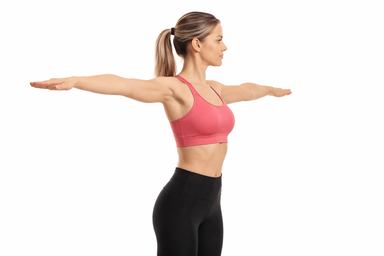
How to
A simple shoulder warm-up that moves both arms in circles and trains shoulder control.
- Stand tall with your feet about hip-width apart.
- Raise both arms out to your sides at shoulder height.
- Make small, controlled circles with both arms.
- Keep circling for the set time, then reverse direction if told.
- Lower your arms to finish.
- Keep your ribs down
- Move smoothly, not fast
- Shrugging your shoulders toward your ears
- Arching your back to keep the arms up
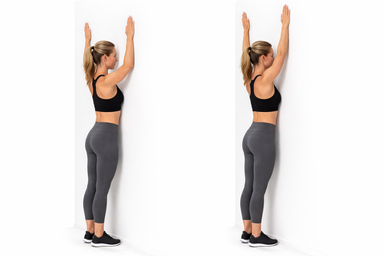
How to
A wall-based shoulder slide that trains upper back control and shoulder movement.
- Stand with your back to a wall and feet a small step away.
- Press your ribs, upper back, and head gently toward the wall.
- Set your arms in a goalpost shape with elbows and wrists near the wall.
- Slide your arms up the wall without shrugging.
- Slide back down to the start and repeat.
- Keep your ribs down
- Move slow and smooth
- Arching your lower back to reach higher
- Shrugging your shoulders toward your ears
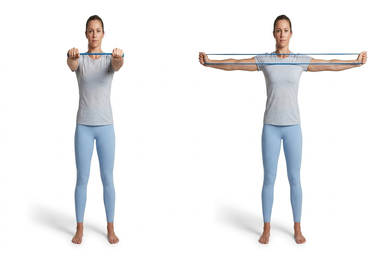
How to
A band upper-back move that trains your rear shoulders and mid-back.
- Stand tall and hold a band at chest height with both hands.
- Start with arms straight and hands shoulder-width apart.
- Pull the band apart until your hands move out to your sides.
- Pause briefly with shoulder blades squeezed together.
- Control the band back to the start and repeat.
- Keep your ribs down.
- Move from your shoulders, not your lower back.
- Shrugging your shoulders toward your ears.
- Arching your back to finish the pull.
Circuit A
Rotator Cuff Control. Elbow tucked at your side (use a towel roll if helpful). Move slowly; stop short of discomfort.
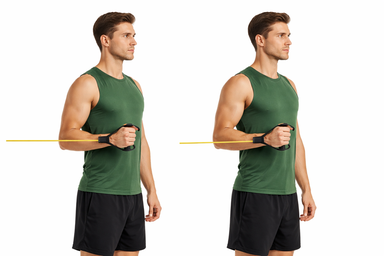
How to
A one-arm band rotation that trains your shoulder rotators.
- Stand tall with the band at your side and elbow bent 90 degrees.
- Keep your elbow tucked to your side.
- Rotate your forearm outward against the band.
- Slowly return to start under control.
- Finish your reps, then switch sides.
- Keep your elbow pinned to your side
- Move only your forearm
- Letting your elbow drift away from your body
- Twisting your torso to cheat the rep
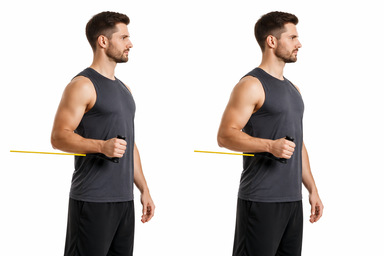
How to
A one-arm band rotation that trains your shoulder rotators and control.
- Anchor the band at elbow height and stand sideways.
- Bend your elbow to 90 degrees and keep it tucked in.
- Rotate your forearm inward, then return with control.
- Finish your reps, then switch sides.
- Keep your elbow pinned to your side
- Move slowly and stay upright
- Letting your elbow drift away from your body
- Using momentum instead of control
How to
A band upper-back move that trains your rear shoulders and mid-back.
- Stand tall and hold a band at chest height with both hands.
- Start with arms straight and hands shoulder-width apart.
- Pull the band apart until your hands move out to your sides.
- Pause briefly with shoulder blades squeezed together.
- Control the band back to the start and repeat.
- Keep your ribs down.
- Move from your shoulders, not your lower back.
- Shrugging your shoulders toward your ears.
- Arching your back to finish the pull.
Circuit B
Scapular Upward Rotation & Serratus. Keep ribs down; reach long through the arms without shrugging.
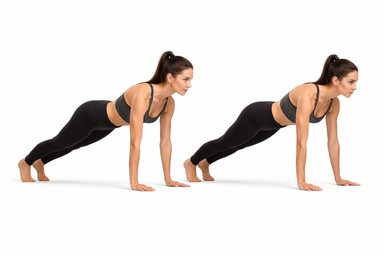
How to
A straight-arm push-up variation that trains shoulder blade control and upper back stability.
- Start in a high plank with hands under shoulders and arms straight.
- Let your chest sink slightly as your shoulder blades move together.
- Push the floor away to spread your shoulder blades apart.
- Keep your body in one straight line as you repeat.
- Keep your elbows straight
- Move only at your shoulder blades
- Bending your elbows like a regular push-up
- Letting your hips sag or pike
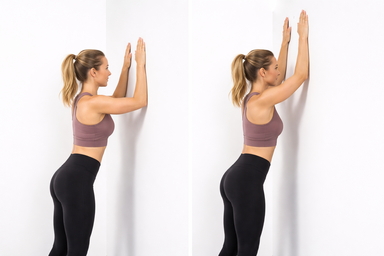
How to
A wall-based shoulder move that trains your serratus and helps control your shoulder blades.
- Stand facing a wall with your forearms on it and elbows bent.
- Press your forearms gently into the wall.
- Slide your arms up the wall without shrugging.
- Reach slightly at the top, keeping your ribs down.
- Slide back to the start with control.
- Keep your ribs down
- Let your shoulder blades glide
- Shrugging your shoulders toward your ears
- Arching your lower back as you slide up
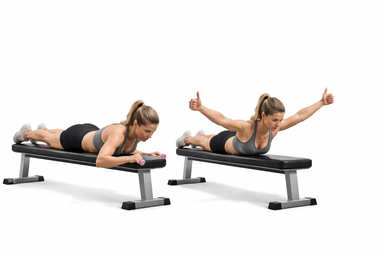
How to
A face-down shoulder raise that trains your upper back and rear shoulders.
- Lie face down with legs long and arms overhead in a Y.
- Set your thumbs up and keep your forehead near the floor.
- Lift your arms a few inches, then lower with control.
- Move your arms out to a T and repeat the lift.
- Continue alternating Y raises and T raises for your reps.
- Squeeze your shoulder blades gently
- Keep your neck long
- Shrugging your shoulders toward your ears
- Lifting your chest high off the floor
Finisher
Lateral Core + Shoulder Stability. Stack shoulder over elbow/wrist. Keep the shoulder blade gently engaged and avoid sinking.
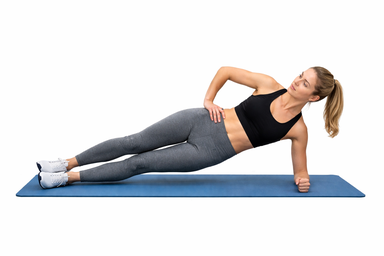
How to
A side hold that trains your obliques, hips, and shoulder stability.
- Lie on one side with your elbow under your shoulder and legs stacked.
- Lift your hips until your body forms a straight line.
- Hold the position and breathe steadily.
- Lower your hips with control.
- Finish your hold, then switch sides.
- Keep your hips stacked
- Press the floor away
- Letting your hips sag
- Rolling your chest toward the floor
Cool-Down
2–3 minutes. Downshift and reinforce relaxed, pain-free shoulder motion.
How to
A wall-based shoulder slide that trains upper back control and shoulder movement.
- Stand with your back to a wall and feet a small step away.
- Press your ribs, upper back, and head gently toward the wall.
- Set your arms in a goalpost shape with elbows and wrists near the wall.
- Slide your arms up the wall without shrugging.
- Slide back down to the start and repeat.
- Keep your ribs down
- Move slow and smooth
- Arching your lower back to reach higher
- Shrugging your shoulders toward your ears
How to
A simple shoulder warm-up that moves both arms in circles and trains shoulder control.
- Stand tall with your feet about hip-width apart.
- Raise both arms out to your sides at shoulder height.
- Make small, controlled circles with both arms.
- Keep circling for the set time, then reverse direction if told.
- Lower your arms to finish.
- Keep your ribs down
- Move smoothly, not fast
- Shrugging your shoulders toward your ears
- Arching your back to keep the arms up

Rotator Cuff Sequencing: Inside Out
Band external and internal rotation directly load the infraspinatus, teres minor, and subscapularis — the muscles responsible for centering the humeral head in the glenoid fossa. Pairing these with Prone Y-T Raises recruits the lower trapezius and serratus anterior simultaneously, building the force-couple balance that unstable shoulders chronically lack.

Why Shoulder Instability Demands Scapular Control
An unstable glenohumeral joint compensates by losing scapulothoracic rhythm — the coordinated upward rotation and posterior tilt that creates a stable base for arm movement. Scapular Wall Slides and Serratus Wall Slides specifically retrain this rhythm, addressing the root dysfunction rather than just the painful joint.

Building Stability Before Loading Strength
This routine follows a proximal-to-distal sequencing principle: scapular stabilizers are activated first so the rotator cuff operates from a stable platform rather than compensating for a moving base. The Side Plank adds anti-lateral-flexion core stiffness, which reduces compensatory shoulder elevation under load — start there if any exercise provokes impingement-like symptoms.