
Clean & Minimal AI Powered Fitness Routines
Download AppPost-Workout Yoga for Balance
Gentle mobility and balance flow to loosen up after training.
Post-Workout Yoga for Balance
Gentle mobility and balance flow to loosen up after training.
Yoga Flow
Post-workout mobility and balance. Breathe slowly; keep ranges gentle for your neck, groin, and wrists.
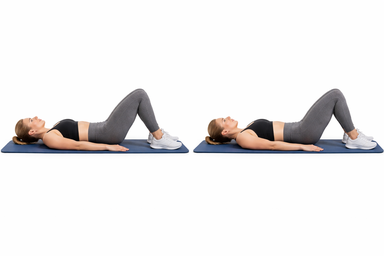
How to
A gentle floor move that trains pelvic control and engages your lower abs and glutes.
- Lie on your back with knees bent and feet flat on the floor.
- Exhale and tilt your pelvis to press your lower back toward the floor.
- Inhale and slowly return to your starting curve.
- Repeat with smooth, controlled movement.
- Move from your pelvis, not your ribs.
- Keep your shoulders relaxed.
- Holding your breath during the tilt.
- Pushing hard through your feet.
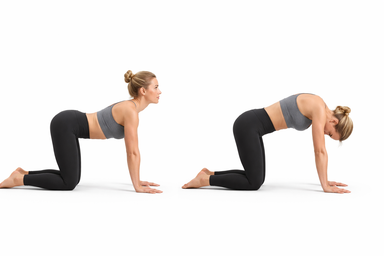
How to
A gentle spine mobility move that alternates rounding and arching your back on hands and knees.
- Start on hands and knees with wrists under shoulders and knees under hips.
- Inhale and drop your belly as you lift your chest and tailbone.
- Exhale and round your back, tucking your chin and tailbone.
- Move slowly between both positions with your breath.
- Move one vertebra at a time.
- Keep your shoulders away from your ears.
- Forcing your neck up or down.
- Rushing through the movement.
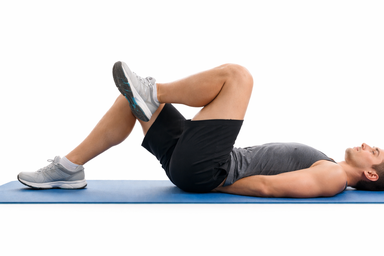
How to
A seated or lying hip stretch that targets your glutes and outer hip on one side.
- Lie on your back with both knees bent and feet flat.
- Cross one ankle over the opposite thigh, making a figure four.
- Pull the uncrossed thigh toward your chest until you feel a stretch.
- Hold and breathe, keeping your shoulders relaxed.
- Release slowly, then switch sides.
- Keep your lower back relaxed
- Flex the crossed foot
- Forcing the knee down with your hand
- Holding your breath
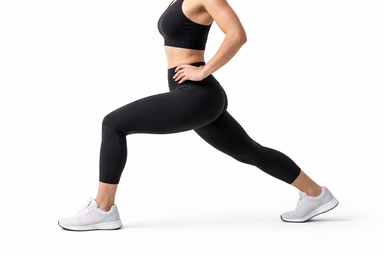
How to
A standing stretch for the front of your hip and thigh on one side.
- Stand tall and hold a wall or sturdy support for balance.
- Step one foot back and tuck that hip slightly under you.
- Bend your front knee until you feel a stretch in the back hip.
- Hold the stretch and breathe slowly.
- Finish the hold, then switch sides.
- Keep your torso tall
- Squeeze the back-side glute
- Arching your lower back
- Letting the back foot turn far outward
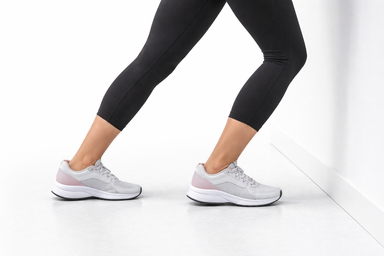
How to
A wall-supported calf stretch that targets one lower leg at a time.
- Stand facing a wall and place your hands on it at chest height.
- Step one foot back with that heel down and toes pointing forward.
- Bend your front knee and lean in until you feel a calf stretch.
- Hold the position and breathe slowly.
- Release, then switch legs.
- Keep your back heel down
- Keep both toes facing forward
- Letting the back heel lift
- Turning the back foot out
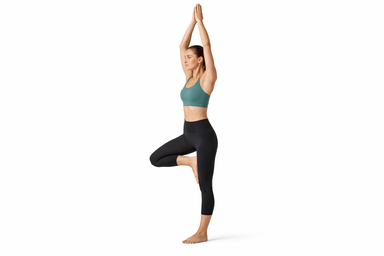
How to
A one-leg balance hold that trains posture, hip control, and steady focus.
- Stand tall with your feet together and arms at your sides.
- Shift weight into one foot and lift the other foot.
- Place your foot on your inner calf or thigh, not on your knee.
- Bring your hands together or reach them overhead.
- Hold and breathe, then switch sides.
- Keep your hips level
- Press your foot and leg together
- Placing your foot directly on your knee
- Letting your standing hip drop
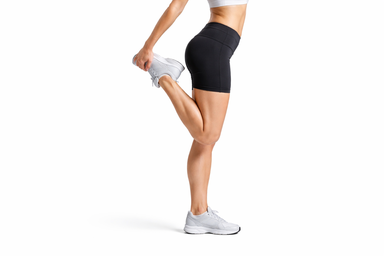
How to
A standing thigh stretch that targets the front of your hip and quad on one leg.
- Stand tall and hold a wall or chair for balance if needed.
- Bend one knee and hold your ankle or foot behind you.
- Keep your knees close and gently draw your heel toward your glute.
- Hold the stretch and breathe slowly.
- Release with control, then switch legs.
- Stand tall through your chest
- Keep your knees close
- Arching your lower back
- Pulling the knee out to the side
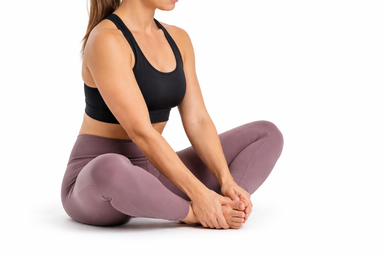
How to
A seated hip stretch that targets your inner thighs and groin.
- Sit tall and bring the soles of your feet together.
- Let your knees fall out to the sides.
- Hold your feet or ankles and lengthen through your spine.
- Relax your thighs and hold, breathing slowly.
- Keep your chest lifted
- Let your knees drop naturally
- Forcing your knees down with your hands
- Rounding your back to reach your feet
How to
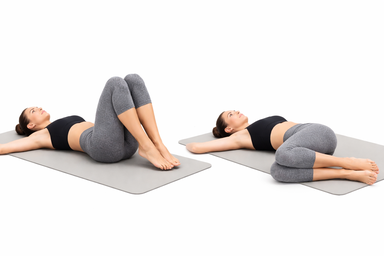
A lying spinal twist that stretches your trunk and hips while you hold and breathe.
- Lie on your back with arms out and knees bent.
- Draw one knee toward your chest.
- Guide that knee across your body toward the floor.
- Keep both shoulders heavy and hold while breathing slowly.
- Return to center, then switch sides.
- Keep both shoulders down
- Move into the twist gently
- Forcing your knee to the floor
- Letting your shoulder lift and roll over
How to
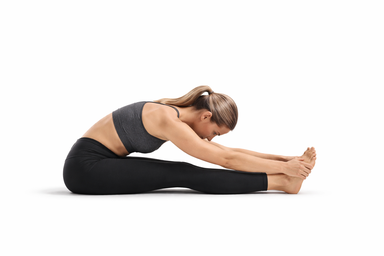
A seated hamstring stretch that also eases your lower back and hips.
- Sit tall with both legs straight in front of you.
- Flex your feet and reach your arms toward your toes.
- Fold forward from your hips until you feel a gentle stretch.
- Hold the position and breathe slowly.
- Keep your knees soft
- Lengthen your spine
- Forcing your head toward your knees
- Bouncing in the stretch
How to
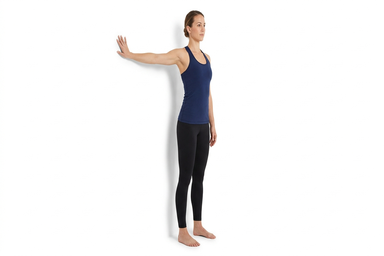
A chest stretch that opens the front of your shoulders and upper body.
- Stand tall and clasp your hands behind your back.
- Straighten your arms gently and lift your chest.
- Draw your shoulders down as you feel a stretch across your chest.
- Hold the stretch and breathe slowly.
- Keep your ribs down
- Relax your neck
- Arching your lower back
- Forcing your arms too high
How to
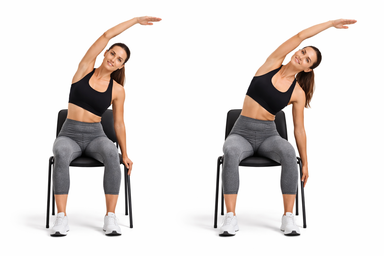
A seated side stretch that opens your side body and builds gentle posture awareness.
- Sit tall with legs crossed or extended, shoulders relaxed.
- Place one hand on the floor beside you for support.
- Reach your other arm up and bend slowly to the side.
- Hold the stretch and breathe steadily.
- Come back to center, then switch sides.
- Keep both hips heavy.
- Lengthen before you bend.
- Collapsing forward as you lean.
- Lifting the opposite hip off the floor.
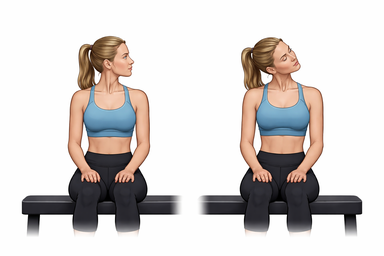
How to
A seated neck side bend held on one side to work gentle neck control and mobility.
- Sit tall with your feet flat and shoulders relaxed.
- Look straight ahead and brace lightly through your core.
- Slowly tip one ear toward the same-side shoulder.
- Hold the position and breathe slowly.
- Return to center, finish your hold, then switch sides.
- Keep both shoulders down
- Move slowly and gently
- Shrugging the shoulder toward your ear
- Twisting or turning your head
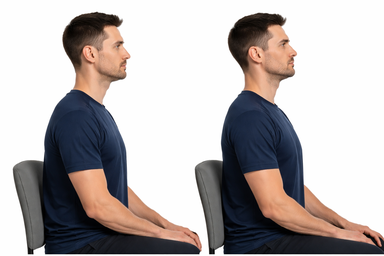
How to
An isometric neck exercise that trains deep neck control with a gentle chin tuck.
- Sit or stand tall with your eyes level.
- Gently draw your chin straight back, making a small double chin.
- Hold the tuck and breathe steadily.
- Relax back to neutral with control.
- Keep your gaze level
- Move straight back, not down
- Tilting your head up or down
- Forcing the tuck or holding your breath
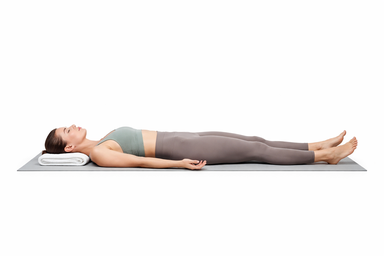
How to
A resting yoga pose done lying on your back. It helps you relax and settle your breathing.
- Lie on your back with your legs long and arms by your sides.
- Let your feet fall open and turn your palms up.
- Close your eyes or soften your gaze.
- Hold still and breathe slowly for the set time.
- To finish, move slowly and roll to one side before sitting up.
- Relax your jaw and shoulders
- Let the floor support you
- Holding tension in your face or hands
- Rushing up at the end

Cool-Down Sequencing From Floor to Sky
This flow moves deliberately from supine spinal decompression—Pelvic Tilt, Cat Cow, Supine Spinal Twist—into standing proprioceptive challenges like Tree Pose, systematically transitioning your nervous system out of sympathetic drive. Each layer addresses the tissues most compressed during training: hip flexors, thoracic spine, and posterior chain.

What Your Body Craves After Hard Output
Post-training muscle tissue is flooded with metabolic byproducts and held in shortened positions from sustained contraction. The Figure Four and Butterfly Stretch target the external rotators and adductors that stabilize every athletic movement, while Wall Calf Stretch addresses the soleus—a chronically neglected tissue that directly affects knee and ankle recovery quality.

Parasympathetic Anchoring Through Stillness
Savasana isn't passive—it's the neurological reset that consolidates the mobility gains made throughout this flow. To personalize, linger 60–90 seconds longer in whichever stretch reveals the most asymmetry between sides; that side-to-side imbalance is your body's clearest signal of where adaptation is still incomplete.