
Clean & Minimal AI Powered Fitness Routines
Download AppIntermediate Hip Opener for Squat Depth
A ~25-minute mobility session to open hips, improve ankle/hip control, and support deeper squats.
Intermediate Hip Opener for Squat Depth
A ~25-minute mobility session to open hips, improve ankle/hip control, and support deeper squats.
Warm-Up
Increase temperature and gently mobilize the spine and hips to prepare for deeper hip work.
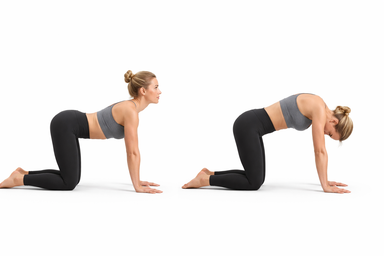
How to
A gentle spine mobility move that alternates rounding and arching your back on hands and knees.
- Start on hands and knees with wrists under shoulders and knees under hips.
- Inhale and drop your belly as you lift your chest and tailbone.
- Exhale and round your back, tucking your chin and tailbone.
- Move slowly between both positions with your breath.
- Move one vertebra at a time.
- Keep your shoulders away from your ears.
- Forcing your neck up or down.
- Rushing through the movement.
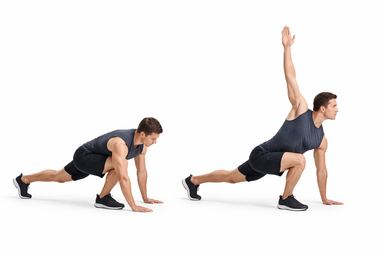
How to
A dynamic lunge stretch that opens your hips, hamstrings, and upper back as you alternate sides.
- Start in a high plank with hands under shoulders.
- Step your right foot outside your right hand.
- Drop your hips, then rotate your right arm up toward the ceiling.
- Place your hand down and step back to plank.
- Repeat on the left side, alternating sides each rep.
- Keep your front foot flat.
- Reach long through your top hand.
- Letting your front heel lift off the floor.
- Rushing the rotation without control.
Mobility Circuit A
Prioritize posture: squeeze glute on the down-knee side during hip flexor stretching.
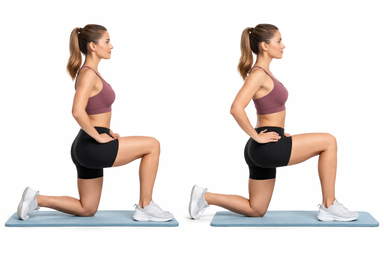
How to
A half-kneeling stretch for the front of your hip and thigh on the back leg.
- Kneel with one knee down and the other foot in front.
- Stack your ribs over your hips and gently tuck your pelvis.
- Shift your hips forward until you feel a stretch in the back-leg hip.
- Hold the stretch and breathe slowly.
- Finish the hold, then switch sides.
- Squeeze the back-leg glute.
- Keep your chest tall.
- Arching your lower back to get lower.
- Letting the front knee collapse inward.
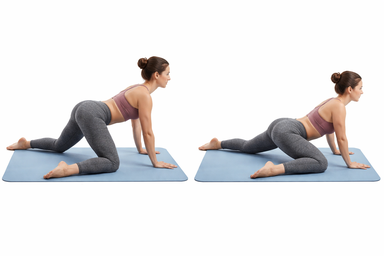
How to
A floor mobility drill that opens your inner thighs and hips with a gentle rock back.
- Start on hands and knees with your knees wide and toes turned out.
- Keep your hands under your shoulders and your spine long.
- Slowly push your hips back toward your heels.
- Pause briefly when you feel a stretch in your inner thighs.
- Rock forward to the start and repeat.
- Move slowly and stay relaxed
- Keep your back long
- Forcing into a painful range
- Rounding your back as you rock back
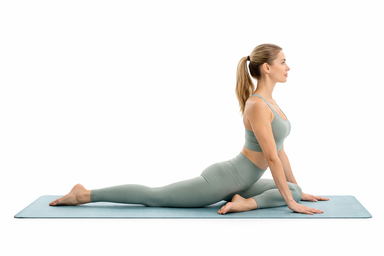
How to
A floor hip stretch for the front-leg glutes and outer hip while opening the back hip.
- Start on hands and knees, then bring one knee toward the same-side wrist.
- Angle your front shin across the mat and slide the other leg back.
- Square your hips forward and lower onto your hands, forearms, or a support.
- Hold the stretch and breathe slowly.
- Come out carefully, then switch sides.
- Keep both hips facing forward.
- Relax your shoulders and jaw.
- Letting one hip drop hard to the floor.
- Forcing the front knee into a sharp angle.
Mobility Circuit B
Stay tall through the chest; keep feet active (tripod foot) in the squat work.
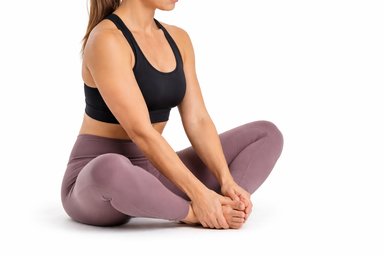
How to
A seated hip stretch that targets your inner thighs and groin.
- Sit tall and bring the soles of your feet together.
- Let your knees fall out to the sides.
- Hold your feet or ankles and lengthen through your spine.
- Relax your thighs and hold, breathing slowly.
- Keep your chest lifted
- Let your knees drop naturally
- Forcing your knees down with your hands
- Rounding your back to reach your feet
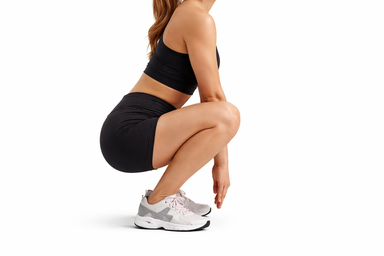
How to
A deep squat position held in place to train your legs, hips, and posture.
- Stand with your feet about shoulder-width apart, toes slightly out.
- Lower into your deepest comfortable squat.
- Keep your chest up and your heels down.
- Hold the position and breathe steadily.
- Stand up with control when the hold is done.
- Keep your chest proud.
- Press knees in line with toes.
- Letting your heels lift off the floor.
- Rounding your back at the bottom.
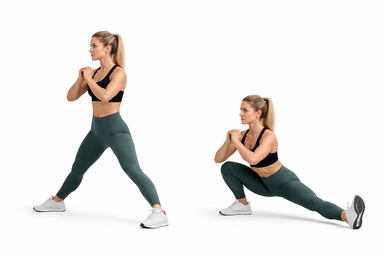
How to
A side-to-side squat that trains your legs, hips, and groin mobility.
- Stand wide with toes slightly turned out.
- Shift your weight to one side and bend that knee.
- Keep the other leg straight with its heel down if you can.
- Push through the bent leg to return to center.
- Repeat to the other side, alternating each rep.
- Keep your chest lifted.
- Track your knee over your toes.
- Letting the bent knee cave inward.
- Rounding your back at the bottom.
Cool-Down
Settle the nervous system and recheck squat comfort with calm breathing. — Breathe slowly and revisit a comfortable squat depth with control.
How to
A deep squat position held in place to train your legs, hips, and posture.
- Stand with your feet about shoulder-width apart, toes slightly out.
- Lower into your deepest comfortable squat.
- Keep your chest up and your heels down.
- Hold the position and breathe steadily.
- Stand up with control when the hold is done.
- Keep your chest proud.
- Press knees in line with toes.
- Letting your heels lift off the floor.
- Rounding your back at the bottom.
How to
A seated hip stretch that targets your inner thighs and groin.
- Sit tall and bring the soles of your feet together.
- Let your knees fall out to the sides.
- Hold your feet or ankles and lengthen through your spine.
- Relax your thighs and hold, breathing slowly.
- Keep your chest lifted
- Let your knees drop naturally
- Forcing your knees down with your hands
- Rounding your back to reach your feet

Unlocking the Posterior Chain for Squat Depth
Cat-Cow primes lumbar segmentation before load, while the World's Greatest Stretch targets the t-spine, hip flexors, and adductors in one compound pattern — the exact tissues that restrict squat depth. Pigeon and Half-Kneeling Hip Flexor Stretch then isolate the iliopsoas and piriformis, the two structures most responsible for anterior pelvic tilt under load.

Why Squatters Live and Die by Hip Capsule Mobility
Deep squatting demands simultaneous hip flexion past 120°, external rotation, and ankle dorsiflexion — a combination that exposes tightness in the adductors and hip capsule immediately. The Adductor Rock Back and Butterfly Stretch directly address the groin's passive stiffness that pulls your knees in and cuts depth short before your quads even engage.

End-Range Loading as the Real Adaptation Signal
The Deep Squat Hold and Cossack Squat aren't passive stretches — they apply low-level tensile stress at end range, signaling connective tissue remodeling through mechanotransduction. To personalize this routine, add a 2-second pause at your deepest uncomfortable point in the Cossack Squat each week, progressively extending your functional range rather than just visiting it.