
Clean & Minimal AI Powered Fitness Routines
Download AppDiscreet No-Equipment Mobility for Neck Pain and Sprained Ankle
A quiet, anywhere routine to reduce neck tension and rebuild ankle stability without aggravating low back pain.
Discreet No-Equipment Mobility for Neck Pain and Sprained Ankle
A quiet, anywhere routine to reduce neck tension and rebuild ankle stability without aggravating low back pain.
Discreet Reset
Neck and posture focus. Downshift tension, restore neck position, and wake up upper-back support without stressing the low back.
How to
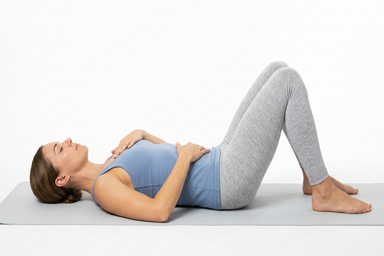
A slow breathing drill that trains relaxed belly breathing and helps you control your breath.
- Lie on your back or sit tall with one hand on your belly.
- Inhale through your nose and let your belly rise.
- Exhale slowly and let your belly fall.
- Keep your chest and shoulders quiet.
- Continue for the set time with smooth breaths.
- Breathe low into your belly
- Keep your shoulders relaxed
- Shrugging your shoulders as you inhale
- Forcing the breath or holding tension
How to
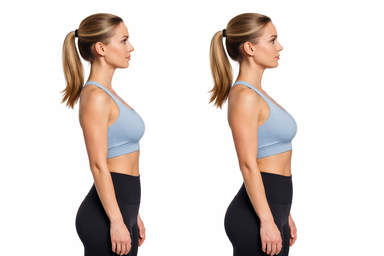
A small neck position hold that trains the front of your neck and helps control head position.
- Sit or stand tall with your eyes looking straight ahead.
- Gently slide your chin straight back, like making a double chin.
- Keep your head level and your jaw relaxed.
- Hold the tuck and breathe slowly.
- Release to neutral, then repeat for the set.
- Move straight back, not down.
- Keep your shoulders relaxed.
- Tilting your head up or down.
- Forcing the tuck or clenching your jaw.
How to
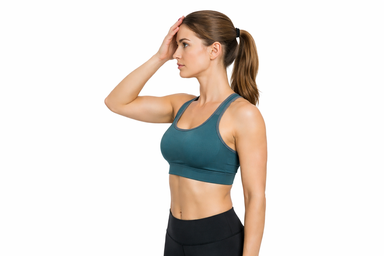
An isometric neck side bend that trains neck muscles and side-to-side stability.
- Sit or stand tall with your shoulder relaxed.
- Place your hand against the side of your head.
- Press your head into your hand without moving.
- Hold and breathe steadily, then relax.
- Finish your reps, then switch sides.
- Keep your neck tall
- Press gently, not hard
- Tilting your head instead of holding still
- Shrugging your shoulder up toward your ear
How to
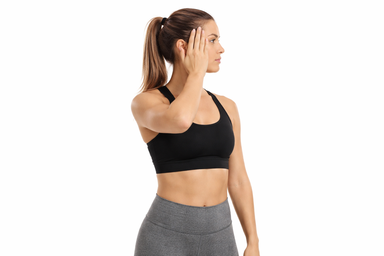
A neck isometric that trains rotation strength by pressing your head into your hand without moving.
- Sit or stand tall with your head facing forward.
- Place one hand against the side of your jaw or cheek.
- Try to turn your head into your hand, but do not let it move.
- Hold steady and breathe slowly.
- Relax, finish your holds, then switch sides.
- Keep your chin level.
- Use gentle, steady pressure.
- Twisting your neck during the hold.
- Shrugging your shoulders up.
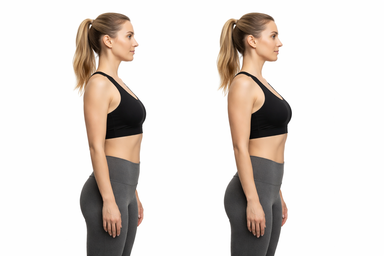
How to
A small shoulder blade squeeze that trains your upper back and shoulder control.
- Stand or sit tall with your arms relaxed by your sides.
- Pull your shoulder blades back and slightly down.
- Pause briefly while keeping your ribs stacked.
- Release with control to the start position.
- Repeat for the set.
- Keep your neck relaxed
- Move from your shoulder blades
- Shrugging your shoulders toward your ears
- Arching your lower back to create the squeeze
Ankle Mobility and Foot Control
Move slow and controlled. Keep pain ≤ 2–3/10. If toe yoga cramps, reduce range.
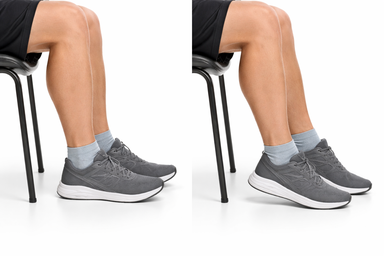
How to
A simple ankle movement that warms your calves and shins and moves both ankles through flex and point.
- Sit or lie down with both legs extended and relaxed.
- Pull your toes toward your shins on both feet.
- Point your toes away from you on both feet.
- Move smoothly back and forth for the set.
- Keep your knees still
- Use a full, smooth range
- Bouncing or jerking the ankles
- Letting your legs tense up
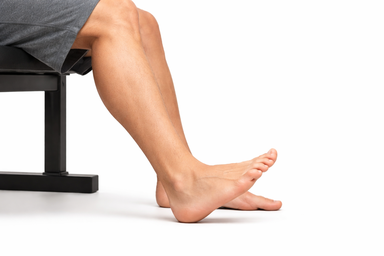
How to
A simple ankle mobility drill where you trace letters with your foot to move the ankle in many directions.
- Sit tall or lie down with one leg extended.
- Lift one foot slightly off the floor.
- Use your big toe to trace the alphabet in the air.
- Move from the ankle, not from your whole leg.
- Finish the alphabet, then switch sides.
- Keep the movement slow and controlled.
- Make each letter as large as you can.
- Swinging your whole leg to draw the letters.
- Rushing through the alphabet.
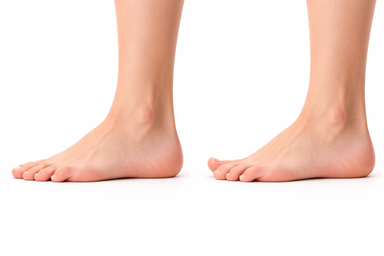
How to
A foot control drill that trains your toe muscles and arch awareness.
- Stand or sit with both feet flat and toes pointing forward.
- Lift both big toes while keeping the other toes down.
- Lower your big toes, then lift the four small toes on each foot.
- Move slowly and keep the balls of your feet on the floor.
- Repeat, alternating big toes and small toes with control.
- Keep your arches gently lifted
- Move only your toes
- Letting your feet roll in or out
- Clawing the toes instead of lifting them
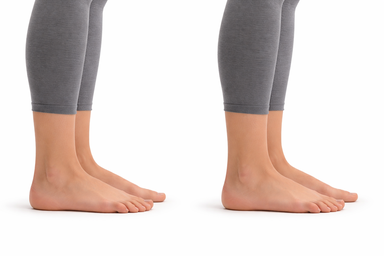
How to
An isometric foot exercise that trains your arches and small foot muscles.
- Stand or sit with both feet flat and toes relaxed.
- Gently draw the balls of your feet toward your heels.
- Lift your arches without curling your toes.
- Hold the shape and breathe.
- Relax your feet and repeat.
- Keep your toes long.
- Use a gentle squeeze.
- Curling your toes to make the arch.
- Rolling to the outside edges of your feet.
Balance and Calf Strength
Balance barefoot if possible. Keep the arch gently lifted (don't claw toes).
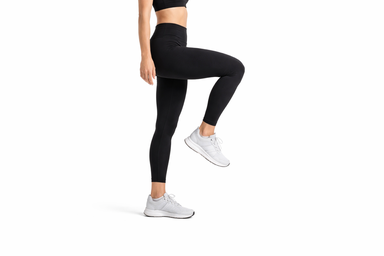
How to
A one-leg standing hold that trains balance and stability in your foot, ankle, and hips.
- Stand tall with feet hip-width apart and arms relaxed.
- Shift your weight onto one foot and lift the other foot off the floor.
- Hold steady, keep your torso tall, and breathe slowly.
- Lower your foot with control, then switch legs.
- Keep your hips level
- Look at one spot ahead
- Letting your hips twist or drop
- Holding your breath
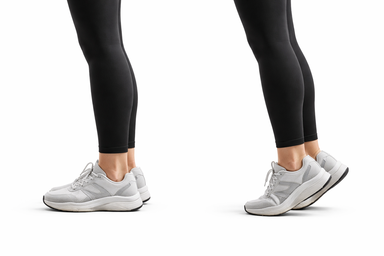
How to
A standing lower-leg move that trains your calves by lifting and lowering your heels.
- Stand tall with both feet hip-width apart.
- Press through the balls of your feet and lift your heels.
- Pause briefly at the top with control.
- Lower your heels slowly back to the floor.
- Repeat for your reps.
- Keep your ankles tracking straight.
- Move up and down with control.
- Rocking onto the outside edges of your feet.
- Bouncing at the bottom of each rep.

Isometrics First: Healing Without Loading
Chin Tucks and Neck Isometric Side Bends recruit deep cervical flexors like longus colli without compressive spinal loading, making them ideal when inflammation or guarding is present. Scapular Retraction simultaneously deactivates overactive upper traps, addressing the postural chain that feeds neck tension from the thoracic spine upward.

Ankle Sprain Recovery Demands Neuromuscular Re-Edu
Inversion sprains damage the ATFL and disrupt proprioceptive nerve endings, meaning strength alone won't restore stability — your nervous system needs retraining. Ankle Alphabet and Toe Yoga rebuild distal motor control, while Short-Foot and Single-Leg Balance progressively reload the peroneal and intrinsic foot muscles that failed during injury.

Sequencing That Protects Your Low Back
Diaphragmatic Breathing opens every session to engage the transverse abdominis, creating intra-abdominal pressure that shields the lumbar spine before any standing work begins. Progressing from Ankle Pumps to Calf Raises follows a load-tolerance model — restoring range before adding force — so you can advance Single-Leg Balance duration as a personal marker of readiness.