
Clean & Minimal AI Powered Fitness Routines
Download AppIntermediate Kettlebell Sport Session
A 25-minute kettlebell sport-focused session emphasizing efficient breathing, rack position, and steady pacing.
Intermediate Kettlebell Sport Session
A 25-minute kettlebell sport-focused session emphasizing efficient breathing, rack position, and steady pacing.
Warm-Up
5 minutes. Raise temperature, prep shoulders/hips, and groove the hinge.
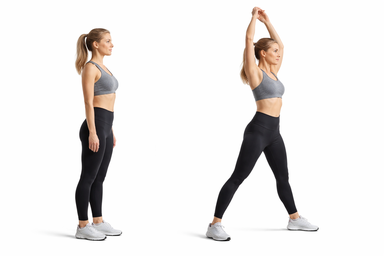
How to
A full-body cardio move that trains coordination, calves, shoulders, and hips.
- Stand tall with feet together and arms at your sides.
- Jump your feet out as you raise your arms overhead.
- Jump your feet back together as you lower your arms.
- Repeat at a steady pace, landing softly each time.
- Stay light on your toes
- Keep your chest tall
- Landing hard with locked knees
- Letting your arms swing out of control
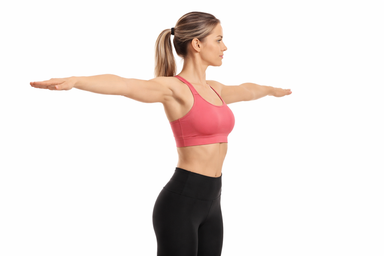
How to
A simple shoulder warm-up that moves both arms in circles and trains shoulder control.
- Stand tall with your feet about hip-width apart.
- Raise both arms out to your sides at shoulder height.
- Make small, controlled circles with both arms.
- Keep circling for the set time, then reverse direction if told.
- Lower your arms to finish.
- Keep your ribs down
- Move smoothly, not fast
- Shrugging your shoulders toward your ears
- Arching your back to keep the arms up
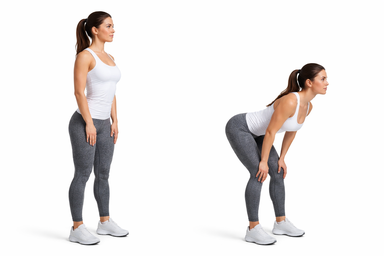
How to
A standing hip hinge that trains your glutes and hamstrings and builds the pattern for deadlifts.
- Stand with feet hip-width apart and knees slightly bent.
- Brace your core and keep your chest open.
- Push your hips back as your torso tips forward.
- Lower until you feel your hamstrings, keeping your back flat.
- Drive your hips forward to stand tall again.
- Move from your hips, not your waist.
- Keep your back long.
- Squatting instead of hinging your hips back.
- Rounding your back as you lower.
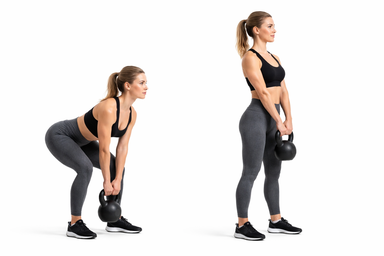
How to
A two-leg hip hinge with a kettlebell that trains your glutes, hamstrings, and back.
- Stand with feet hip-width, kettlebell between your feet.
- Hinge at your hips and grip the handle with both hands.
- Brace your core, then stand tall by driving your hips forward.
- Lower the kettlebell back to the floor with control.
- Keep your back flat.
- Push the floor away.
- Squatting instead of hinging at the hips.
- Letting the kettlebell drift away from you.
Long Cycle Assistance Circuit
Prioritize technique. Switch hands as needed while keeping the interval continuous.
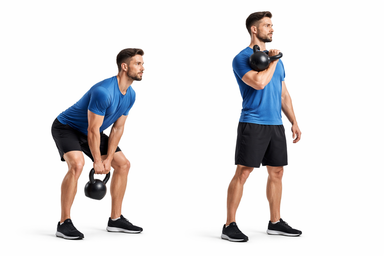
How to
A one-arm kettlebell lift to the rack that trains your hips, back, shoulders, and grip.
- Stand with feet hip-width and the bell just in front of one foot.
- Hinge at your hips and grip the handle with one hand.
- Hike the bell back, then snap your hips forward to drive it up.
- Keep it close and catch it softly in the front rack.
- Lower with control into the next rep or to the floor.
- Finish your reps, then switch sides.
- Keep the bell close to your body
- Use your hips, not just your arm
- Letting the bell crash onto your forearm
- Curling the bell away from your body
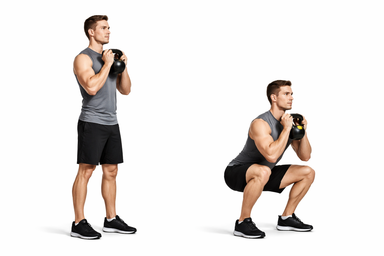
How to
A front-loaded squat that trains your quads, glutes, and core.
- Hold the kettlebell at your chest with both hands.
- Stand with feet about shoulder-width apart, toes slightly out.
- Bend your knees and hips to squat down under control.
- Lower until your thighs are near parallel, or as far as comfortable.
- Drive through your feet to stand tall again.
- Keep your chest up
- Knees track over toes
- Letting your knees cave inward
- Rounding your back at the bottom
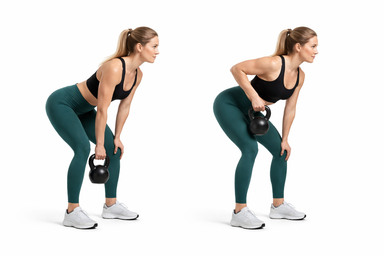
How to
A one-arm rowing move that trains your upper back, lats, and arms.
- Stand hinged at your hips with one hand braced and a kettlebell in the other.
- Let the kettlebell hang under your shoulder with your back flat.
- Pull your elbow up and back until the kettlebell reaches your ribs.
- Lower it with control to the start position.
- Finish your reps, then switch sides.
- Keep your chest facing the floor.
- Pull your elbow toward your hip.
- Twisting your torso as you row.
- Shrugging your shoulder toward your ear.
Jerk Interval
From rack to overhead lockout. Keep legs driving; avoid pressing early.
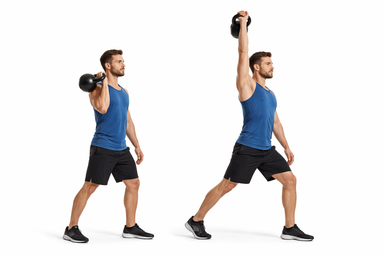
How to
A powerful overhead lift that uses your legs and arms to train shoulders, legs, and coordination.
- Hold the kettlebell in the rack position with your feet about hip-width apart.
- Dip your knees slightly while keeping your chest tall.
- Drive up hard with your legs and send the kettlebell overhead.
- Dip again to catch it with your arm locked out overhead.
- Stand tall, then lower it back to the rack with control.
- Use your legs to drive the bell.
- Keep your wrist stacked over your elbow.
- Pressing it up slowly with only your arm.
- Leaning back as the kettlebell goes overhead.
Cool-Down
3 minutes. Downshift breathing and open hips/chest after overhead work.
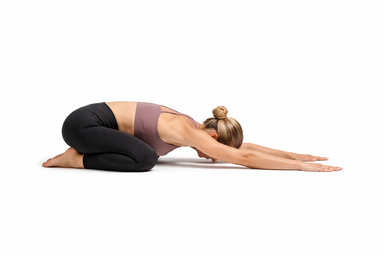
How to
A kneeling rest pose that gently stretches your back, hips, and shoulders.
- Kneel on the floor with your big toes together and knees apart.
- Sit your hips back toward your heels.
- Fold forward and reach your arms in front of you.
- Rest your forehead down and let your chest sink between your thighs.
- Hold the position and breathe slowly.
- Relax your shoulders
- Breathe into your back
- Forcing your hips down
- Holding your breath
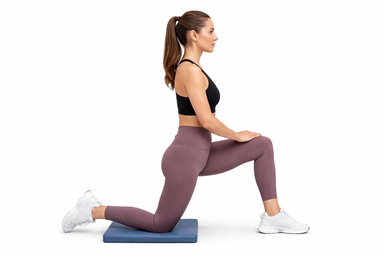
How to
A kneeling stretch for the front of your hip. It targets the hip flexors on one side at a time.
- Kneel with one knee down and the other foot in front.
- Tuck your pelvis slightly and keep your chest tall.
- Shift your hips forward until you feel a gentle stretch.
- Hold the position and breathe steadily.
- Finish the hold, then switch sides.
- Squeeze the glute on the back leg
- Keep your ribs stacked over your hips
- Arching your lower back to get deeper
- Letting the front knee cave inward
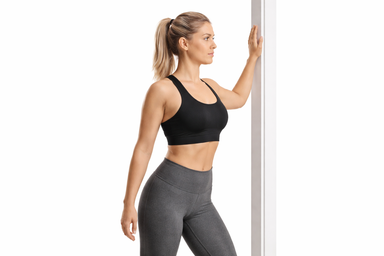
How to
A chest stretch that opens the pecs using a wall or doorway. Hold and breathe to ease tension in the front of the shoulders.
- Stand beside a wall or doorway and place your forearm on it.
- Keep your elbow near shoulder height with your palm facing forward.
- Step or turn your body away until you feel a chest stretch.
- Hold the stretch and breathe slowly.
- Release gently, then repeat on the other side if needed.
- Keep your chest lifted
- Relax your shoulder down
- Twisting hard through your lower back
- Letting your shoulder shrug toward your ear

Why the Clean-to-Jerk Sequence Dominates
The clean and jerk pairing trains the posterior chain and overhead lockout as one continuous power expression, demanding precise hip snap, rack absorption, and lat engagement to protect the wrist under load. The deadlift and swing earlier in the session pre-activate the glutes and hamstrings so your clean arrives with stored elastic energy rather than raw muscular effort.

The Rack Position Is Your Engine Room
Kettlebell sport separates itself from general fitness through the rack — a compressed, breath-governed position where the bell rests on the forearm and shoulder, not the hand. Fatigue accumulates fastest when athletes fight the rack instead of surrendering into it, making breathing cadence and lat tension the real performance limiters across any timed set.

Pacing Before Power: The 25-Minute Rule
This session uses submaximal loading across the swing, clean, and jerk to train aerobic efficiency within the phosphocreatine-to-glycolytic transition zone, building the work capacity that sustains competition pace. Personalize it by tracking your rep cadence on the jerk — if it drops more than 20% by the final minute, reduce load one step before increasing set duration.