
Clean & Minimal AI Powered Fitness Routines
Download App25-Minute Deep Core
Intermediate deep core strength focused on control, breathing, and trunk stability (~25 min).
25-Minute Deep Core
Intermediate deep core strength focused on control, breathing, and trunk stability (~25 min).
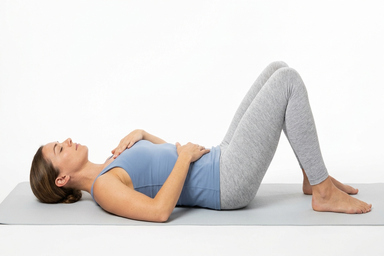
Breath + Brace
Slow nasal inhale, long exhale; feel ribs come down and abs gently tighten.
How to
A slow breathing drill that trains relaxed belly breathing and helps you control your breath.
- Lie on your back or sit tall with one hand on your belly.
- Inhale through your nose and let your belly rise.
- Exhale slowly and let your belly fall.
- Keep your chest and shoulders quiet.
- Continue for the set time with smooth breaths.
- Breathe low into your belly
- Keep your shoulders relaxed
- Shrugging your shoulders as you inhale
- Forcing the breath or holding tension
Activation Round
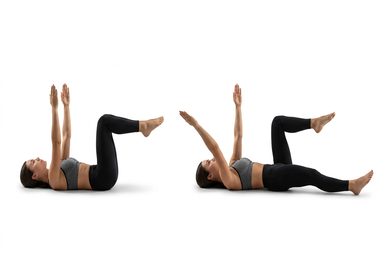
Smooth reps; keep low back gently pressed toward the mat on dead bugs.
How to
A core move on your back that trains control while you move opposite arm and leg.
- Lie on your back with arms up and knees bent over hips.
- Press your lower back gently toward the floor.
- Lower one arm and the opposite leg with control.
- Return to the start, then repeat on the other side.
- Keep alternating sides for each rep.
- Move slow and stay braced
- Keep your ribs down
- Letting your lower back arch
- Rushing through the reps
How to
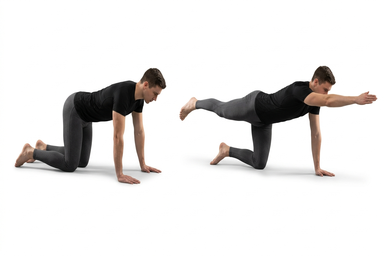
A core stability move from all fours that trains your abs, back, glutes, and balance.
- Start on hands and knees with your hands under shoulders and knees under hips.
- Brace your core and keep your back flat.
- Reach one arm forward and the opposite leg back until they are straight.
- Pause briefly, then bring your hand and knee back under you.
- Repeat on the other side, alternating each rep.
- Keep your hips square
- Move slow and controlled
- Arching or sagging your lower back
- Rotating your hips as you reach
Circuit A
Stay strict: ribs down, glutes lightly on, steady breathing.
How to
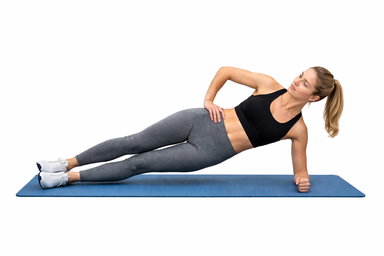
A side hold that trains your obliques, hips, and shoulder stability.
- Lie on one side with your elbow under your shoulder and legs stacked.
- Lift your hips until your body forms a straight line.
- Hold the position and breathe steadily.
- Lower your hips with control.
- Finish your hold, then switch sides.
- Keep your hips stacked
- Press the floor away
- Letting your hips sag
- Rolling your chest toward the floor
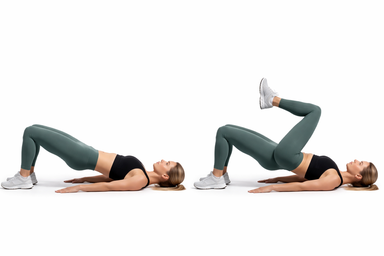
How to
A glute bridge variation that trains your glutes and core while you march your feet.
- Lie on your back with knees bent, feet flat, and arms by your sides.
- Drive through your heels and lift your hips into a bridge.
- Brace your core and lift one foot a few inches off the floor.
- Set it down, then lift the other foot. Keep alternating.
- Lower your hips with control when the set is done.
- Keep your hips level
- Squeeze your glutes
- Letting your hips drop as you march
- Arching your lower back
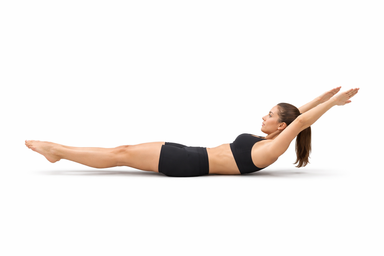
How to
A core hold on your back that trains bracing and body tension.
- Lie on your back with arms overhead and legs straight.
- Press your lower back into the floor and brace your core.
- Lift your shoulders, arms, and legs slightly off the floor.
- Hold the shape and breathe with control.
- Lower to the floor when the hold is done.
- Keep your lower back pressed down
- Reach long through hands and toes
- Letting your lower back arch off the floor
- Holding your breath
Circuit B
Resist twisting and shifting; move slowly and quietly.

How to
A plank variation where you tap each shoulder in turn to train your core, shoulders, and balance.
- Start in a high plank with hands under shoulders and feet set wide.
- Brace your core and keep your body in a straight line.
- Lift one hand and tap the opposite shoulder.
- Place it back down, then alternate sides each rep.
- Keep your hips still
- Press the floor away
- Rocking your hips side to side
- Letting your lower back sag
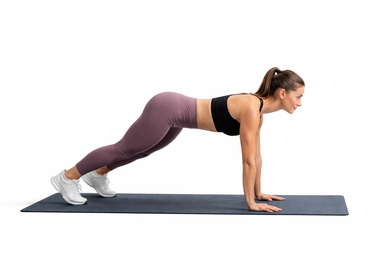
How to
A plank hold on hands and toes that trains your core, shoulders, and glutes.
- Start on hands and toes with knees off the floor.
- Brace your core and keep your back flat.
- Hold still and breathe in short, steady breaths.
- Stop when form slips or you feel sharp pain.
- Keep your hips level
- Press the floor away
- Letting your hips sag
- Raising your hips too high
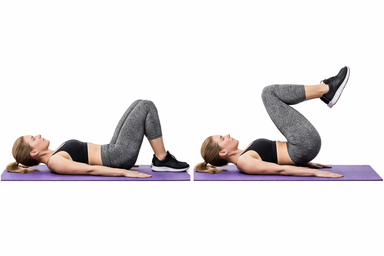
How to
A floor core move that curls your hips toward your ribs to train your abs.
- Lie on your back with knees bent and feet lifted.
- Brace your abs and press your lower back into the floor.
- Curl your hips up, bringing your knees toward your chest.
- Lower your hips with control and keep your feet off the floor.
- Repeat for the set.
- Move from your abs, not momentum.
- Keep your neck relaxed.
- Swinging your legs to lift your hips.
- Letting your lower back arch as you lower.

Intra-Abdominal Pressure as Your Foundation
Dead Bug and Hollow Hold target the transverse abdominis and pelvic floor in tandem, training your body to generate intra-abdominal pressure — the invisible force that stabilizes your spine under load. Diaphragmatic Breathing primes this system first, ensuring the deep canister muscles are online before any movement demand is placed on them.

Why Deep Core Fails Under Real Demands
The superficial abs often dominate, leaving the multifidus and transverse abdominis undertrained and slow to fire. Bird Dog and Bear Plank specifically challenge anti-rotation stability — the exact demand your deep core faces during asymmetrical loading, single-leg movement, and rotational sport.

Anti-Movement Before Movement: The Right Order
This routine sequences isometric anti-extension (Hollow Hold, Plank Shoulder Tap) before dynamic patterns (Glute Bridge March, Reverse Crunch), building neural control before adding limb load. To personalize, extend your Hollow Hold hold time by 5 seconds each week — that single metric tracks your deep core endurance progression precisely.