
Clean & Minimal AI Powered Fitness Routines
Download App25-Minute Chronic Low Back Pain Routine
A low-impact mobility + core stability session to help manage chronic low back pain in ~25 minutes.
25-Minute Chronic Low Back Pain Routine
A low-impact mobility + core stability session to help manage chronic low back pain in ~25 minutes.
Warm-Up
Gentle mobility and core prep to reduce stiffness and prepare the trunk and hips for stability work.
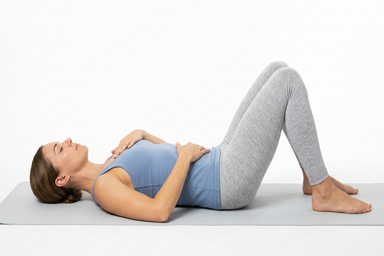
How to
A slow breathing drill that trains relaxed belly breathing and helps you control your breath.
- Lie on your back or sit tall with one hand on your belly.
- Inhale through your nose and let your belly rise.
- Exhale slowly and let your belly fall.
- Keep your chest and shoulders quiet.
- Continue for the set time with smooth breaths.
- Breathe low into your belly
- Keep your shoulders relaxed
- Shrugging your shoulders as you inhale
- Forcing the breath or holding tension
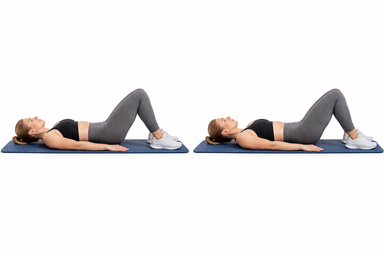
How to
A gentle floor move that trains pelvic control and engages your lower abs and glutes.
- Lie on your back with knees bent and feet flat on the floor.
- Exhale and tilt your pelvis to press your lower back toward the floor.
- Inhale and slowly return to your starting curve.
- Repeat with smooth, controlled movement.
- Move from your pelvis, not your ribs.
- Keep your shoulders relaxed.
- Holding your breath during the tilt.
- Pushing hard through your feet.
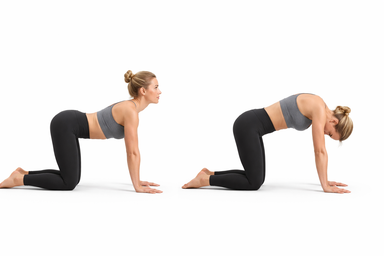
How to
A gentle spine mobility move that alternates rounding and arching your back on hands and knees.
- Start on hands and knees with wrists under shoulders and knees under hips.
- Inhale and drop your belly as you lift your chest and tailbone.
- Exhale and round your back, tucking your chin and tailbone.
- Move slowly between both positions with your breath.
- Move one vertebra at a time.
- Keep your shoulders away from your ears.
- Forcing your neck up or down.
- Rushing through the movement.
Stability Circuit
Keep ribs down and pelvis level; move slowly and with control.
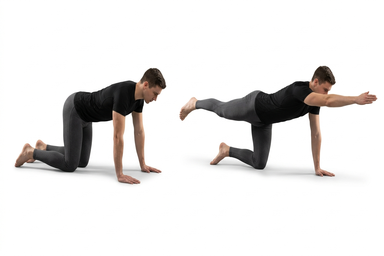
How to
A core stability move from all fours that trains your abs, back, glutes, and balance.
- Start on hands and knees with your hands under shoulders and knees under hips.
- Brace your core and keep your back flat.
- Reach one arm forward and the opposite leg back until they are straight.
- Pause briefly, then bring your hand and knee back under you.
- Repeat on the other side, alternating each rep.
- Keep your hips square
- Move slow and controlled
- Arching or sagging your lower back
- Rotating your hips as you reach
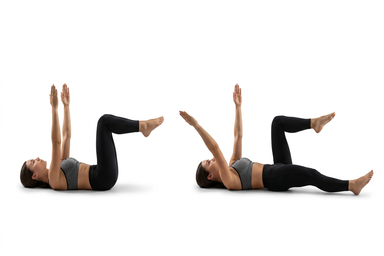
How to
A core move on your back that trains control while you move opposite arm and leg.
- Lie on your back with arms up and knees bent over hips.
- Press your lower back gently toward the floor.
- Lower one arm and the opposite leg with control.
- Return to the start, then repeat on the other side.
- Keep alternating sides for each rep.
- Move slow and stay braced
- Keep your ribs down
- Letting your lower back arch
- Rushing through the reps
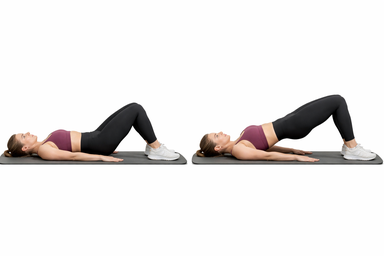
How to
A floor hip lift that trains your glutes and hamstrings with both feet planted.
- Lie on your back with knees bent and feet flat, hip-width apart.
- Brace your core and press your arms lightly into the floor.
- Drive through your heels and lift your hips until your body forms a straight line.
- Squeeze your glutes at the top, then lower with control.
- Repeat for your reps.
- Keep your ribs down
- Drive through your heels
- Arching your lower back at the top
- Pushing through your toes
Side Support
If needed, bend the bottom knee for support; keep hips stacked.
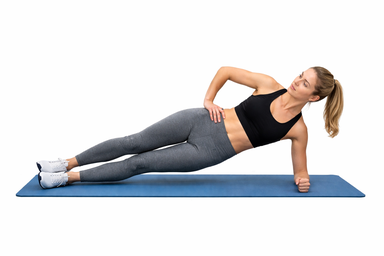
How to
A side hold that trains your obliques, hips, and shoulder stability.
- Lie on one side with your elbow under your shoulder and legs stacked.
- Lift your hips until your body forms a straight line.
- Hold the position and breathe steadily.
- Lower your hips with control.
- Finish your hold, then switch sides.
- Keep your hips stacked
- Press the floor away
- Letting your hips sag
- Rolling your chest toward the floor
Cool-Down
Decompression and flexibility work to downshift the nervous system and gently open hips and hamstrings.
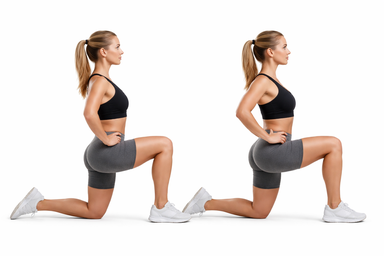
How to
A kneeling stretch for the front of your hip. It targets the hip flexors on one side at a time.
- Kneel with one foot forward and the other knee on the floor.
- Tuck your hips slightly and stand tall through your chest.
- Shift your hips forward until you feel a stretch in the back-leg hip.
- Hold and breathe slowly without bouncing.
- Release gently, then switch sides.
- Keep your ribs stacked over your hips
- Squeeze the back-leg glute lightly
- Arching your lower back to go deeper
- Bouncing in the stretch
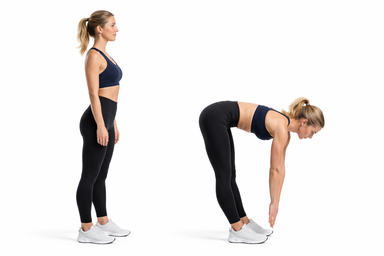
How to
A held stretch for the back of your thigh that targets your hamstrings.
- Sit tall with your target leg straight and toes up.
- Hinge at your hips and reach toward your foot.
- Stop when you feel a gentle stretch behind your thigh.
- Hold the stretch and breathe slowly.
- Release slowly, then switch sides if stretching one leg.
- Keep your back long.
- Hinge from your hips.
- Rounding your back to reach farther.
- Bouncing in the stretch.

Why Bird Dog Precedes Dead Bug Here
Bird Dog and Dead Bug both train anti-extension stability, but from opposite positions — quadruped vs. supine — systematically loading the multifidus and transverse abdominis through contralateral limb patterns. This sequencing builds lumbar control before introducing the greater intra-abdominal pressure demands of Dead Bug.

The Chronic Pain Tissue Tolerance Gap
Chronic low back pain often involves sensitized neural tissue alongside true movement deficits, meaning load tolerance fluctuates day to day in ways acute injuries don't. The Glute Bridge and Side Plank target gluteus medius and maximus weakness — a primary driver of compensatory lumbar overload — without compressive spinal forces that aggravate flare-ups.

Decompression as a Training Principle
The cool-down's Hip Flexor and Hamstring Stretches aren't passive afterthoughts — tight iliopsoas and hamstrings anteriorly tilt the pelvis and increase lumbar lordosis under load. Rate your hip flexor tightness 1–10 post-session weekly; if it stays above 6, extend that stretch to 90 seconds per side before progressing core intensity.