
Clean & Minimal AI Powered Fitness Routines
Download AppHip Labral Irritation – Intermediate 25 Minute Routine
A low-impact hip mobility + glute strengthening session designed to reduce irritation and improve hip control in ~25 minutes.
Hip Labral Irritation – Intermediate 25 Minute Routine
A low-impact hip mobility + glute strengthening session designed to reduce irritation and improve hip control in ~25 minutes.
Warm-Up
Gentle mobility to reduce guarding and find comfortable hip range before strengthening.
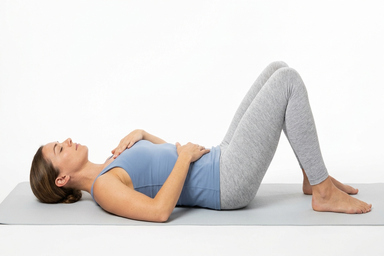
How to
A slow breathing drill that trains relaxed belly breathing and helps you control your breath.
- Lie on your back or sit tall with one hand on your belly.
- Inhale through your nose and let your belly rise.
- Exhale slowly and let your belly fall.
- Keep your chest and shoulders quiet.
- Continue for the set time with smooth breaths.
- Breathe low into your belly
- Keep your shoulders relaxed
- Shrugging your shoulders as you inhale
- Forcing the breath or holding tension
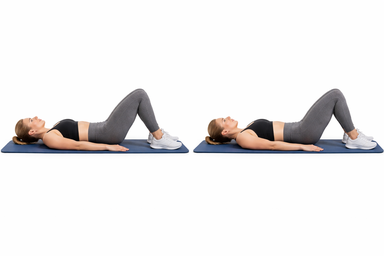
How to
A gentle floor move that trains pelvic control and engages your lower abs and glutes.
- Lie on your back with knees bent and feet flat on the floor.
- Exhale and tilt your pelvis to press your lower back toward the floor.
- Inhale and slowly return to your starting curve.
- Repeat with smooth, controlled movement.
- Move from your pelvis, not your ribs.
- Keep your shoulders relaxed.
- Holding your breath during the tilt.
- Pushing hard through your feet.
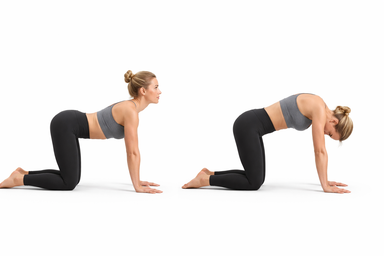
How to
A gentle spine mobility move that alternates rounding and arching your back on hands and knees.
- Start on hands and knees with wrists under shoulders and knees under hips.
- Inhale and drop your belly as you lift your chest and tailbone.
- Exhale and round your back, tucking your chin and tailbone.
- Move slowly between both positions with your breath.
- Move one vertebra at a time.
- Keep your shoulders away from your ears.
- Forcing your neck up or down.
- Rushing through the movement.
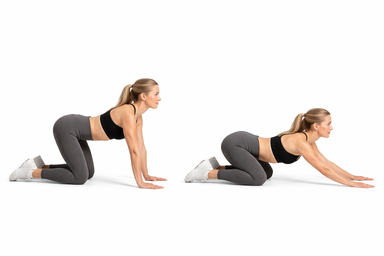
How to
A hands-and-knees rock back that moves your hips and spine while training control.
- Start on hands and knees with hands under shoulders and knees under hips.
- Brace lightly and keep your spine long.
- Push your hips back toward your heels.
- Pause briefly, then return to the start with control.
- Keep your back long
- Move slowly and smoothly
- Rounding your back hard as you rock back
- Letting your shoulders shrug toward your ears
Circuit A
Use a small, controlled range. Add a light band only if it stays pain-free.
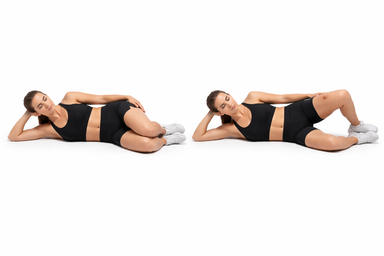
How to
A side-lying hip exercise that trains your glutes and outer hips.
- Lie on your side with knees bent and feet stacked.
- Brace your core and keep your hips stacked.
- Lift your top knee while keeping your feet together.
- Lower your knee with control to the start.
- Finish your reps, then switch sides.
- Keep your hips stacked
- Move slow and controlled
- Rolling your hips back as you lift
- Letting your feet separate
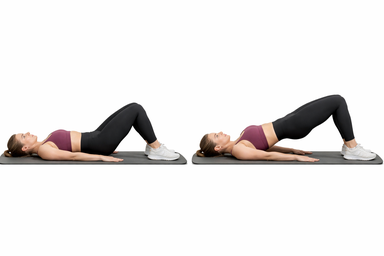
How to
A floor hip lift that trains your glutes and hamstrings with both feet planted.
- Lie on your back with knees bent and feet flat, hip-width apart.
- Brace your core and press your arms lightly into the floor.
- Drive through your heels and lift your hips until your body forms a straight line.
- Squeeze your glutes at the top, then lower with control.
- Repeat for your reps.
- Keep your ribs down
- Drive through your heels
- Arching your lower back at the top
- Pushing through your toes
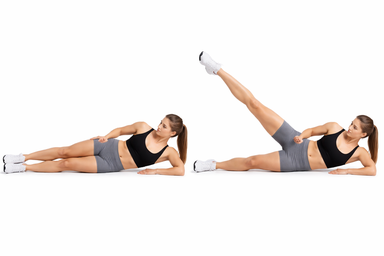
How to
A side-lying leg lift that trains your outer hips and glutes.
- Lie on your side with your legs straight and hips stacked.
- Brace your core and point your top foot straight ahead.
- Lift your top leg up without rolling your hips back.
- Lower with control to the start position.
- Finish your reps, then switch sides.
- Keep your hips stacked.
- Lead with your heel.
- Rolling your top hip back as you lift.
- Swinging the leg instead of controlling it.
Circuit B
Keep torso steady; avoid twisting through the pelvis. Steps should be small and controlled.
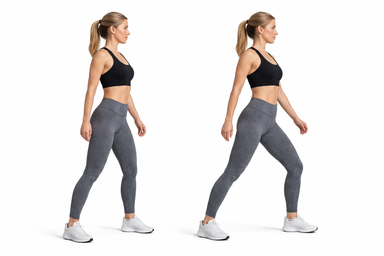
How to
A side-to-side stepping move that warms up your hips, glutes, and legs.
- Stand tall with feet hip-width apart and arms relaxed.
- Step one foot out to the side, then follow with the other foot.
- Step back the other way and keep alternating sides.
- Stay light on your feet and keep a steady rhythm.
- Keep your chest up
- Step softly with control
- Letting your knees cave inward
- Dragging your feet instead of stepping
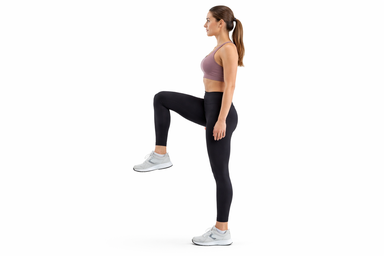
How to
A static hip flexion hold that trains your hip flexors and core without moving your legs.
- Lie on your back with both knees bent over your hips.
- Lift your feet so your hips and knees are about 90 degrees.
- Press your hands into your thighs as your thighs press back.
- Hold steady and breathe without letting your low back arch.
- Brace your core
- Keep knees over hips
- Letting your lower back lift off the floor
- Holding your breath
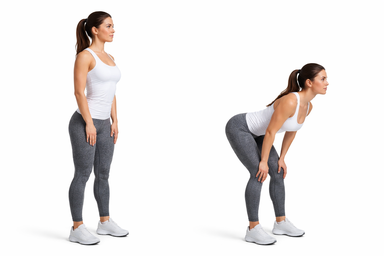
How to
A standing hip hinge that trains your glutes and hamstrings and builds the pattern for deadlifts.
- Stand with feet hip-width apart and knees slightly bent.
- Brace your core and keep your chest open.
- Push your hips back as your torso tips forward.
- Lower until you feel your hamstrings, keeping your back flat.
- Drive your hips forward to stand tall again.
- Move from your hips, not your waist.
- Keep your back long.
- Squatting instead of hinging your hips back.
- Rounding your back as you lower.
Cool-Down
Gentle stretching to decompress and restore, reducing hip flexor tone and restoring comfortable motion.
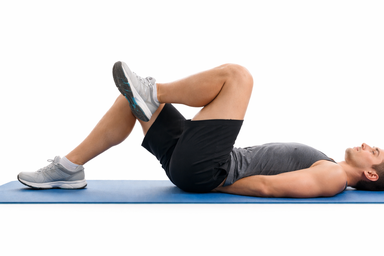
How to
A seated or lying hip stretch that targets your glutes and outer hip on one side.
- Lie on your back with both knees bent and feet flat.
- Cross one ankle over the opposite thigh, making a figure four.
- Pull the uncrossed thigh toward your chest until you feel a stretch.
- Hold and breathe, keeping your shoulders relaxed.
- Release slowly, then switch sides.
- Keep your lower back relaxed
- Flex the crossed foot
- Forcing the knee down with your hand
- Holding your breath
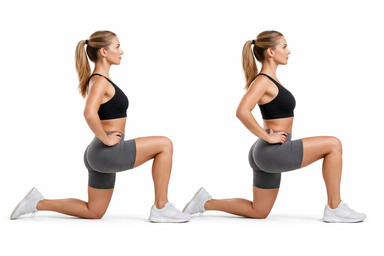
How to
A kneeling stretch for the front of your hip. It targets the hip flexors on one side at a time.
- Kneel with one foot forward and the other knee on the floor.
- Tuck your hips slightly and stand tall through your chest.
- Shift your hips forward until you feel a stretch in the back-leg hip.
- Hold and breathe slowly without bouncing.
- Release gently, then switch sides.
- Keep your ribs stacked over your hips
- Squeeze the back-leg glute lightly
- Arching your lower back to go deeper
- Bouncing in the stretch

Protecting the Labrum While Building Strength
Clamshells and side-lying abduction target gluteus medius without compressing the acetabular labrum, while isometric hip flexion builds iliopsoas strength at zero joint shear. The quadruped rock back caps range of motion intentionally — labral tissue is most vulnerable at end-range, so staying within pain-free limits lets you load without re-irritating.

Why Labral Tears Demand Neuromuscular Precision
The labrum acts as a suction seal and pressure distributor — when it's compromised, the hip loses passive stability and overloads surrounding musculature to compensate. Glute weakness and anterior pelvic tilt (both addressed here via bridges and pelvic tilts) are the two most common drivers of labral irritation, creating femoral head migration that grinds tissue with every step.

Graded Loading Before Mobility, Always
Diaphragmatic breathing and cat-cow prime the lumbopelvic rhythm before any hip loading — a critical sequencing choice, since poor thoracolumbar mobility forces the hip to compensate. The hip hinge at session's end applies the newly acquired glute control under a functional pattern. As symptoms improve, add a light resistance band to side steps to progressively challenge the abductor-stabilizer ch