
Clean & Minimal AI Powered Fitness Routines
Download AppPost-ACL Reconstruction (Intermediate) — 25 Minute Session
A knee-friendly strength + stability routine to rebuild single-leg control and confidence (~25 minutes).
Post-ACL Reconstruction (Intermediate) — 25 Minute Session
A knee-friendly strength + stability routine to rebuild single-leg control and confidence (~25 minutes).
Warm-Up (5 minutes)
Increase blood flow and gently prep knee range of motion.
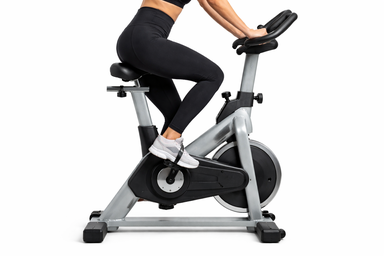
How to
A low-impact cardio exercise done on a bike that trains your legs and builds aerobic fitness.
- Adjust the seat so your knee stays slightly bent at the bottom of each pedal stroke.
- Sit tall, place your feet on the pedals, and hold the handles lightly.
- Start pedaling smoothly at an easy pace.
- Increase resistance or speed to match your workout goal.
- Ease the pace down before you stop pedaling.
- Keep your chest up
- Pedal in smooth circles
- Locking your knees at the bottom
- Hunching your shoulders over the handles
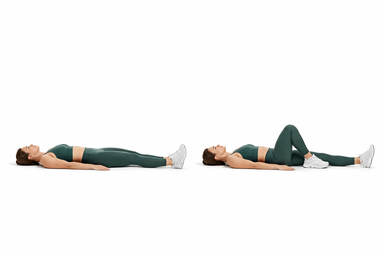
How to
A lying leg slide that trains core control and hip movement one side at a time.
- Lie on your back with knees bent and feet flat.
- Brace your core and keep your low back steady.
- Slide one heel away until your leg is almost straight.
- Pull the heel back to the start with control.
- Finish your reps, then switch legs.
- Move slowly and stay braced.
- Keep your pelvis still.
- Arching your lower back as the leg slides out.
- Letting your hips rock side to side.
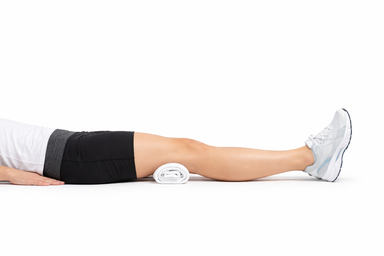
How to
An isometric thigh squeeze that trains your quad with your leg straight.
- Sit or lie with one leg straight and toes up.
- Tighten your thigh and press the back of your knee down.
- Hold the squeeze and breathe steadily.
- Relax, then repeat for your reps or time.
- Finish your set, then switch legs.
- Keep your kneecap facing up
- Squeeze the front of your thigh
- Lifting your hip off the floor
- Holding your breath
Circuit A — Hip + Knee Control
Move with control; keep pain-free range. Rest as needed to maintain form.
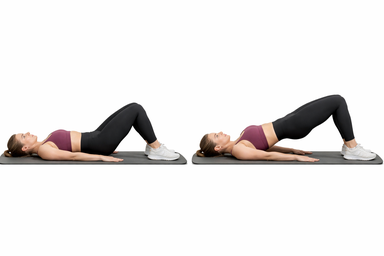
How to
A floor hip lift that trains your glutes and hamstrings with both feet planted.
- Lie on your back with knees bent and feet flat, hip-width apart.
- Brace your core and press your arms lightly into the floor.
- Drive through your heels and lift your hips until your body forms a straight line.
- Squeeze your glutes at the top, then lower with control.
- Repeat for your reps.
- Keep your ribs down
- Drive through your heels
- Arching your lower back at the top
- Pushing through your toes
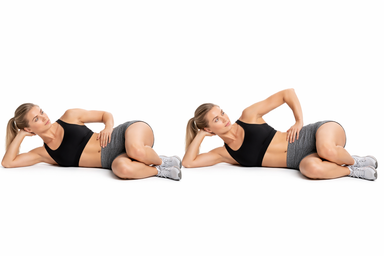
How to
A side-lying hip move that trains your outer glutes and hip rotation control.
- Lie on one side with knees bent and feet stacked.
- Brace lightly and keep your hips stacked.
- Keeping feet together, lift your top knee without rolling back.
- Lower your knee with control to the start.
- Finish your reps, then switch sides.
- Keep your hips stacked.
- Move from the hip, not the low back.
- Rolling your pelvis backward to lift higher.
- Letting your feet separate.
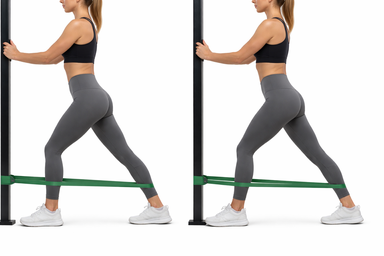
How to
A knee extension drill that trains your quads and control near a straight knee.
- Anchor a band behind one knee and step back to add light tension.
- Stand tall with that foot flat and your knee slightly bent.
- Straighten your knee by tightening your thigh.
- Pause briefly, then bend your knee with control.
- Finish your reps, then switch legs.
- Keep your foot flat
- Move from the knee, not the hips
- Letting your heel lift off the floor
- Snapping the knee back too fast
Circuit B — Functional Strength + Balance
Use a chair height that allows good knee alignment; keep steps low and controlled.
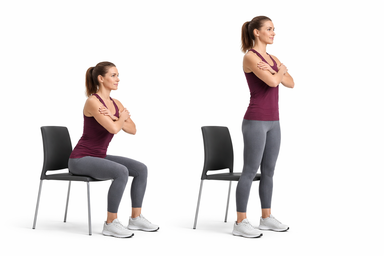
How to
A chair-based squat pattern that trains your thighs and glutes for standing strength.
- Sit near the front of a chair with feet flat and hip-width apart.
- Lean slightly forward and brace your core.
- Press through both feet and stand tall.
- Push your hips back and sit down with control.
- Keep your knees tracking over your toes
- Stand tall at the top
- Letting your knees cave inward
- Dropping hard onto the chair
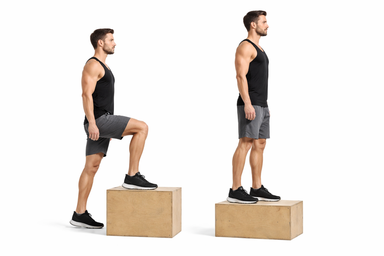
How to
A single-leg climb onto a step that trains your quads, glutes, and balance.
- Stand facing a sturdy step with one foot fully on top.
- Lean slightly forward and drive through the front foot to stand up.
- Bring your back foot onto the step with control.
- Step back down with the same back foot, then lower the front foot.
- Finish your reps, then switch legs.
- Keep your chest tall
- Drive through your whole front foot
- Pushing off too much with the back foot
- Letting your front knee cave inward
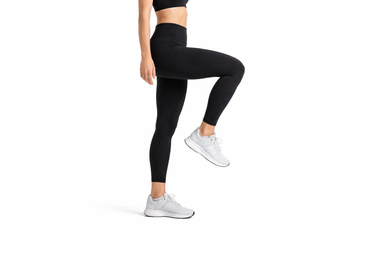
How to
A one-leg standing hold that trains balance and stability in your foot, ankle, and hips.
- Stand tall with feet hip-width apart and arms relaxed.
- Shift your weight onto one foot and lift the other foot off the floor.
- Hold steady, keep your torso tall, and breathe slowly.
- Lower your foot with control, then switch legs.
- Keep your hips level
- Look at one spot ahead
- Letting your hips twist or drop
- Holding your breath
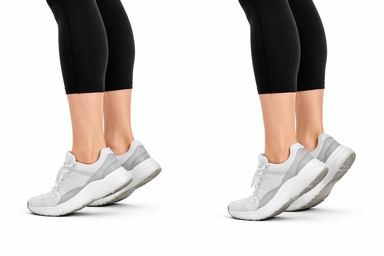
How to
A standing lower-leg move that trains your calves by lifting and lowering your heels.
- Stand tall with feet hip-width apart and toes pointing forward.
- Press through the balls of your feet and lift your heels high.
- Pause briefly at the top without leaning forward.
- Lower your heels with control to the floor.
- Keep your knees softly straight.
- Rise straight up, not forward.
- Bouncing through the reps.
- Letting your ankles roll outward.
Cool-Down (3–4 minutes)
Downshift and restore comfort after strengthening.
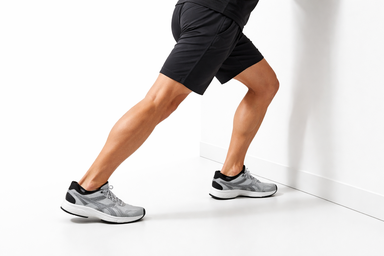
How to
A standing calf stretch that targets the back of your lower leg with a steady hold.
- Stand facing a wall and place your hands on it.
- Step one foot back and keep that heel on the floor.
- Bend your front knee until you feel a calf stretch.
- Hold and breathe slowly without bouncing.
- Finish the hold, then switch legs.
- Keep your back heel down
- Point both toes forward
- Bouncing in the stretch
- Letting the back heel lift
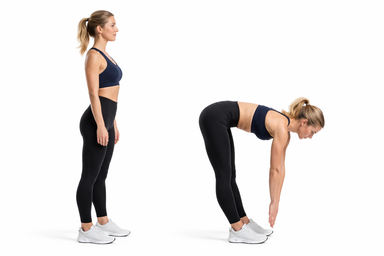
How to
A held stretch for the back of your thigh that targets your hamstrings.
- Sit tall with your target leg straight and toes up.
- Hinge at your hips and reach toward your foot.
- Stop when you feel a gentle stretch behind your thigh.
- Hold the stretch and breathe slowly.
- Release slowly, then switch sides if stretching one leg.
- Keep your back long.
- Hinge from your hips.
- Rounding your back to reach farther.
- Bouncing in the stretch.

Rebuilding the Quad-Hamstring Co-Contraction
Quad Sets and Terminal Knee Extensions specifically retrain VMO firing patterns lost after ACL injury, while Heel Slides restore hamstring length under load. Together, they rebuild the co-contraction timing that protects your reconstructed ligament before progressing to full weight-bearing movements like Step Ups.

Why Single-Leg Control Is Your Real Benchmark
ACL reconstruction doesn't just repair tissue — it severs proprioceptive nerve endings that tell your brain where your knee is in space. Single-Leg Balance and Sit-to-Stand directly retrain this neuromuscular feedback loop, which is why athletes who skip this work re-injure at dramatically higher rates even after full strength returns.

Loading the Graft Without Overloading the Joint
This routine follows a proximal-to-distal progression — Glute Bridges and Clamshells load hip abductors first, reducing valgus stress before your knee handles Step Up demands. Track your Single-Leg Balance hold time each session; when you can hold 30 seconds eyes-closed, you're ready to increase Step Up height or add a tempo challenge.