
Clean & Minimal AI Powered Fitness Routines
Download AppIntermediate Marathon Run
A 25-minute run session to build aerobic base and marathon-specific pacing.
Intermediate Marathon Run
A 25-minute run session to build aerobic base and marathon-specific pacing.
Warm-Up
Gradually raise heart rate and loosen up before steady running.
How to
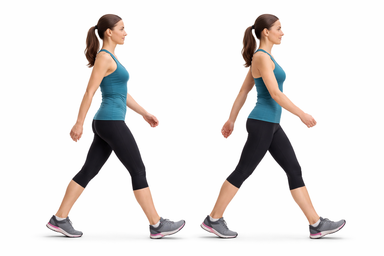
A simple walking movement that trains your legs and builds steady full-body rhythm.
- Stand tall with your feet under your hips.
- Step forward with one foot and roll from heel to toe.
- Swing the opposite arm naturally as you step.
- Push off your back foot and step forward with the other foot.
- Keep alternating steps at a steady pace.
- Stand tall
- Let your arms swing naturally
- Looking down the whole time
- Taking steps that feel too long
How to
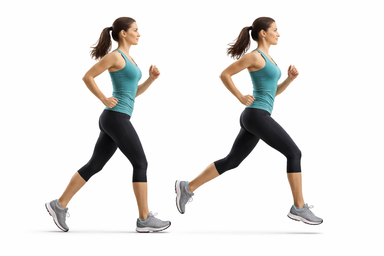
A steady forward run that trains your legs and cardio fitness.
- Stand tall and look ahead.
- Start with short, quick steps and build your pace.
- Land lightly under your hips.
- Swing your arms forward and back.
- Keep a steady rhythm until the set ends.
- Stay tall through your chest
- Land softly
- Overstriding with your foot far ahead
- Hunching your shoulders
Main Set
Marathon-pace intervals with easy jogging recoveries.
How to
A steady forward run that trains your legs and cardio fitness.
- Stand tall and look ahead.
- Start with short, quick steps and build your pace.
- Land lightly under your hips.
- Swing your arms forward and back.
- Keep a steady rhythm until the set ends.
- Stay tall through your chest
- Land softly
- Overstriding with your foot far ahead
- Hunching your shoulders
Cool-Down
Bring heart rate down and finish feeling smooth.
How to
A steady forward run that trains your legs and cardio fitness.
- Stand tall and look ahead.
- Start with short, quick steps and build your pace.
- Land lightly under your hips.
- Swing your arms forward and back.
- Keep a steady rhythm until the set ends.
- Stay tall through your chest
- Land softly
- Overstriding with your foot far ahead
- Hunching your shoulders
How to
A simple walking movement that trains your legs and builds steady full-body rhythm.
- Stand tall with your feet under your hips.
- Step forward with one foot and roll from heel to toe.
- Swing the opposite arm naturally as you step.
- Push off your back foot and step forward with the other foot.
- Keep alternating steps at a steady pace.
- Stand tall
- Let your arms swing naturally
- Looking down the whole time
- Taking steps that feel too long

Walk-Run Zones Build Lactate Threshold
Alternating walk and run intervals train your aerobic energy system by repeatedly pushing into and recovering from moderate-intensity effort. This teaches your body to clear lactate more efficiently — the exact adaptation that lets you hold marathon pace without fading in the final miles.

Marathon Pace Is a Metabolic Tightrope
The marathon demands you sustain 75–85% of VO2 max for hours, where fat and carbohydrate oxidation must work in precise balance. Running too hard too early depletes glycogen catastrophically — the walk segments in this session train your body to recognize and respect that metabolic edge before race day.

Structured Pacing Locks In Neuromuscular Economy
The warm-up and cool-down structure isn't just comfort — it primes stride mechanics and gradually recruits slow-twitch Type I fibers before demanding sustained output. To personalize this session, use the main set run segments at a pace where you can speak in short phrases but not full sentences, your most reliable real-world lactate threshold cue.