
Clean & Minimal AI Powered Fitness Routines
Download AppIntermediate Grip Strength
A 25-minute forearm and hand strength session using carries, hangs, and pinch work.
Intermediate Grip Strength
A 25-minute forearm and hand strength session using carries, hangs, and pinch work.
Warm-Up
Prepare wrists, forearms, and shoulders for loaded holds and carries. 4 minutes.
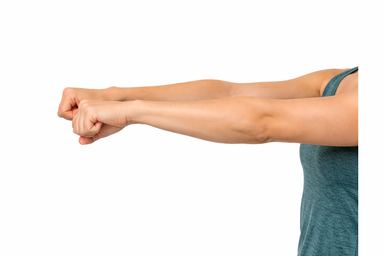
How to
A gentle wrist mobility drill that moves both wrists through circles to warm your forearms and hands.
- Stand or sit tall with your arms relaxed and elbows bent.
- Make slow circles with both wrists in one direction.
- Keep the movement smooth and controlled.
- Reverse direction and circle both wrists the other way.
- Move through a comfortable range
- Keep your shoulders relaxed
- Forcing a painful range
- Moving too fast or jerky
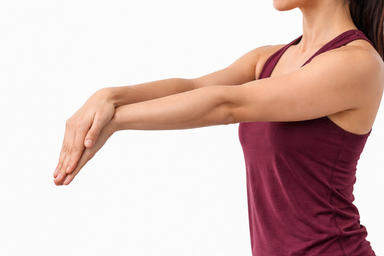
How to
A forearm stretch that targets the wrist extensors on the top side of your forearm.
- Extend one arm in front of you with your palm facing down.
- Use your other hand to gently bend your wrist down.
- Keep your elbow straight and shoulders relaxed.
- Hold the stretch and breathe slowly.
- Release gently, then switch sides.
- Keep the stretch gentle
- Relax your shoulder
- Forcing the wrist too far
- Bending the elbow during the hold
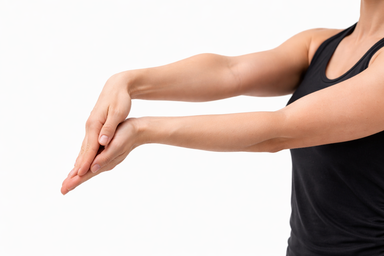
How to
A forearm stretch that targets the wrist flexors on one arm at a time.
- Extend one arm in front of you, palm up.
- Keep your elbow straight and gently pull your fingers back.
- Hold the stretch and breathe slowly.
- Release gently, then switch sides.
- Keep your shoulder relaxed
- Use gentle pressure
- Bending your elbow
- Pulling into sharp pain
Circuit A
Aim for steady holds/carries. Keep shoulders engaged on hangs (avoid hanging passively).
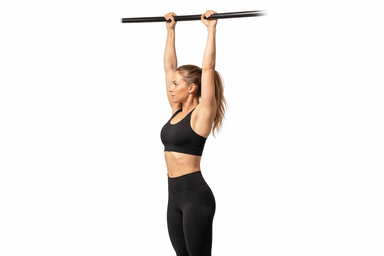
How to
A two-hand hang from an overhead bar that trains grip and upper-body hanging strength.
- Grip a sturdy overhead bar with both hands.
- Step or jump up so your arms are straight and feet are off the floor.
- Let your body hang long, with your ribs down.
- Hold for the set time and breathe slowly.
- Step down with control.
- Keep your grip firm.
- Stay still from shoulders to feet.
- Swinging or kicking your legs.
- Holding your breath during the hold.
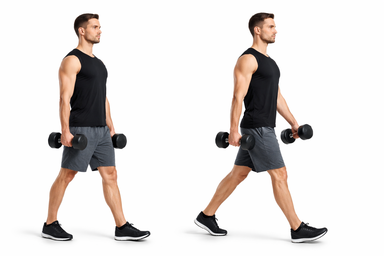
How to
A loaded walk that trains your grip, core, shoulders, and posture.
- Stand tall with a weight in each hand at your sides.
- Brace your core and pull your shoulders down and back.
- Walk forward with short, controlled steps.
- Keep the weights steady and your torso upright.
- Set the weights down with control when finished.
- Stand tall as you walk
- Keep the weights by your sides
- Leaning back or to one side
- Letting the weights swing
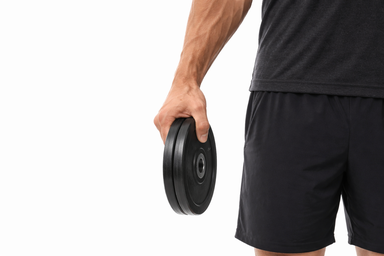
How to
An isometric grip hold using weight plates. It trains your fingers, hands, and forearms.
- Stand tall with a weight plate pinched in each hand.
- Hold the plates at your sides with arms straight.
- Keep your shoulders down and your chest tall.
- Hold for time and breathe steadily.
- Set the plates down with control.
- Pinch hard with your fingers
- Keep your wrists straight
- Letting the plates rest against your legs
- Shrugging your shoulders as you hold
Circuit B
Towel hangs increase grip demand. Keep ribs down and avoid shrugging.
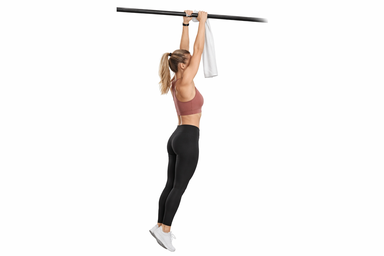
How to
A two-hand dead hang on a towel that trains your grip, lats, and shoulder stability.
- Grab a towel with both hands and hang from a bar.
- Keep your body tight and shoulders active.
- Hold steady and breathe.
- Step down when you are done.
- Keep shoulders down and active
- Squeeze the towel hard
- Relaxing into a loose shoulder shrug
- Swinging or twisting your body
How to
A loaded walk that trains your grip, core, shoulders, and posture.
- Stand tall with a weight in each hand at your sides.
- Brace your core and pull your shoulders down and back.
- Walk forward with short, controlled steps.
- Keep the weights steady and your torso upright.
- Set the weights down with control when finished.
- Stand tall as you walk
- Keep the weights by your sides
- Leaning back or to one side
- Letting the weights swing
How to
An isometric grip hold using weight plates. It trains your fingers, hands, and forearms.
- Stand tall with a weight plate pinched in each hand.
- Hold the plates at your sides with arms straight.
- Keep your shoulders down and your chest tall.
- Hold for time and breathe steadily.
- Set the plates down with control.
- Pinch hard with your fingers
- Keep your wrists straight
- Letting the plates rest against your legs
- Shrugging your shoulders as you hold
Cool-Down
Reduce forearm tightness and restore comfortable wrist range of motion. 3 minutes.
How to
A forearm stretch that targets the wrist extensors on the top side of your forearm.
- Extend one arm in front of you with your palm facing down.
- Use your other hand to gently bend your wrist down.
- Keep your elbow straight and shoulders relaxed.
- Hold the stretch and breathe slowly.
- Release gently, then switch sides.
- Keep the stretch gentle
- Relax your shoulder
- Forcing the wrist too far
- Bending the elbow during the hold
How to
A forearm stretch that targets the wrist flexors on one arm at a time.
- Extend one arm in front of you, palm up.
- Keep your elbow straight and gently pull your fingers back.
- Hold the stretch and breathe slowly.
- Release gently, then switch sides.
- Keep your shoulder relaxed
- Use gentle pressure
- Bending your elbow
- Pulling into sharp pain
How to
A gentle wrist mobility drill that moves both wrists through circles to warm your forearms and hands.
- Stand or sit tall with your arms relaxed and elbows bent.
- Make slow circles with both wrists in one direction.
- Keep the movement smooth and controlled.
- Reverse direction and circle both wrists the other way.
- Move through a comfortable range
- Keep your shoulders relaxed
- Forcing a painful range
- Moving too fast or jerky

Flexor-Extensor Balance in Every Set
Dead Hangs and Towel Hangs load the finger flexors and forearm flexors under sustained tension, while the Forearm Extensor Stretch counterbalances chronic flexor dominance that causes lateral elbow pain. Plate Pinch Holds specifically recruit the adductor pollicis and first dorsal interosseous — muscles most grip programs neglect entirely.

Why Grip Fails Before Everything Else
In carries, climbing, and pulling sports, grip is the first link to break — not the lats, not the legs. The Farmer Carry here trains crush grip under locomotion stress, forcing your forearm stabilizers to fire continuously rather than in isolated bursts, which mirrors real-world and athletic grip demands far more accurately than static holds alone.

Tendon Adaptation Drives the Timeline
Grip strength is gated by tendon and connective tissue adaptation, which lags 4–6 weeks behind muscular gains — so progressive overload here means adding hold duration before adding load. Towel Hangs are your benchmark: when 30-second sets feel controlled rather than desperate, increase Farmer Carry distance or Plate Pinch weight by one small increment.