
Clean & Minimal AI Powered Fitness Routines
Download AppIntermediate Serratus Anterior Routine
A ~25-minute session to strengthen the serratus anterior for better scapular control and shoulder stability.
Intermediate Serratus Anterior Routine
A ~25-minute session to strengthen the serratus anterior for better scapular control and shoulder stability.
Warm-Up
Prepare the shoulders and ribcage for serratus-focused work. Scapular control focus.
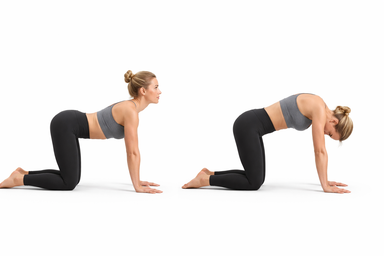
How to
A gentle spine mobility move that alternates rounding and arching your back on hands and knees.
- Start on hands and knees with wrists under shoulders and knees under hips.
- Inhale and drop your belly as you lift your chest and tailbone.
- Exhale and round your back, tucking your chin and tailbone.
- Move slowly between both positions with your breath.
- Move one vertebra at a time.
- Keep your shoulders away from your ears.
- Forcing your neck up or down.
- Rushing through the movement.
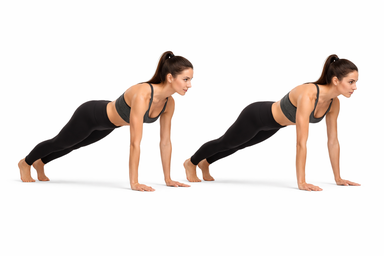
How to
A straight-arm push-up variation that trains shoulder blade control and upper back stability.
- Start in a high plank with hands under shoulders and arms straight.
- Let your chest sink slightly as your shoulder blades move together.
- Push the floor away to spread your shoulder blades apart.
- Keep your body in one straight line as you repeat.
- Keep your elbows straight
- Move only at your shoulder blades
- Bending your elbows like a regular push-up
- Letting your hips sag or pike
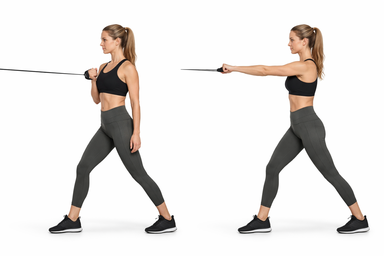
How to
A band-resisted punch that trains your serratus and shoulder control.
- Anchor the band behind you at chest height and hold it in one hand.
- Stand tall with your elbow straight and arm at shoulder height.
- Punch forward by reaching your shoulder blade around your ribs.
- Pause briefly, then control your arm back to the start.
- Finish your reps, then switch sides.
- Keep your ribs down.
- Reach from your shoulder blade.
- Shrugging your shoulder toward your ear.
- Twisting your torso as you punch.
Circuit A
Prioritize quality protraction at the top of each rep.
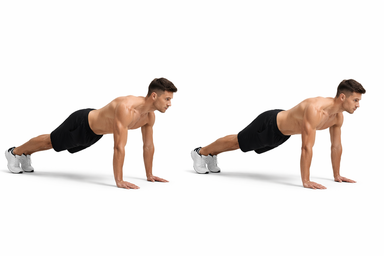
How to
A push-up with an extra reach at the top that trains your chest, triceps, and shoulder control.
- Start in a high plank with hands under shoulders and body in a straight line.
- Bend your elbows and lower your chest toward the floor.
- Press back up until your arms are straight.
- Push the floor away to spread your shoulder blades at the top.
- Let your shoulder blades settle, then repeat.
- Keep your ribs tucked
- Reach tall at the top
- Sagging your hips as you press
- Shrugging your shoulders toward your ears
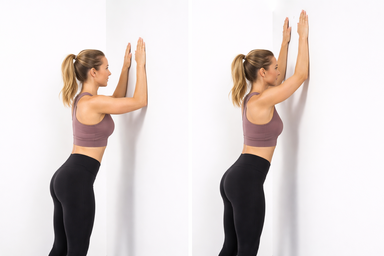
How to
A wall-based shoulder move that trains your serratus and helps control your shoulder blades.
- Stand facing a wall with your forearms on it and elbows bent.
- Press your forearms gently into the wall.
- Slide your arms up the wall without shrugging.
- Reach slightly at the top, keeping your ribs down.
- Slide back to the start with control.
- Keep your ribs down
- Let your shoulder blades glide
- Shrugging your shoulders toward your ears
- Arching your lower back as you slide up
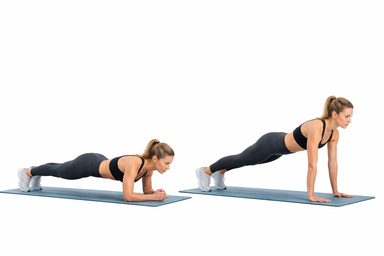
How to
A forearm plank with an upper-back push that trains your core, shoulders, and serratus.
- Set your forearms on the floor, elbows under shoulders.
- Step both feet back and make a straight line from head to heels.
- Push the floor away to spread your shoulder blades.
- Hold the position and breathe steadily.
- Lower your knees to the floor to finish.
- Ribs down, glutes tight.
- Press through your forearms.
- Letting your hips sag or pike.
- Sinking between your shoulder blades.
Circuit B
Stay quiet through the torso; minimize shifting as you tap.
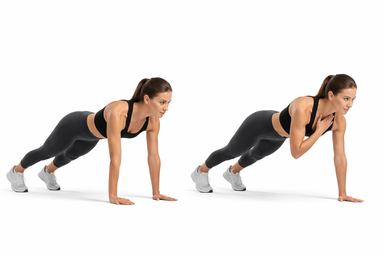
How to
A bear plank with alternating shoulder taps that trains your core, shoulders, and balance.
- Set up in a bear plank with knees hovering under your hips.
- Brace your core and tap one shoulder with the opposite hand.
- Set that hand down and tap the other shoulder.
- Keep alternating taps for your reps, then rest.
- Keep your hips level
- Move slowly and stay braced
- Rocking side to side as you tap
- Letting your hips pike up
How to
A band-resisted punch that trains your serratus and shoulder control.
- Anchor the band behind you at chest height and hold it in one hand.
- Stand tall with your elbow straight and arm at shoulder height.
- Punch forward by reaching your shoulder blade around your ribs.
- Pause briefly, then control your arm back to the start.
- Finish your reps, then switch sides.
- Keep your ribs down.
- Reach from your shoulder blade.
- Shrugging your shoulder toward your ear.
- Twisting your torso as you punch.
Cool-Down
Downshift and restore comfortable shoulder motion. Reset and breathing focus.
How to
A gentle spine mobility move that alternates rounding and arching your back on hands and knees.
- Start on hands and knees with wrists under shoulders and knees under hips.
- Inhale and drop your belly as you lift your chest and tailbone.
- Exhale and round your back, tucking your chin and tailbone.
- Move slowly between both positions with your breath.
- Move one vertebra at a time.
- Keep your shoulders away from your ears.
- Forcing your neck up or down.
- Rushing through the movement.
How to
A wall-based shoulder move that trains your serratus and helps control your shoulder blades.
- Stand facing a wall with your forearms on it and elbows bent.
- Press your forearms gently into the wall.
- Slide your arms up the wall without shrugging.
- Reach slightly at the top, keeping your ribs down.
- Slide back to the start with control.
- Keep your ribs down
- Let your shoulder blades glide
- Shrugging your shoulders toward your ears
- Arching your lower back as you slide up

Serration Through Protraction Mechanics
Every exercise here — from Push-Up Plus to Banded Serratus Punch — targets the serratus anterior's primary job: protracting and upwardly rotating the scapula against resistance. Bear Plank Shoulder Taps add anti-rotation demand, forcing the serratus to stabilize dynamically rather than statically, which is where most shoulder breakdowns actually happen.

The Winging Scapula Problem, Solved
Serratus weakness is the hidden driver behind shoulder impingement, rotator cuff overload, and poor pressing mechanics — the scapula wings away from the ribcage instead of hugging it. Wall Slides and Forearm Plank Plus specifically train the low-load endurance capacity of serratus, because this muscle fails from fatigue before it fails from maximal force.

Layered Load for a Deep Stabilizer
The routine follows a smart progression: mobilize the thoracic chain with Cat-Cow, build neuromuscular activation through Scapular Push-Ups, then layer in resistance with banded and weighted variations. To personalize, slow the eccentric phase of every push-up variation to 3 seconds — this amplifies serratus time-under-tension without adding reps or load.