
Clean & Minimal AI Powered Fitness Routines
Download App25-Minute Intermediate Home Renovation Prep Workout
An intermediate, low-impact strength + mobility session to prep your body for common DIY home renovation tasks.
25-Minute Intermediate Home Renovation Prep Workout
An intermediate, low-impact strength + mobility session to prep your body for common DIY home renovation tasks.
Warm-Up
Loosen spine/hips and rehearse safe bending mechanics before the main work. — Mobility and patterning focus.
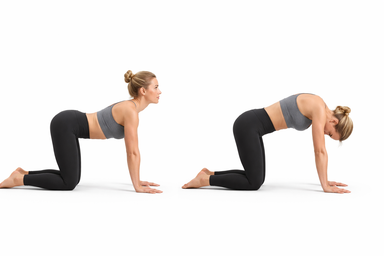
How to
A gentle spine mobility move that alternates rounding and arching your back on hands and knees.
- Start on hands and knees with wrists under shoulders and knees under hips.
- Inhale and drop your belly as you lift your chest and tailbone.
- Exhale and round your back, tucking your chin and tailbone.
- Move slowly between both positions with your breath.
- Move one vertebra at a time.
- Keep your shoulders away from your ears.
- Forcing your neck up or down.
- Rushing through the movement.
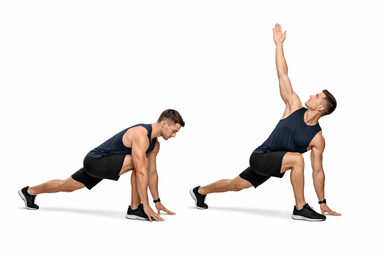
How to
A deep lunge stretch with rotation that opens your hips, groin, and upper back.
- Start in a high plank with hands under your shoulders.
- Step your right foot outside your right hand.
- Sink your hips and hold while breathing slowly.
- Rotate your chest right and reach your right arm up.
- Return to plank, then repeat on the left. Alternate sides.
- Keep your front foot flat
- Reach long through your top hand
- Letting your front knee cave inward
- Rushing the hold or holding your breath
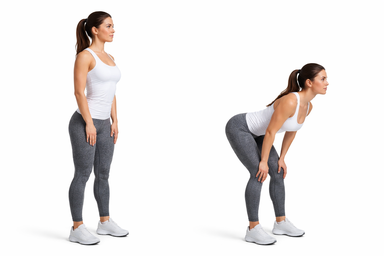
How to
A standing hip hinge that trains your glutes and hamstrings and builds the pattern for deadlifts.
- Stand with feet hip-width apart and knees slightly bent.
- Brace your core and keep your chest open.
- Push your hips back as your torso tips forward.
- Lower until you feel your hamstrings, keeping your back flat.
- Drive your hips forward to stand tall again.
- Move from your hips, not your waist.
- Keep your back long.
- Squatting instead of hinging your hips back.
- Rounding your back as you lower.
Circuit A
Choose a weight that feels challenging but controlled. Rest as needed while keeping good form.
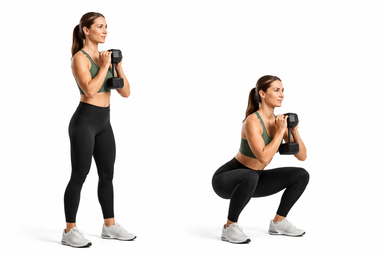
How to
A squat holding a weight at your chest. It trains your quads, glutes, and core.
- Stand with feet about shoulder-width and hold the weight at your chest.
- Brace your core and keep your chest tall.
- Bend your knees and hips to squat down under control.
- Lower until comfortable, with knees tracking over toes.
- Drive through your feet to stand back up.
- Keep your chest tall
- Knees track over toes
- Letting your knees cave inward
- Rounding your back at the bottom
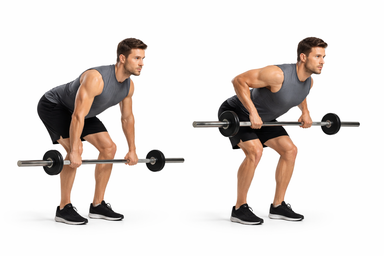
How to
A bent-over pulling move that trains your upper back, lats, and arms.
- Stand with feet hip-width and hold the weights in front of your thighs.
- Hinge at your hips and keep your back long, with arms hanging down.
- Pull the weights toward your ribs, squeezing your shoulder blades back.
- Lower the weights with control until your arms are straight.
- Keep your chest proud.
- Pull elbows back, not out.
- Rounding your back as you row.
- Jerking the weights with your body.
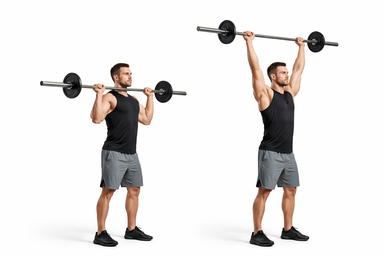
How to
A standing press that trains your shoulders, triceps, and upper back.
- Stand tall with your feet hip-width apart and weights at shoulder height.
- Brace your core and keep your ribs down.
- Press the weights overhead until your arms are straight.
- Lower the weights with control back to your shoulders.
- Repeat for the set.
- Keep your wrists stacked over elbows.
- Press straight up, not forward.
- Leaning back as you press.
- Shrugging your shoulders toward your ears.
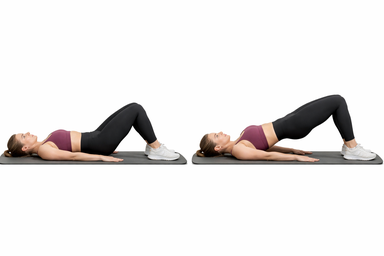
How to
A floor hip lift that trains your glutes and hamstrings with both feet planted.
- Lie on your back with knees bent and feet flat, hip-width apart.
- Brace your core and press your arms lightly into the floor.
- Drive through your heels and lift your hips until your body forms a straight line.
- Squeeze your glutes at the top, then lower with control.
- Repeat for your reps.
- Keep your ribs down
- Drive through your heels
- Arching your lower back at the top
- Pushing through your toes
Circuit B
Keep ribs down, brace gently, and move with control. — Core and carry focus.
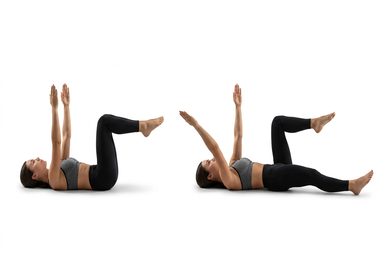
How to
A core move on your back that trains control while you move opposite arm and leg.
- Lie on your back with arms up and knees bent over hips.
- Press your lower back gently toward the floor.
- Lower one arm and the opposite leg with control.
- Return to the start, then repeat on the other side.
- Keep alternating sides for each rep.
- Move slow and stay braced
- Keep your ribs down
- Letting your lower back arch
- Rushing through the reps
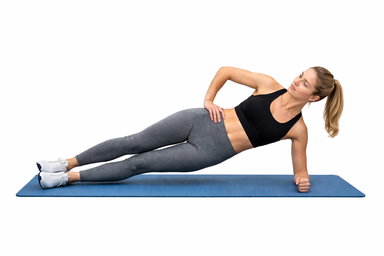
How to
A side hold that trains your obliques, hips, and shoulder stability.
- Lie on one side with your elbow under your shoulder and legs stacked.
- Lift your hips until your body forms a straight line.
- Hold the position and breathe steadily.
- Lower your hips with control.
- Finish your hold, then switch sides.
- Keep your hips stacked
- Press the floor away
- Letting your hips sag
- Rolling your chest toward the floor
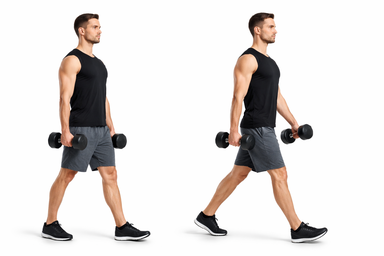
How to
A loaded walk that trains your grip, core, shoulders, and posture.
- Stand tall with a weight in each hand at your sides.
- Brace your core and pull your shoulders down and back.
- Walk forward with short, controlled steps.
- Keep the weights steady and your torso upright.
- Set the weights down with control when finished.
- Stand tall as you walk
- Keep the weights by your sides
- Leaning back or to one side
- Letting the weights swing
Cool-Down
Downshift breathing, open the chest, and relax hips/back after work. — Reset and posture focus.
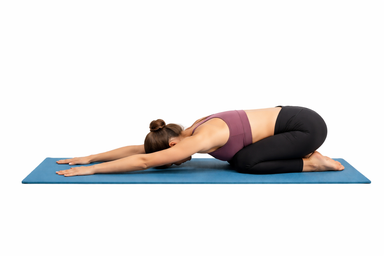
How to
A kneeling rest stretch that relaxes your back, hips, and shoulders while you breathe.
- Kneel with your big toes together and knees apart.
- Sit your hips back toward your heels.
- Reach your arms forward and lower your chest to the floor.
- Rest your forehead down and relax your neck.
- Hold the stretch and breathe slowly.
- Let your hips sink back
- Keep your neck relaxed
- Forcing your hips down
- Holding your breath
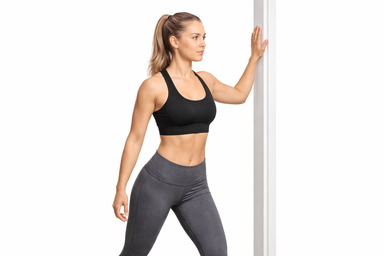
How to
A doorway hold that stretches your chest and front shoulders.
- Stand in a doorway with forearms on the frame at shoulder height.
- Step one foot forward until you feel a gentle chest stretch.
- Hold the position and breathe slowly.
- Step back to release the stretch.
- Keep your ribs down
- Relax your neck and shoulders
- Leaning your head forward
- Pushing into sharp pain

Every Exercise Mirrors a Job Site Movement
The hip hinge and goblet squat directly pattern the mechanics of lifting tile boxes and tool bags, while the bent-over row trains the pulling demand of prying, scraping, and demo work. Overhead press prepares your rotator cuff and scapular stabilizers for ceiling work, and the farmer carry builds the grip endurance and lateral core stiffness that hauling materials actually requires.

Renovation Work Is Asymmetric and Relentless
DIY tasks load one side of the body repeatedly — a drill in one hand, a trowel in one arm — creating cumulative strain on the thoracic spine and hip flexors. The world's greatest stretch and side plank address this directly, restoring rotational range and building the lateral stability that prevents the low-back fatigue that typically hits hour two of a project.

Patterning Before Loading Is the Protocol
This session follows a movement-preparation model: the warm-up establishes spinal segmentation via cat-cow and hip dissociation before any load is introduced, so your nervous system rehearses safe patterns first. The dead bug anchors anterior core stiffness under the strength block — if that exercise feels easy, slow each rep to 5 seconds to increase motor control demand without adding weight.