
Clean & Minimal AI Powered Fitness Routines
Download AppIntermediate Hip Internal Rotation Mobility
A 25-minute mobility session focused on improving hip internal rotation control and range of motion.
Intermediate Hip Internal Rotation Mobility
A 25-minute mobility session focused on improving hip internal rotation control and range of motion.
Warm-Up & Tissue Prep
Increase blood flow and reduce tone around the hips before targeted internal rotation work. — 5 minutes.
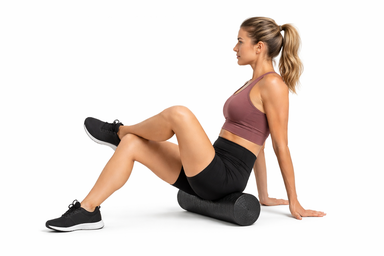
How to
A single-side foam rolling drill for your glutes that uses body weight and small shifts.
- Sit on a foam roller with one ankle crossed over the other knee.
- Lean toward the crossed-leg side and place your hands behind you.
- Slowly roll from the top of your glute to just above your thigh.
- Pause on tender spots and breathe with comfortable pressure.
- Finish the time, then switch sides.
- Move slowly and breathe.
- Keep pressure comfortable.
- Rolling onto your lower back.
- Holding your breath or forcing painful pressure.
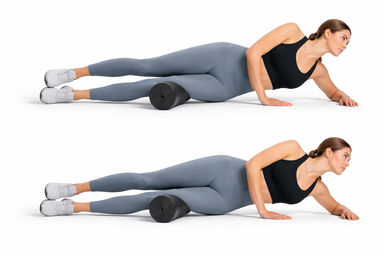
How to
A foam roller pressure hold for the front outer hip, targeting the TFL.
- Lie face down with a foam roller under one front outer hip.
- Prop up on your forearms and use the other leg for support.
- Shift gently until you find a tender spot near the hip pocket.
- Hold steady and breathe slowly for the set time.
- Ease off the roller, then switch sides.
- Use your arms to control pressure.
- Keep pressure gentle and steady.
- Rolling onto the bony point of your hip.
- Holding your breath or tensing your leg.
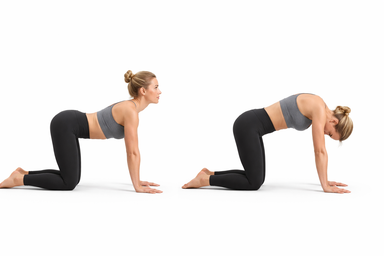
How to
A gentle spine mobility move that alternates rounding and arching your back on hands and knees.
- Start on hands and knees with wrists under shoulders and knees under hips.
- Inhale and drop your belly as you lift your chest and tailbone.
- Exhale and round your back, tucking your chin and tailbone.
- Move slowly between both positions with your breath.
- Move one vertebra at a time.
- Keep your shoulders away from your ears.
- Forcing your neck up or down.
- Rushing through the movement.
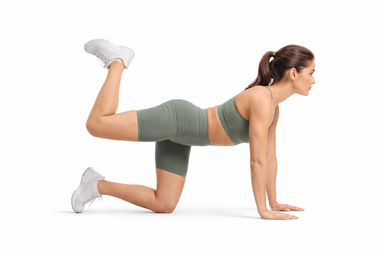
How to
A hands-and-knees hip circle that trains your glutes and hip control while your core stays steady.
- Start on all fours with hands under shoulders and knees under hips.
- Brace your core and keep one knee bent at 90 degrees.
- Lift that knee out to the side, then circle it back and around.
- Move slowly through the biggest circle you can control.
- Finish your reps, then switch legs.
- Keep your hips level
- Move from your hip, not your low back
- Arching your back to make the circle bigger
- Shifting your weight far to one side
Circuit A
Move with control; pause briefly at end ranges without forcing.
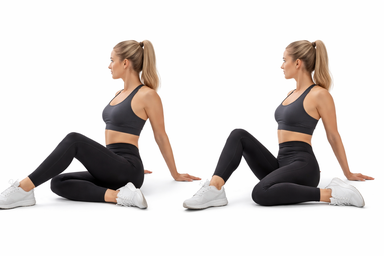
How to
A seated hip switch that trains hip mobility and control through both sides.
- Sit tall with knees bent and feet wider than hip-width.
- Keep your chest up and rotate both knees toward one side.
- Pause in the shin box position with both knees near 90 degrees.
- Lift through center and rotate both knees to the other side.
- Alternate sides with smooth control for each rep.
- Keep your chest tall
- Move from your hips
- Collapsing your chest as you switch
- Rushing or bouncing through the movement
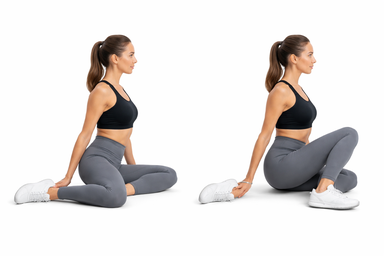
How to
A seated 90/90 hip lift that trains hip internal rotation and control on one side.
- Sit in a 90/90 position with the working leg behind you.
- Place your hands on the floor or sit tall if you can.
- Keep the back knee down and lift the back foot off the floor.
- Pause briefly, then lower the foot with control.
- Finish your reps, then switch sides.
- Keep your knee heavy on the floor.
- Move slowly and stay tall.
- Leaning far away from the working hip.
- Letting the back knee lift off the floor.
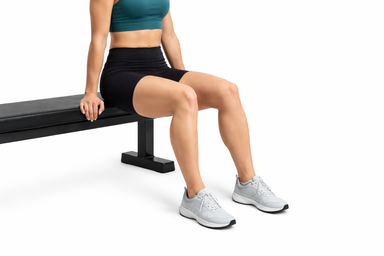
How to
A seated hip rotation hold that trains hip internal rotation strength and control.
- Sit tall on a chair with knees bent and feet flat.
- Place your hand against the outside of your working ankle.
- Press your ankle outward into your hand without moving it.
- Hold and breathe steadily, then relax with control.
- Finish the hold, then switch legs.
- Keep your thigh still
- Sit tall through your spine
- Letting your knee drift as you press
- Leaning or twisting your trunk
Circuit B
Keep the pelvis heavy and stable; rotate from the hip, not the low back.
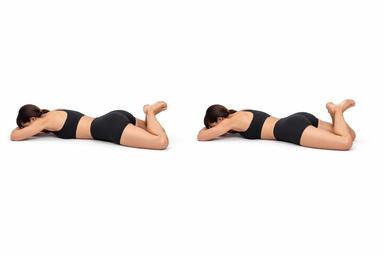
How to
A prone hip rotation drill that trains hip control and internal rotation on one side at a time.
- Lie face down with one knee bent to 90 degrees.
- Keep your thigh on the floor and your hips level.
- Sweep your foot outward like a wiper, using a smooth range.
- Pause briefly, then return your foot to center.
- Finish your reps, then switch legs.
- Keep your hips heavy on the floor
- Move slowly and with control
- Lifting your hip as your foot moves
- Forcing the range or twisting your low back
How to
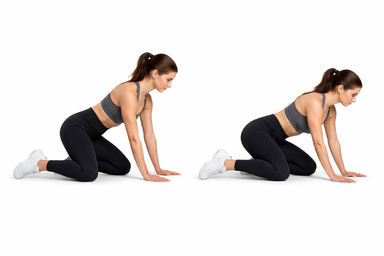
A half-kneeling hip mobility drill that trains hip internal rotation and control one side at a time.
- Start half kneeling with one foot forward and the other knee down.
- Keep the front knee still and move the front foot out to the side.
- Rock your hips back slowly while staying tall.
- Rock forward to the start with control.
- Finish your reps, then switch sides.
- Keep your front knee still
- Move slowly with control
- Letting the front knee drift with the foot
- Rounding your back as you rock back
Cool-Down
Downshift and finish with a gentle hip stretch. — 2 minutes.
How to
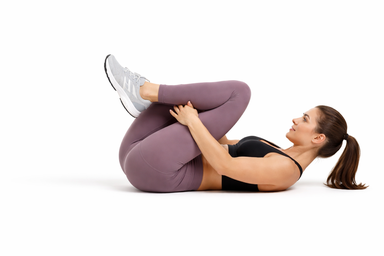
A lying hip stretch that targets your glutes and outer hip on one side at a time.
- Lie on your back with knees bent and feet flat.
- Cross one ankle over the opposite thigh, making a figure four.
- Hold behind the thigh or shin and gently pull toward you.
- Hold the stretch and breathe slowly.
- Release with control, then switch sides.
- Keep your head and shoulders relaxed
- Flex the crossed foot
- Pulling so hard your hips lift off the floor
- Twisting your pelvis to one side

Unlocking the Glute-TFL Tension Loop
Foam rolling the glute and TFL first clears the myofascial tension that mechanically blocks internal rotation before a single active rep begins. The 90/90 IR Lift and Prone Wipers then train the posterior hip capsule under load, building usable range rather than passive flexibility that disappears under movement demand.

Why Hip IR Is the Athlete's Hidden Limiter
Hip internal rotation drives knee tracking, lumbar stability, and single-leg power absorption — deficits here quietly sabotage squats, gait, and rotational force transfer. Shin Box Switches expose asymmetries between sides that static stretching alone never reveals, making them the honest diagnostic in this session.

Isometrics Before Eccentrics, Always
The Seated IR Isometric is placed before dynamic work to activate the deep hip rotators neurologically, priming motor units that are chronically underrecruited in most people. Progress this routine by adding a 2-second pause at end-range during the Half-Kneeling Rock-Back — that single cue converts a mobility drill into active joint control training.