
Clean & Minimal AI Powered Fitness Routines
Download AppPerimenopause Strength — 25 Minutes
A joint-friendly, full-body strength session emphasizing muscle and bone support in ~25 minutes.
Perimenopause Strength — 25 Minutes
A joint-friendly, full-body strength session emphasizing muscle and bone support in ~25 minutes.
Warm-Up
4 minutes. Raise temperature, prepare hips/shoulders, and groove squat/hinge patterns.
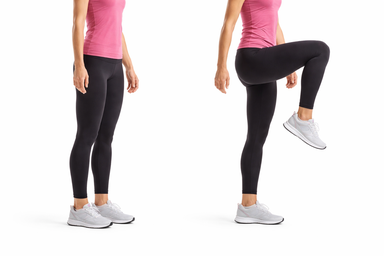
How to
A low-impact cardio move that warms up your legs and hips while raising your heart rate.
- Stand tall with your feet hip-width apart and arms at your sides.
- Lift one knee to hip height as you swing the opposite arm forward.
- Lower that foot, then lift the other knee and switch arms.
- Keep alternating sides at a steady pace.
- Slow down and plant both feet to finish.
- Stand tall with your chest up
- Land softly under your hips
- Leaning back as you lift your knees
- Stomping your feet on each step
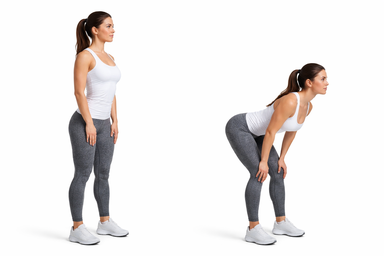
How to
A standing hip hinge that trains your glutes and hamstrings and builds the pattern for deadlifts.
- Stand with feet hip-width apart and knees slightly bent.
- Brace your core and keep your chest open.
- Push your hips back as your torso tips forward.
- Lower until you feel your hamstrings, keeping your back flat.
- Drive your hips forward to stand tall again.
- Move from your hips, not your waist.
- Keep your back long.
- Squatting instead of hinging your hips back.
- Rounding your back as you lower.
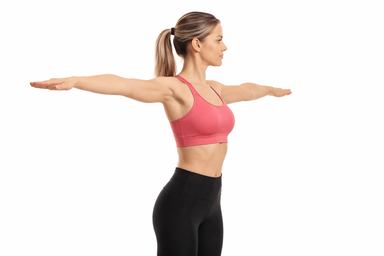
How to
A simple shoulder warm-up that moves both arms in circles and trains shoulder control.
- Stand tall with your feet about hip-width apart.
- Raise both arms out to your sides at shoulder height.
- Make small, controlled circles with both arms.
- Keep circling for the set time, then reverse direction if told.
- Lower your arms to finish.
- Keep your ribs down
- Move smoothly, not fast
- Shrugging your shoulders toward your ears
- Arching your back to keep the arms up
How to
A simple shoulder warm-up that moves both arms in circles and trains shoulder control.
- Stand tall with your feet about hip-width apart.
- Raise both arms out to your sides at shoulder height.
- Make small, controlled circles with both arms.
- Keep circling for the set time, then reverse direction if told.
- Lower your arms to finish.
- Keep your ribs down
- Move smoothly, not fast
- Shrugging your shoulders toward your ears
- Arching your back to keep the arms up
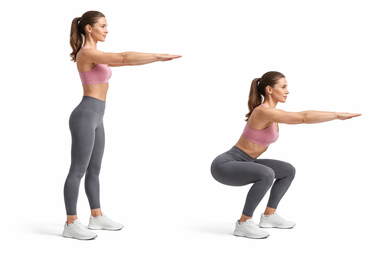
How to
A bodyweight lower-body move that trains your quads, glutes, and hips.
- Stand with feet about shoulder-width apart and toes slightly out.
- Brace your core and keep your chest tall.
- Bend your knees and hips to lower into a squat.
- Push through your feet to stand back up.
- Keep your knees tracking over your toes
- Keep your chest up
- Letting your knees cave in
- Rounding your back as you lower
Circuit A
Moderate-heavy loads; keep form strict. Repeat for 2 rounds.
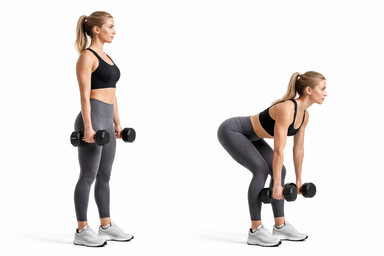
How to
A dumbbell hip hinge that trains your hamstrings, glutes, and back position control.
- Stand tall with a dumbbell in each hand, arms in front of your thighs.
- Soften your knees and brace your core.
- Push your hips back and lower the dumbbells along your legs.
- Stop when you feel a strong hamstring stretch or your back starts to round.
- Drive your hips forward and stand tall again.
- Keep the dumbbells close to your legs.
- Move from your hips, not your knees.
- Rounding your back as you lower.
- Letting the dumbbells drift away from your body.
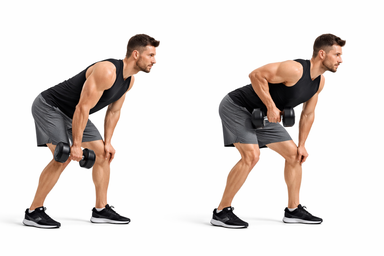
How to
A single-arm pulling move that trains your back, shoulders, and arms.
- Hold a dumbbell in one hand and hinge forward with your other hand supported.
- Let the weight hang under your shoulder with your back flat.
- Pull your elbow up and back toward your ribs.
- Lower the weight with control until your arm is straight.
- Finish your reps, then switch sides.
- Keep your chest facing the floor.
- Pull with your elbow, not your hand.
- Twisting your torso as you row.
- Shrugging your shoulder toward your ear.
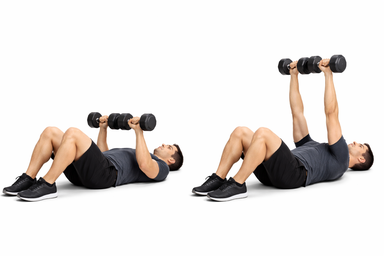
How to
A floor chest press with dumbbells that trains your chest, shoulders, and triceps.
- Lie on your back with knees bent and a dumbbell in each hand.
- Set upper arms on the floor, elbows about 45 degrees from your body.
- Press the dumbbells up until your arms are straight over your chest.
- Lower with control until your upper arms lightly touch the floor.
- Repeat for reps.
- Keep wrists stacked over elbows.
- Press both dumbbells evenly.
- Bouncing your arms off the floor.
- Letting elbows flare straight out.
Circuit B
Slightly lighter load than Circuit A; controlled tempo. Repeat for 2 rounds.
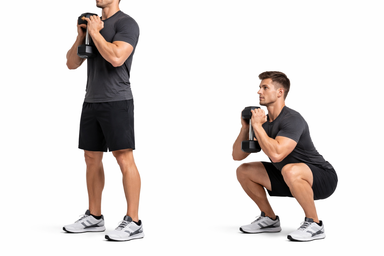
How to
A front-loaded squat that trains your quads, glutes, and core.
- Stand with feet about shoulder-width apart, holding one dumbbell at your chest.
- Brace your core and keep your chest tall.
- Bend your knees and hips to squat down under control.
- Pause briefly, then push through your feet to stand tall.
- Keep the dumbbell close to your chest
- Knees track in line with toes
- Letting your heels lift off the floor
- Rounding your back or collapsing your chest
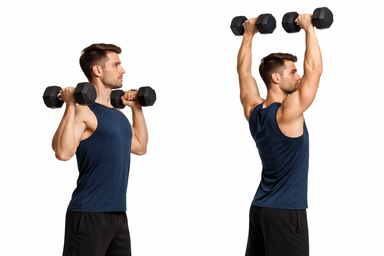
How to
A standing or seated press that trains your shoulders and triceps with dumbbells.
- Hold dumbbells at shoulder height, palms facing forward or in.
- Brace your core and keep your ribs down.
- Press both dumbbells overhead until your arms are straight.
- Lower the dumbbells with control back to your shoulders.
- Keep wrists stacked over elbows.
- Do not lean back as you press.
- Flaring your ribs to lift the weights.
- Dropping the dumbbells too fast.
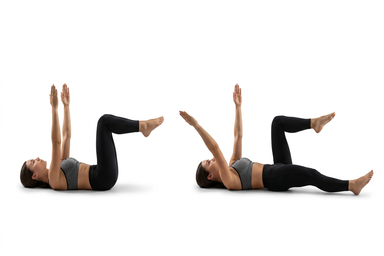
How to
A core move on your back that trains control while you move opposite arm and leg.
- Lie on your back with arms up and knees bent over hips.
- Press your lower back gently toward the floor.
- Lower one arm and the opposite leg with control.
- Return to the start, then repeat on the other side.
- Keep alternating sides for each rep.
- Move slow and stay braced
- Keep your ribs down
- Letting your lower back arch
- Rushing through the reps
Cool-Down
2 minutes. Downshift breathing and open up hips/chest.
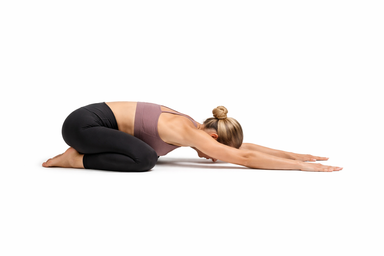
How to
A kneeling rest pose that gently stretches your back, hips, and shoulders.
- Kneel on the floor with your big toes together and knees apart.
- Sit your hips back toward your heels.
- Fold forward and reach your arms in front of you.
- Rest your forehead down and let your chest sink between your thighs.
- Hold the position and breathe slowly.
- Relax your shoulders
- Breathe into your back
- Forcing your hips down
- Holding your breath
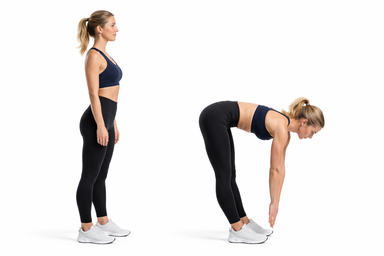
How to
A held stretch for the back of your thigh that targets your hamstrings.
- Sit tall with your target leg straight and toes up.
- Hinge at your hips and reach toward your foot.
- Stop when you feel a gentle stretch behind your thigh.
- Hold the stretch and breathe slowly.
- Release slowly, then switch sides if stretching one leg.
- Keep your back long.
- Hinge from your hips.
- Rounding your back to reach farther.
- Bouncing in the stretch.
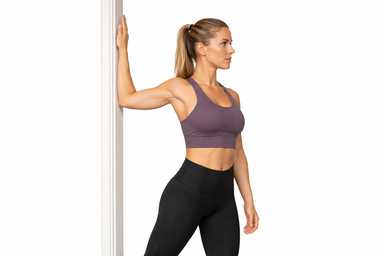
How to
A static chest opener that stretches your chest and front shoulders.
- Stand tall and clasp your hands behind your back.
- Straighten your arms and gently lift your hands.
- Open your chest until you feel a comfortable stretch.
- Hold and breathe slowly, then release with control.
- Keep your ribs down
- Relax your shoulders
- Arching your lower back to force the stretch
- Shrugging your shoulders up toward your ears
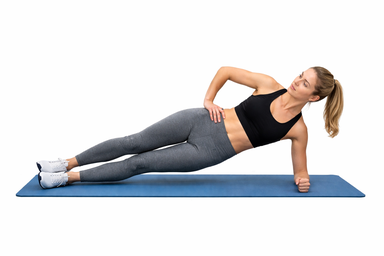
How to
A side hold that trains your obliques, hips, and shoulder stability.
- Lie on one side with your elbow under your shoulder and legs stacked.
- Lift your hips until your body forms a straight line.
- Hold the position and breathe steadily.
- Lower your hips with control.
- Finish your hold, then switch sides.
- Keep your hips stacked
- Press the floor away
- Letting your hips sag
- Rolling your chest toward the floor

Hip Hinges, Rows & the Bone Density Link
The Romanian Deadlift and Goblet Squat load your femur and lumbar spine through axial compression—exactly the mechanical stimulus that signals osteoblast activity during perimenopause. The One-Arm Row adds scapular retraction under load, protecting the thoracic spine where estrogen-related bone loss often begins first.

Estrogen Drop Changes How Muscle Responds
Declining estrogen reduces anabolic signaling, meaning muscle protein synthesis requires more deliberate mechanical tension to trigger adaptation. The Floor Press and Overhead Press target the chest, shoulders, and triceps with controlled ranges of motion that respect joint laxity changes without sacrificing the load needed to preserve lean mass.

Compound-First Sequencing for Hormonal Efficiency
Placing the heaviest bilateral patterns—Romanian Deadlift, Goblet Squat—early in the session capitalizes on peak neuromuscular readiness and cortisol's natural morning curve. To personalize progression, add 2.5 lbs to your dumbbell selection every 2–3 sessions when the final rep of each set feels easier than a 7 out of 10 effort.