
Clean & Minimal AI Powered Fitness Routines
Download AppIntermediate Snowboarding Prep
A 25-minute off-snow session to build leg strength, balance, and core control for snowboarding.
Intermediate Snowboarding Prep
A 25-minute off-snow session to build leg strength, balance, and core control for snowboarding.
Warm-Up
6 minutes. Raise body temperature and open hips/ankles before strength and balance work.
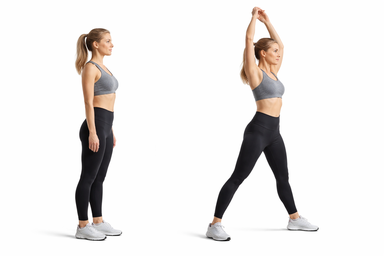
How to
A full-body cardio move that trains coordination, calves, shoulders, and hips.
- Stand tall with feet together and arms at your sides.
- Jump your feet out as you raise your arms overhead.
- Jump your feet back together as you lower your arms.
- Repeat at a steady pace, landing softly each time.
- Stay light on your toes
- Keep your chest tall
- Landing hard with locked knees
- Letting your arms swing out of control
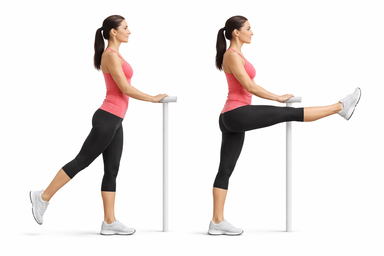
How to
A dynamic leg swing that warms up your hips, hamstrings, and glutes while challenging balance.
- Stand tall and hold a wall or rail for light support if needed.
- Lift one leg slightly off the floor with a soft knee.
- Swing it forward and back with control.
- Set it down, then switch legs on the next rep.
- Keep your torso tall.
- Swing from the hip, not the low back.
- Leaning back as the leg swings forward.
- Forcing the range of motion.
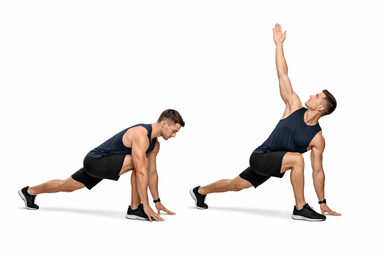
How to
A deep lunge stretch with rotation that opens your hips, groin, and upper back.
- Start in a high plank with hands under your shoulders.
- Step your right foot outside your right hand.
- Sink your hips and hold while breathing slowly.
- Rotate your chest right and reach your right arm up.
- Return to plank, then repeat on the left. Alternate sides.
- Keep your front foot flat
- Reach long through your top hand
- Letting your front knee cave inward
- Rushing the hold or holding your breath
Circuit A
Legs and core focus. Controlled tempo. Keep your core braced on every rep.
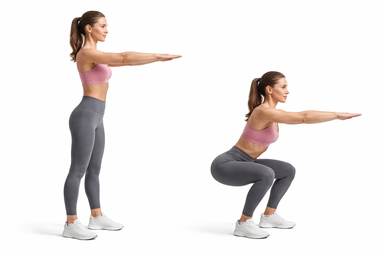
How to
A bodyweight lower-body move that trains your quads, glutes, and hips.
- Stand with feet about shoulder-width apart and toes slightly out.
- Brace your core and keep your chest tall.
- Bend your knees and hips to lower into a squat.
- Push through your feet to stand back up.
- Keep your knees tracking over your toes
- Keep your chest up
- Letting your knees cave in
- Rounding your back as you lower

How to
A side lunge that trains your quads, glutes, and inner thighs while challenging control.
- Stand tall with feet hip-width apart and toes forward.
- Step one foot out to the side, keeping both feet flat.
- Bend the stepping knee and send your hips back.
- Push through the bent leg to return to standing.
- Finish your reps, then switch sides.
- Keep your chest lifted.
- Keep the straight leg long.
- Letting the bent knee cave inward.
- Rounding your back as you lower.

How to
A plank variation where you tap each shoulder in turn to train your core, shoulders, and balance.
- Start in a high plank with hands under shoulders and feet set wide.
- Brace your core and keep your body in a straight line.
- Lift one hand and tap the opposite shoulder.
- Place it back down, then alternate sides each rep.
- Keep your hips still
- Press the floor away
- Rocking your hips side to side
- Letting your lower back sag
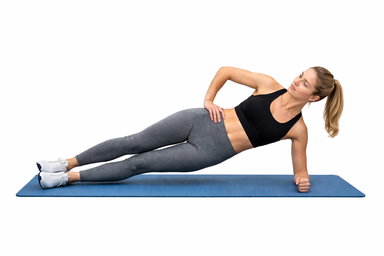
How to
A side hold that trains your obliques, hips, and shoulder stability.
- Lie on one side with your elbow under your shoulder and legs stacked.
- Lift your hips until your body forms a straight line.
- Hold the position and breathe steadily.
- Lower your hips with control.
- Finish your hold, then switch sides.
- Keep your hips stacked
- Press the floor away
- Letting your hips sag
- Rolling your chest toward the floor
Circuit B
Isometric and balance work. This mimics sustained riding positions. Keep knees aligned and hips level.
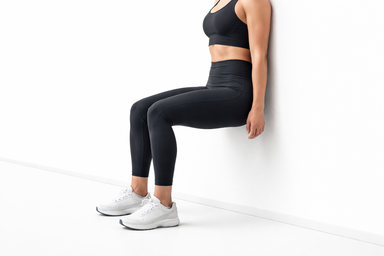
How to
An isometric squat hold against a wall that trains your quads, glutes, and endurance.
- Stand with your back against a wall and feet hip-width apart.
- Walk your feet forward and slide down until your thighs are near parallel.
- Keep your back on the wall and knees over your ankles.
- Hold the position and breathe steadily.
- Stand up by pressing through your feet when finished.
- Keep your chest tall
- Press your back into the wall
- Letting your knees cave inward
- Holding your breath

How to
A one-leg hip hinge that trains your hamstrings and glutes while challenging balance.
- Stand tall on one leg with a soft bend in your knee.
- Hinge at your hips and send your free leg back behind you.
- Lower your torso until you feel a stretch in your standing leg.
- Drive through your standing foot to return to tall.
- Finish your reps, then switch legs.
- Keep your hips square.
- Keep your back long.
- Rounding your back as you lower.
- Opening your hips toward the side.
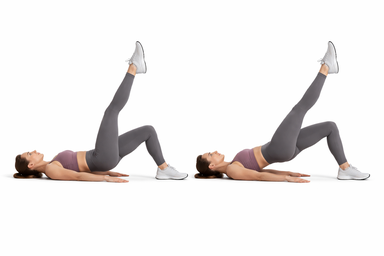
How to
A one-leg bridge that trains your glutes and hamstrings while challenging hip control.
- Lie on your back with one knee bent and the other leg lifted.
- Brace your core and press the planted foot into the floor.
- Lift your hips until your body forms a straight line.
- Lower your hips with control back to the floor.
- Finish your reps, then switch legs.
- Keep your hips level.
- Drive through your heel.
- Letting one hip drop as you lift.
- Arching your lower back at the top.
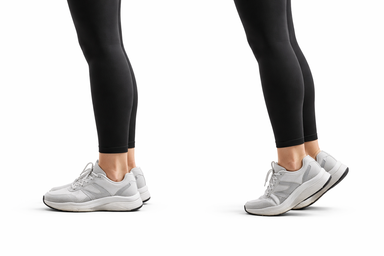
How to
A standing lower-leg move that trains your calves by lifting and lowering your heels.
- Stand tall with both feet hip-width apart.
- Press through the balls of your feet and lift your heels.
- Pause briefly at the top with control.
- Lower your heels slowly back to the floor.
- Repeat for your reps.
- Keep your ankles tracking straight.
- Move up and down with control.
- Rocking onto the outside edges of your feet.
- Bouncing at the bottom of each rep.
Cool-Down
2 minutes. Downshift and restore ankle/hip range of motion.
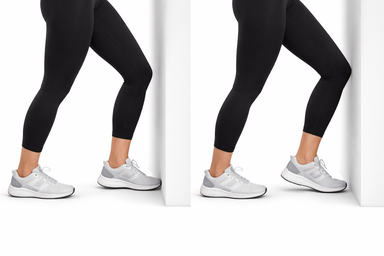
How to
A single-leg ankle stretch that opens the front of the ankle and improves dorsiflexion.
- Kneel with one foot forward and flat on the floor.
- Keep your heel down and gently drive your knee forward.
- Hold the stretch and breathe evenly.
- Finish your time, then switch sides.
- Keep your heel planted
- Move only as far as feels smooth
- Lifting the heel off the floor
- Forcing the knee forward too hard
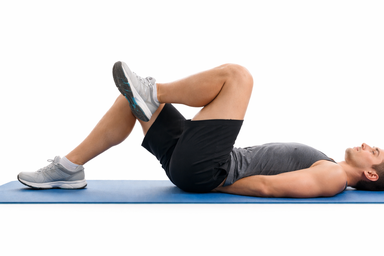
How to
A seated or lying hip stretch that targets your glutes and outer hip on one side.
- Lie on your back with both knees bent and feet flat.
- Cross one ankle over the opposite thigh, making a figure four.
- Pull the uncrossed thigh toward your chest until you feel a stretch.
- Hold and breathe, keeping your shoulders relaxed.
- Release slowly, then switch sides.
- Keep your lower back relaxed
- Flex the crossed foot
- Forcing the knee down with your hand
- Holding your breath

Edge Control Starts at the Hip & Ankle
Lateral lunges and single-leg RDLs directly train the frontal-plane hip stability that drives toeside and heelside edge transitions. Calf raises and ankle dorsiflexion work condition the exact range your boots demand on steep terrain, where restricted dorsiflexion kills your ability to load the front foot cleanly.

Why Snowboarders Break Down After Run 4
Snowboarding locks both feet to one platform, forcing your hips, obliques, and ankles to absorb every vibration and direction change unilaterally. Quad and glute fatigue accumulate fast in a static-dynamic mix of isometric holds and explosive pivots — which is exactly why wall sits and single-leg glute bridges appear together here.

Isometric Load Before Dynamic Power
The wall sit precedes single-leg work intentionally — saturating the quads isometrically before demanding stabilization mirrors the fatigue state your legs are already in mid-run. As this routine becomes easier, extend wall sit duration by 10-second increments before adding reps elsewhere to drive progressive overload without equipment.