
Clean & Minimal AI Powered Fitness Routines
Download AppDesk Worker Posture Routine — 25 Minutes
A 25-minute posture-focused session to open the chest, mobilize the spine, and strengthen upper back and core for desk work.
Desk Worker Posture Routine — 25 Minutes
A 25-minute posture-focused session to open the chest, mobilize the spine, and strengthen upper back and core for desk work.
Warm-Up & Mobility
Reduce stiffness from sitting and restore thoracic mobility before strengthening. Focus on spine and rib mobility.
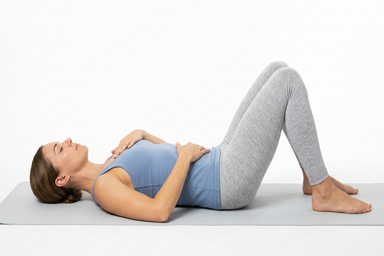
How to
A slow breathing drill that trains relaxed belly breathing and helps you control your breath.
- Lie on your back or sit tall with one hand on your belly.
- Inhale through your nose and let your belly rise.
- Exhale slowly and let your belly fall.
- Keep your chest and shoulders quiet.
- Continue for the set time with smooth breaths.
- Breathe low into your belly
- Keep your shoulders relaxed
- Shrugging your shoulders as you inhale
- Forcing the breath or holding tension
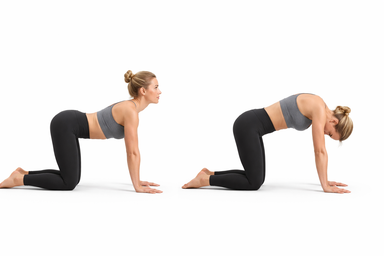
How to
A gentle spine mobility move that alternates rounding and arching your back on hands and knees.
- Start on hands and knees with wrists under shoulders and knees under hips.
- Inhale and drop your belly as you lift your chest and tailbone.
- Exhale and round your back, tucking your chin and tailbone.
- Move slowly between both positions with your breath.
- Move one vertebra at a time.
- Keep your shoulders away from your ears.
- Forcing your neck up or down.
- Rushing through the movement.
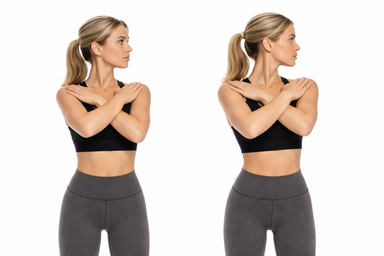
How to
A controlled upper-back rotation that trains thoracic mobility and trunk control.
- Sit or stand tall with your feet steady.
- Cross your arms over your chest or reach them forward.
- Rotate your chest to one side while your hips stay still.
- Return to center, then rotate to the other side.
- Move slowly and breathe through each turn.
- Keep your hips still
- Rotate through your upper back
- Letting your hips follow the turn
- Twisting mostly from your lower back
Circuit A — Scapular Control
Keep ribs down; move from the shoulder blades, not the neck.
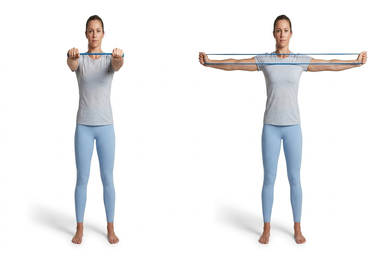
How to
A band upper-back move that trains your rear shoulders and mid-back.
- Stand tall and hold a band at chest height with both hands.
- Start with arms straight and hands shoulder-width apart.
- Pull the band apart until your hands move out to your sides.
- Pause briefly with shoulder blades squeezed together.
- Control the band back to the start and repeat.
- Keep your ribs down.
- Move from your shoulders, not your lower back.
- Shrugging your shoulders toward your ears.
- Arching your back to finish the pull.
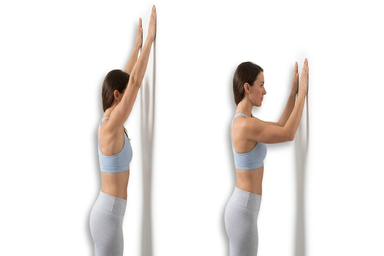
How to
A wall-based shoulder move that trains shoulder control and upper-back posture.
- Stand with your back to a wall and feet a small step out.
- Press your head, upper back, and hips gently into the wall.
- Place your arms on the wall in a goalpost shape.
- Slide your arms up the wall as far as you can control.
- Slide back down to the start and repeat.
- Keep your ribs down.
- Move slowly and stay in control.
- Arching your lower back to reach higher.
- Shrugging your shoulders toward your ears.
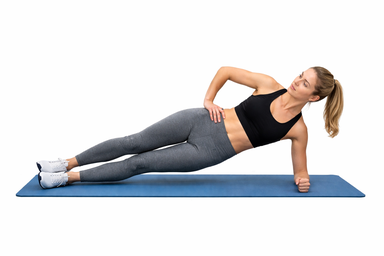
How to
A side hold that trains your obliques, hips, and shoulder stability.
- Lie on one side with your elbow under your shoulder and legs stacked.
- Lift your hips until your body forms a straight line.
- Hold the position and breathe steadily.
- Lower your hips with control.
- Finish your hold, then switch sides.
- Keep your hips stacked
- Press the floor away
- Letting your hips sag
- Rolling your chest toward the floor
Circuit B — Posture Endurance
Slow reps; pause briefly in the squeezed position without shrugging.
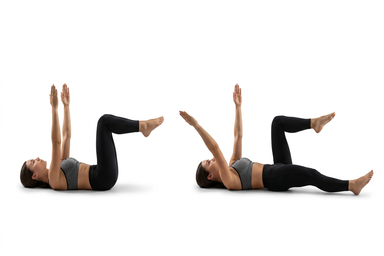
How to
A core move on your back that trains control while you move opposite arm and leg.
- Lie on your back with arms up and knees bent over hips.
- Press your lower back gently toward the floor.
- Lower one arm and the opposite leg with control.
- Return to the start, then repeat on the other side.
- Keep alternating sides for each rep.
- Move slow and stay braced
- Keep your ribs down
- Letting your lower back arch
- Rushing through the reps
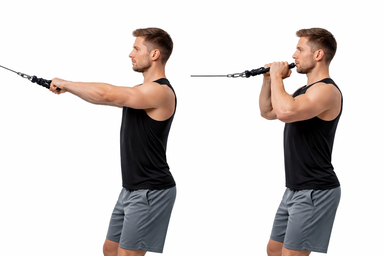
How to
A pulling exercise that trains your upper back and rear shoulders.
- Set a cable or band at face height and hold the handles with both hands.
- Step back with arms straight and palms facing in.
- Pull the handles toward your face, elbows high and wide.
- Squeeze your shoulder blades, then slowly extend your arms.
- Repeat for all reps.
- Keep your ribs down
- Pull elbows back, not down
- Shrugging your shoulders toward your ears
- Leaning back to move the weight
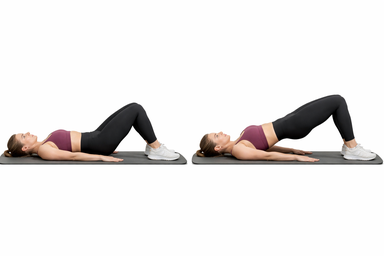
How to
A floor hip lift that trains your glutes and hamstrings with both feet planted.
- Lie on your back with knees bent and feet flat, hip-width apart.
- Brace your core and press your arms lightly into the floor.
- Drive through your heels and lift your hips until your body forms a straight line.
- Squeeze your glutes at the top, then lower with control.
- Repeat for your reps.
- Keep your ribs down
- Drive through your heels
- Arching your lower back at the top
- Pushing through your toes
Cool-Down
Open common tight areas from sitting to help the new posture "stick." Focus on chest and hips.
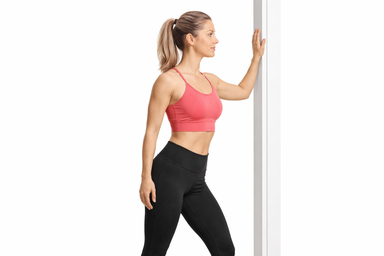
How to
A doorway chest stretch that opens your pecs and front shoulders.
- Stand in a doorway and place one forearm on the frame.
- Step one foot through and gently turn your body away.
- Hold the stretch and breathe slowly.
- Finish your reps, then switch sides.
- Keep your shoulder down
- Breathe into the stretch
- Forcing the stretch too hard
- Shrugging your shoulder up
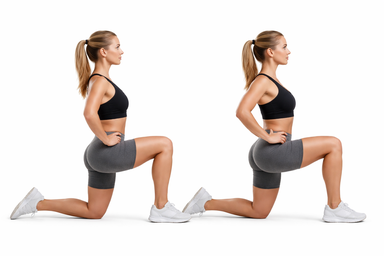
How to
A kneeling stretch for the front of your hip. It targets the hip flexors on one side at a time.
- Kneel with one foot forward and the other knee on the floor.
- Tuck your hips slightly and stand tall through your chest.
- Shift your hips forward until you feel a stretch in the back-leg hip.
- Hold and breathe slowly without bouncing.
- Release gently, then switch sides.
- Keep your ribs stacked over your hips
- Squeeze the back-leg glute lightly
- Arching your lower back to go deeper
- Bouncing in the stretch
How to
A slow breathing drill that trains relaxed belly breathing and helps you control your breath.
- Lie on your back or sit tall with one hand on your belly.
- Inhale through your nose and let your belly rise.
- Exhale slowly and let your belly fall.
- Keep your chest and shoulders quiet.
- Continue for the set time with smooth breaths.
- Breathe low into your belly
- Keep your shoulders relaxed
- Shrugging your shoulders as you inhale
- Forcing the breath or holding tension

Reversing the Desk-Posture Feedback Loop
Cat-Cow and Thoracic Rotation directly target the thoracic vertebrae, which lock into flexion after hours of screen time. Band Pull-Aparts and Face Pulls then activate the mid and lower trapezius — the muscles most suppressed by rounded shoulders — retraining scapular retraction before it becomes permanent.

What Prolonged Sitting Does to Your Neuromuscular
Extended hip flexion causes the psoas and iliacus to adaptively shorten, tilting the pelvis anteriorly and compressing the lumbar spine. The Glute Bridge and Hip Flexor Stretch here address that exact anterior tilt pattern, restoring the posterior chain's ability to generate force from a neutral pelvis.

Sequencing Mobility Before Strength — Here's Why I
Diaphragmatic Breathing opens the program deliberately — rib cage expansion restores thoracic mobility before any loaded movement. Wall Slides then groove scapular upward rotation under low load, so when Band Face Pulls arrive, your nervous system is already primed for correct movement. If one exercise feels too easy, add a 3-second isometric hold at end range.