
Clean & Minimal AI Powered Fitness Routines
Download AppIntermediate Pull-Up Strength
A 25-minute pull-up focused strength session to build pulling power and control.
Intermediate Pull-Up Strength
A 25-minute pull-up focused strength session to build pulling power and control.
Warm-Up
Prep grip, lats, and shoulder blades for quality pulling reps. — Focus on shoulder blade control and scapular stability.
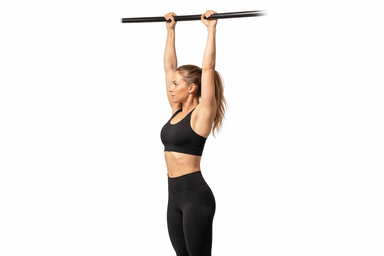
How to
A two-hand hang from an overhead bar that trains grip and upper-body hanging strength.
- Grip a sturdy overhead bar with both hands.
- Step or jump up so your arms are straight and feet are off the floor.
- Let your body hang long, with your ribs down.
- Hold for the set time and breathe slowly.
- Step down with control.
- Keep your grip firm.
- Stay still from shoulders to feet.
- Swinging or kicking your legs.
- Holding your breath during the hold.
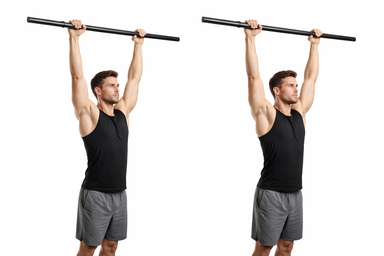
How to
A small pull-up prep that trains shoulder blade control and upper back strength from a dead hang.
- Hang from a bar with hands overhand and arms straight.
- Brace your body and let your shoulders rise toward your ears.
- Pull your shoulder blades down to lift your chest slightly.
- Keep your elbows straight as you pause at the top.
- Lower under control back to the hang and repeat.
- Move from your shoulder blades.
- Keep your ribs down.
- Bending your elbows to turn it into a pull-up.
- Swinging your body between reps.
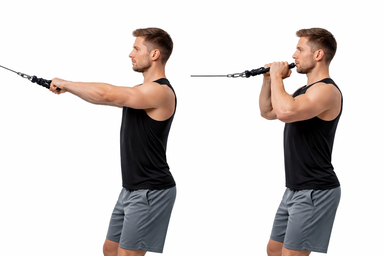
How to
A pulling exercise that trains your upper back and rear shoulders.
- Set a cable or band at face height and hold the handles with both hands.
- Step back with arms straight and palms facing in.
- Pull the handles toward your face, elbows high and wide.
- Squeeze your shoulder blades, then slowly extend your arms.
- Repeat for all reps.
- Keep your ribs down
- Pull elbows back, not down
- Shrugging your shoulders toward your ears
- Leaning back to move the weight
Set A — Pull-Up Strength
Choose chin-up or band-assisted pull-up so you can hit clean reps. Rest as needed between exercises.
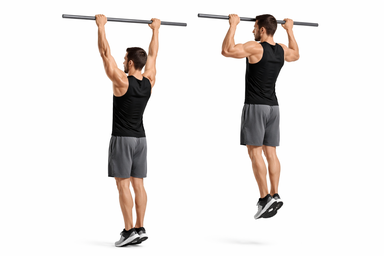
How to
An upper-body pull that trains your back, biceps, and grip using a bar.
- Grip the bar with palms facing you, hands about shoulder-width apart.
- Hang with arms straight and shoulders active.
- Pull your chest toward the bar until your chin clears it.
- Lower with control until your arms are straight again.
- Repeat for your reps.
- Keep your ribs down
- Lead with your chest
- Swinging your legs to start the pull
- Shrugging your shoulders up by your ears
How to
A two-hand hang from an overhead bar that trains grip and upper-body hanging strength.
- Grip a sturdy overhead bar with both hands.
- Step or jump up so your arms are straight and feet are off the floor.
- Let your body hang long, with your ribs down.
- Hold for the set time and breathe slowly.
- Step down with control.
- Keep your grip firm.
- Stay still from shoulders to feet.
- Swinging or kicking your legs.
- Holding your breath during the hold.
Set B — Eccentric Focus
Jump or step to the top, then lower under control for ~5–8 seconds per rep.
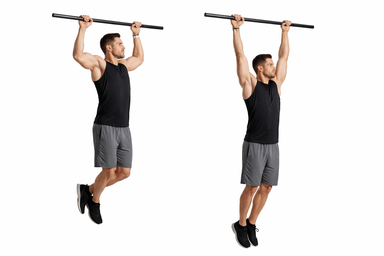
How to
A slow lowering pull-up that trains your back, shoulders, and arms with control.
- Stand under the bar and grip it with both hands.
- Jump or step to the top with your chin over the bar.
- Hold your body tight and lower as slowly as you can.
- Reach straight arms at the bottom, then step down and reset.
- Keep your ribs down
- Lower with control
- Dropping quickly from the top
- Shrugging your shoulders toward your ears
Set C — Volume
Use a band if needed to keep reps smooth. Keep ribs down and avoid shrugging. — Focus on upper-back engagement.
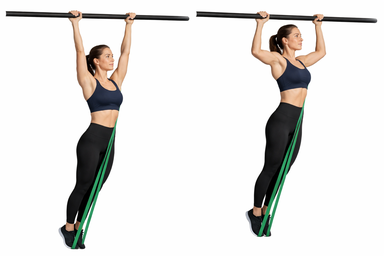
How to
A pull-up with band support that trains your back, arms, and grip.
- Loop the band and grip the bar with hands shoulder-width apart.
- Place one foot or knee in the band and hang with straight arms.
- Pull your chest toward the bar.
- Lower with control and repeat.
- Stop if you feel sharp pain.
- Keep your core tight
- Pull elbows down and back
- Swinging to start the rep
- Shrugging your shoulders up
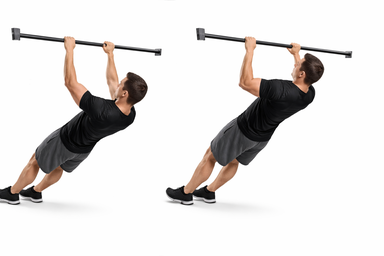
How to
A bodyweight row done under a bar that trains your upper back, lats, and biceps.
- Set a bar at waist height and lie under it.
- Grip the bar with straight arms and your body in a straight line.
- Pull your chest toward the bar.
- Pause briefly, then lower with control.
- Repeat for reps.
- Keep your body straight
- Pull elbows down and back
- Letting your hips sag
- Shrugging your shoulders toward your ears
Cool-Down
Downshift, decompress shoulders, and restore range of motion. — Emphasize grip and lat decompression.
How to
A two-hand hang from an overhead bar that trains grip and upper-body hanging strength.
- Grip a sturdy overhead bar with both hands.
- Step or jump up so your arms are straight and feet are off the floor.
- Let your body hang long, with your ribs down.
- Hold for the set time and breathe slowly.
- Step down with control.
- Keep your grip firm.
- Stay still from shoulders to feet.
- Swinging or kicking your legs.
- Holding your breath during the hold.

Scapular Load Before Spinal Load
Dead Hangs and Scapular Pull-Ups prime the serratus anterior and lower trapezius before any full pulling occurs, protecting the glenohumeral joint under load. This sequencing ensures your rotator cuff isn't compensating during Chin-Ups and Negatives, where peak lat tension is highest.

The Pull-Up Strength Curve Problem
Most intermediate athletes stall because they train the concentric pull but neglect the eccentric — where 40% more force can be absorbed. Negative Pull-Ups directly exploit this by loading the lats and biceps brachii through their lengthening phase, building the tendon stiffness that unlocks clean unassisted reps.

Band Assistance as a Periodization Tool
Band-Assisted Pull-Ups aren't a crutch — they're a volume accumulation strategy that lets you hit 4–6 quality reps beyond failure without form breakdown. To personalize this routine, reduce band resistance by one level every 2 weeks while keeping rep targets constant, letting progressive overload drive adaptation rather than added volume.