
Clean & Minimal AI Powered Fitness Routines
Download AppReturn-to-Work After Injury — 25 Minutes
A 25-minute intermediate routine to rebuild mobility, strength, and work tolerance after an injury.
Return-to-Work After Injury — 25 Minutes
A 25-minute intermediate routine to rebuild mobility, strength, and work tolerance after an injury.
Warm-Up
Decrease stiffness and prepare joints for loading with controlled, pain-free movement. Focus on breath work and mobility.
How to
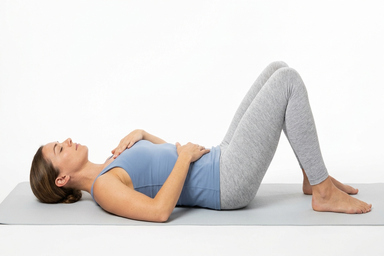
A slow breathing drill that trains relaxed belly breathing and helps you control your breath.
- Lie on your back or sit tall with one hand on your belly.
- Inhale through your nose and let your belly rise.
- Exhale slowly and let your belly fall.
- Keep your chest and shoulders quiet.
- Continue for the set time with smooth breaths.
- Breathe low into your belly
- Keep your shoulders relaxed
- Shrugging your shoulders as you inhale
- Forcing the breath or holding tension
How to
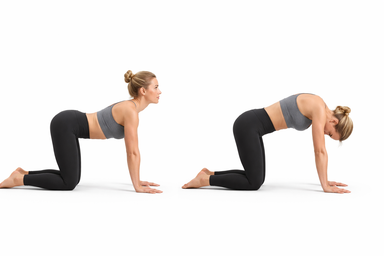
A gentle spine mobility move that alternates rounding and arching your back on hands and knees.
- Start on hands and knees with wrists under shoulders and knees under hips.
- Inhale and drop your belly as you lift your chest and tailbone.
- Exhale and round your back, tucking your chin and tailbone.
- Move slowly between both positions with your breath.
- Move one vertebra at a time.
- Keep your shoulders away from your ears.
- Forcing your neck up or down.
- Rushing through the movement.
How to
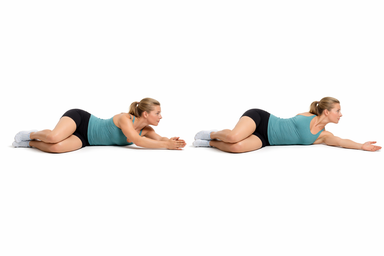
A side-lying rotation that opens your upper back and chest while training controlled spine movement.
- Lie on your side with knees bent and arms straight in front of your chest.
- Keep your knees stacked and reach your top arm up and open behind you.
- Turn your chest with the arm and let your eyes follow your hand.
- Pause briefly, then return your top hand to the start.
- Finish your reps, then switch sides.
- Keep your knees stacked
- Move slowly and breathe
- Letting your top knee lift as you rotate
- Forcing the shoulder toward the floor
Circuit A
Core and hip focus. Slow, controlled reps. Keep ribs down and spine neutral.
How to
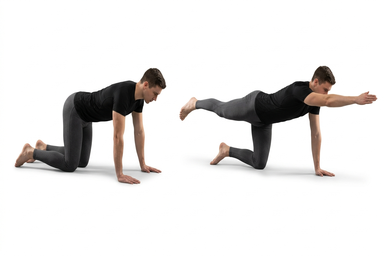
A core stability move from all fours that trains your abs, back, glutes, and balance.
- Start on hands and knees with your hands under shoulders and knees under hips.
- Brace your core and keep your back flat.
- Reach one arm forward and the opposite leg back until they are straight.
- Pause briefly, then bring your hand and knee back under you.
- Repeat on the other side, alternating each rep.
- Keep your hips square
- Move slow and controlled
- Arching or sagging your lower back
- Rotating your hips as you reach
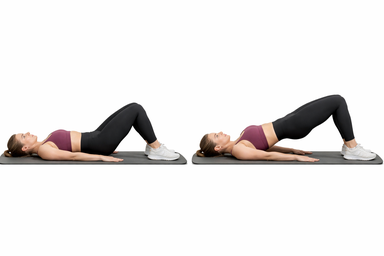
How to
A floor hip lift that trains your glutes and hamstrings with both feet planted.
- Lie on your back with knees bent and feet flat, hip-width apart.
- Brace your core and press your arms lightly into the floor.
- Drive through your heels and lift your hips until your body forms a straight line.
- Squeeze your glutes at the top, then lower with control.
- Repeat for your reps.
- Keep your ribs down
- Drive through your heels
- Arching your lower back at the top
- Pushing through your toes
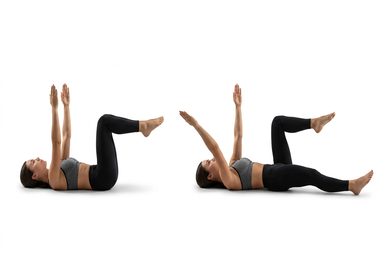
How to
A core move on your back that trains control while you move opposite arm and leg.
- Lie on your back with arms up and knees bent over hips.
- Press your lower back gently toward the floor.
- Lower one arm and the opposite leg with control.
- Return to the start, then repeat on the other side.
- Keep alternating sides for each rep.
- Move slow and stay braced
- Keep your ribs down
- Letting your lower back arch
- Rushing through the reps
Circuit B
Functional strength work. Use a stable tempo (about 2 seconds down, 1 second up).
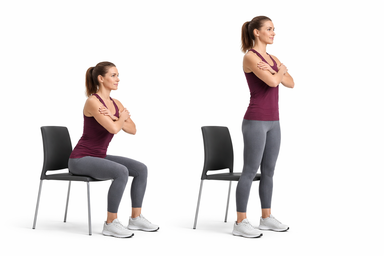
How to
A chair-based squat pattern that trains your thighs and glutes for standing strength.
- Sit near the front of a chair with feet flat and hip-width apart.
- Lean slightly forward and brace your core.
- Press through both feet and stand tall.
- Push your hips back and sit down with control.
- Keep your knees tracking over your toes
- Stand tall at the top
- Letting your knees cave inward
- Dropping hard onto the chair
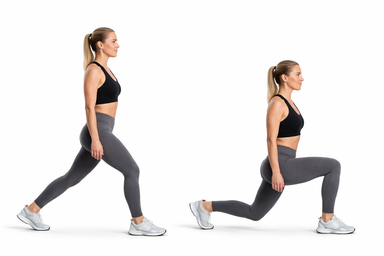
How to
A staggered-stance squat that trains your quads, glutes, and balance one leg at a time.
- Stand in a long split stance with your front foot flat.
- Keep your chest tall and bend both knees to lower down.
- Lower until your front thigh is near parallel, if comfortable.
- Press through your front foot to stand back up.
- Finish your reps, then switch legs.
- Keep your front knee tracking over your toes.
- Stay tall through your torso.
- Letting your front heel lift off the floor.
- Pushing your front knee far inward.
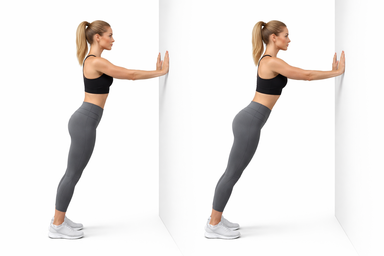
How to
A standing push-up against a wall that trains your chest, shoulders, and triceps.
- Stand facing a wall and place your hands at chest height.
- Step your feet back so your body forms a straight line.
- Bend your elbows and lower your chest toward the wall.
- Press the wall away to return to the start.
- Repeat for your planned reps.
- Keep your body straight
- Keep elbows about 45 degrees
- Letting your hips sag
- Shrugging your shoulders toward your ears
Circuit C
Posture and carry pattern focus. Stay tall; move smoothly and keep shoulders relaxed.
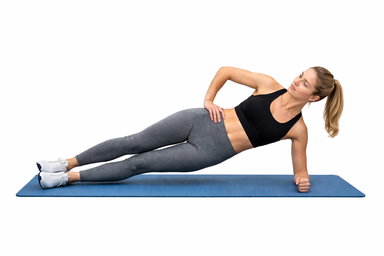
How to
A side hold that trains your obliques, hips, and shoulder stability.
- Lie on one side with your elbow under your shoulder and legs stacked.
- Lift your hips until your body forms a straight line.
- Hold the position and breathe steadily.
- Lower your hips with control.
- Finish your hold, then switch sides.
- Keep your hips stacked
- Press the floor away
- Letting your hips sag
- Rolling your chest toward the floor
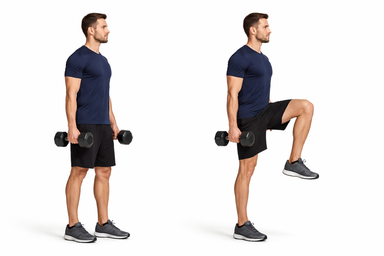
How to
A loaded march that trains your core, grip, and posture while you stay tall.
- Hold a weight in each hand at your sides.
- Stand tall and brace your core.
- March in place with slow, controlled steps.
- Keep your chest up and breathe steadily.
- Stay tall and steady
- Keep the weights close to your sides
- Leaning side to side as you march
- Taking fast, sloppy steps
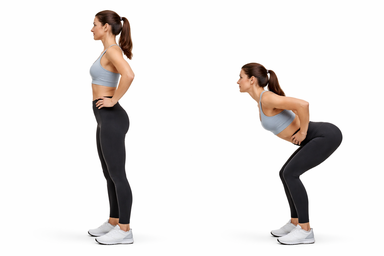
How to
A basic hip hinge that trains your glutes and hamstrings while practicing a strong spine position.
- Stand with feet hip-width apart and knees soft.
- Push your hips back as your chest tips forward.
- Lower until you feel tension in your hamstrings.
- Drive through your feet and squeeze your glutes to stand tall.
- Keep your spine long
- Hips move back, not down
- Squatting instead of hinging
- Rounding your back as you lower
Cool-Down
Bring breathing down and finish with gentle, non-provocative mobility to downshift.
How to
A slow breathing drill that trains relaxed belly breathing and helps you control your breath.
- Lie on your back or sit tall with one hand on your belly.
- Inhale through your nose and let your belly rise.
- Exhale slowly and let your belly fall.
- Keep your chest and shoulders quiet.
- Continue for the set time with smooth breaths.
- Breathe low into your belly
- Keep your shoulders relaxed
- Shrugging your shoulders as you inhale
- Forcing the breath or holding tension
How to
A side-lying rotation that opens your upper back and chest while training controlled spine movement.
- Lie on your side with knees bent and arms straight in front of your chest.
- Keep your knees stacked and reach your top arm up and open behind you.
- Turn your chest with the arm and let your eyes follow your hand.
- Pause briefly, then return your top hand to the start.
- Finish your reps, then switch sides.
- Keep your knees stacked
- Move slowly and breathe
- Letting your top knee lift as you rotate
- Forcing the shoulder toward the floor

Rebuilding the Neural Foundation First
Diaphragmatic breathing and Dead Bug aren't filler — they re-establish intra-abdominal pressure and lumbopelvic coordination that pain and deconditioning disrupt. Bird Dog and Glute Bridge then load the posterior chain under low threat, retraining the glutes and deep spinal stabilizers before heavier demands are introduced.

Why Work Tolerance Is the Real Bottleneck
After injury, the limiting factor isn't muscle strength — it's tissue capacity and neuromuscular confidence under sustained load. The Sit to Stand and Marching Carry train functional endurance patterns that mirror real occupational and daily demands, rebuilding the body's ability to sustain output without compensation.

Structured Progression From Stability to Load
This routine follows a proximal-to-distal loading sequence: stabilize the core and hips first, then challenge single-leg mechanics with the Split Squat and upper body pressing with the Wall Push Up. Personalize it by tracking your rep quality — when Bird Dog and Side Plank feel effortless, that's your cue to progress load or duration.