
Clean & Minimal AI Powered Fitness Routines
Download AppIntermediate Rear Deltoid Routine
A focused rear deltoid + upper-back session using controlled reps and short rests (~25 min).
Intermediate Rear Deltoid Routine
A focused rear deltoid + upper-back session using controlled reps and short rests (~25 min).
Warm-Up
Prime the upper back and rear delts with light tension and clean movement. — Scapular control focus.
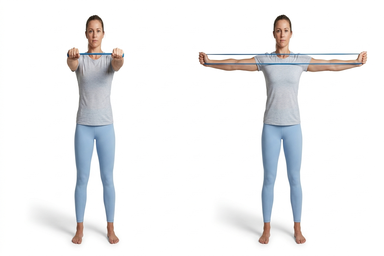
How to
A band upper-back move that trains your rear shoulders and mid-back.
- Stand tall and hold a band at chest height with both hands.
- Start with arms straight and hands shoulder-width apart.
- Pull the band apart until your hands move out to your sides.
- Pause briefly with shoulder blades squeezed together.
- Control the band back to the start and repeat.
- Keep your ribs down.
- Move from your shoulders, not your lower back.
- Shrugging your shoulders toward your ears.
- Arching your back to finish the pull.
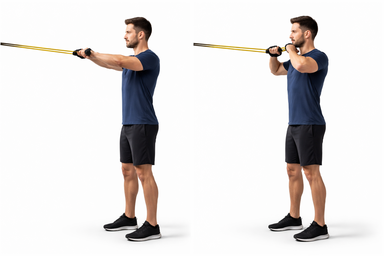
How to
A band pull to your face that trains your upper back, rear shoulders, and shoulder control.
- Anchor the band at face height and hold one end in each hand.
- Step back with arms straight and palms facing down or in.
- Pull the band toward your face, leading with your elbows.
- Squeeze your shoulder blades, then slowly extend your arms.
- Repeat for all reps with steady control.
- Keep your ribs down
- Pull elbows high and wide
- Shrugging your shoulders toward your ears
- Leaning back to move the band
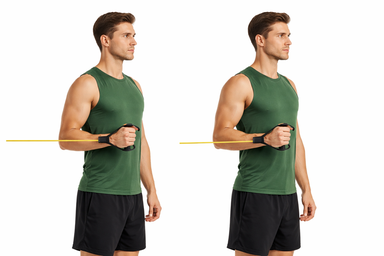
How to
A one-arm band rotation that trains your shoulder rotators.
- Stand tall with the band at your side and elbow bent 90 degrees.
- Keep your elbow tucked to your side.
- Rotate your forearm outward against the band.
- Slowly return to start under control.
- Finish your reps, then switch sides.
- Keep your elbow pinned to your side
- Move only your forearm
- Letting your elbow drift away from your body
- Twisting your torso to cheat the rep
Circuit A
Use moderate load; keep torso stable and avoid swinging.
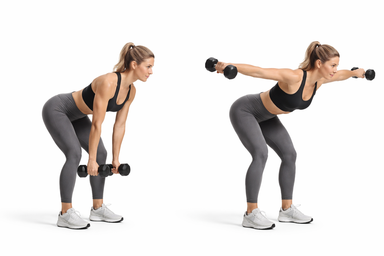
How to
A bent-over dumbbell raise that trains your rear shoulders and upper back.
- Stand with feet hip-width, holding a dumbbell in each hand.
- Hinge at your hips with a flat back and arms hanging down.
- Raise both arms out to the sides with a slight bend in your elbows.
- Pause briefly when your hands reach shoulder height.
- Lower the dumbbells with control and repeat.
- Keep your neck long
- Lead with your elbows
- Shrugging your shoulders toward your ears
- Swinging the weights with momentum
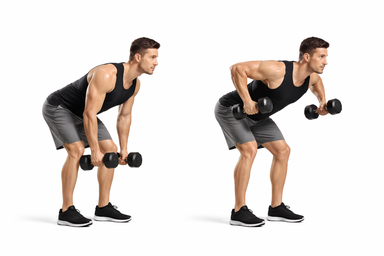
How to
A bent-over dumbbell row that targets your rear shoulders and upper back.
- Hold a dumbbell in each hand and hinge forward with a flat back.
- Let the weights hang under your shoulders, palms facing back.
- Row the weights out to your sides with elbows wide.
- Pause briefly, then lower the weights with control.
- Repeat for all reps.
- Keep your neck long
- Lead with your elbows
- Shrugging your shoulders toward your ears
- Using momentum to swing the weights
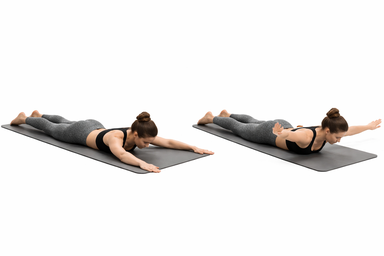
How to
A floor upper-back raise that trains your shoulders, mid back, and lower traps.
- Lie face down with your arms overhead in a Y shape.
- Set your thumbs up and keep your forehead near the floor.
- Lift both arms a few inches by squeezing your upper back.
- Pause briefly, then lower your arms with control.
- Repeat for all reps.
- Keep your neck long.
- Move from your shoulder blades.
- Shrugging your shoulders toward your ears.
- Lifting your chest high to swing the arms.
Circuit B
Lighter load/band tension; focus on squeezing the rear delts and mid-back. — Pump and posture emphasis.
How to
A band pull to your face that trains your upper back, rear shoulders, and shoulder control.
- Anchor the band at face height and hold one end in each hand.
- Step back with arms straight and palms facing down or in.
- Pull the band toward your face, leading with your elbows.
- Squeeze your shoulder blades, then slowly extend your arms.
- Repeat for all reps with steady control.
- Keep your ribs down
- Pull elbows high and wide
- Shrugging your shoulders toward your ears
- Leaning back to move the band
How to
A band upper-back move that trains your rear shoulders and mid-back.
- Stand tall and hold a band at chest height with both hands.
- Start with arms straight and hands shoulder-width apart.
- Pull the band apart until your hands move out to your sides.
- Pause briefly with shoulder blades squeezed together.
- Control the band back to the start and repeat.
- Keep your ribs down.
- Move from your shoulders, not your lower back.
- Shrugging your shoulders toward your ears.
- Arching your back to finish the pull.
How to
A bent-over dumbbell raise that trains your rear shoulders and upper back.
- Stand with feet hip-width, holding a dumbbell in each hand.
- Hinge at your hips with a flat back and arms hanging down.
- Raise both arms out to the sides with a slight bend in your elbows.
- Pause briefly when your hands reach shoulder height.
- Lower the dumbbells with control and repeat.
- Keep your neck long
- Lead with your elbows
- Shrugging your shoulders toward your ears
- Swinging the weights with momentum

Horizontal Pull Patterns & Scapular Rhythm
Band Pull-Aparts and Face Pulls target the posterior deltoid, infraspinatus, and lower trapezius through horizontal abduction — the exact movement pattern most lifters chronically undertrain. Bent-Over Reverse Flys isolate the rear delt by eliminating lat involvement, while the Rear Delt Row adds rhomboid co-activation for full posterior chain recruitment.

Why the Rear Delt Is Always the Weak Link
The posterior deltoid is neurologically inhibited in most people due to anterior-dominant posture — tight pecs and internal rotators suppress its firing pattern. This makes isolated, high-rep work with controlled eccentrics essential; heavy loading before the muscle can properly activate just recruits the traps and reinforces compensation patterns.

Sequencing Scapular Stability Before Load
Opening with Band Pull-Aparts and External Rotations pre-activates the rotator cuff and sets scapular retraction before heavier dumbbell work demands it — this is specificity-driven warm-up design, not filler. To personalize, slow the eccentric phase of Prone Y Raises to 3–4 seconds; if you feel your upper traps taking over, you've found your real working weight.