
Clean & Minimal AI Powered Fitness Routines
Download AppPosture-Focused Upper Back Pain Relief — 25 Minutes
A posture-driven mobility + strengthening session to reduce upper back discomfort and improve shoulder-blade control.
Posture-Focused Upper Back Pain Relief — 25 Minutes
A posture-driven mobility + strengthening session to reduce upper back discomfort and improve shoulder-blade control.
Warm-Up
Gentle movement to reduce stiffness and prepare the upper back/shoulders — mobility and reset focus.
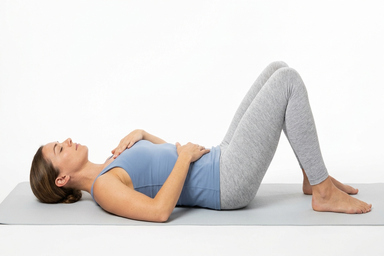
How to
A slow breathing drill that trains relaxed belly breathing and helps you control your breath.
- Lie on your back or sit tall with one hand on your belly.
- Inhale through your nose and let your belly rise.
- Exhale slowly and let your belly fall.
- Keep your chest and shoulders quiet.
- Continue for the set time with smooth breaths.
- Breathe low into your belly
- Keep your shoulders relaxed
- Shrugging your shoulders as you inhale
- Forcing the breath or holding tension
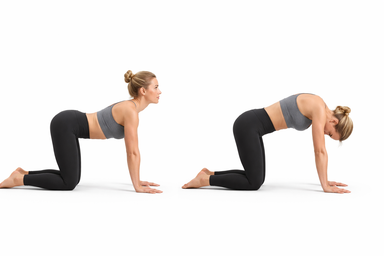
How to
A gentle spine mobility move that alternates rounding and arching your back on hands and knees.
- Start on hands and knees with wrists under shoulders and knees under hips.
- Inhale and drop your belly as you lift your chest and tailbone.
- Exhale and round your back, tucking your chin and tailbone.
- Move slowly between both positions with your breath.
- Move one vertebra at a time.
- Keep your shoulders away from your ears.
- Forcing your neck up or down.
- Rushing through the movement.
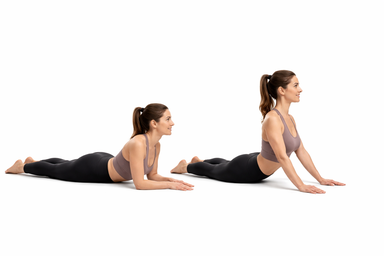
How to
A floor hold that trains upper-back extension and posture muscles.
- Lie face down with legs long and forehead near the floor.
- Place your hands by your temples with elbows wide.
- Brace lightly, then lift your chest a few inches from the floor.
- Hold the lift and breathe slowly.
- Lower with control when the hold is done.
- Keep your neck long.
- Lift from your upper back.
- Cranking your neck to look forward.
- Overarching your lower back.
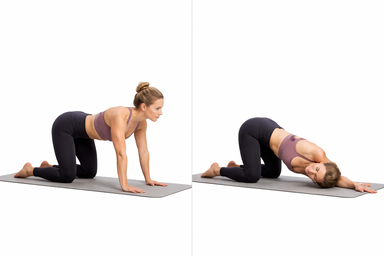
How to
A floor stretch that opens your upper back and shoulder while you hold one side at a time.
- Start on all fours with your hands under shoulders and knees under hips.
- Slide one arm under your chest, palm up, and lower your shoulder toward the floor.
- Rest your head down if comfortable, and keep your hips over your knees.
- Hold the stretch and breathe slowly.
- Press into your top hand to return to all fours, then switch sides.
- Keep your hips stacked over your knees
- Breathe into your upper back
- Letting your hips drift far to one side
- Forcing your shoulder lower than comfortable
Circuit A — Scapular Mechanics
Prioritize quality reps. No shrugging; keep ribs down and chin gently tucked.
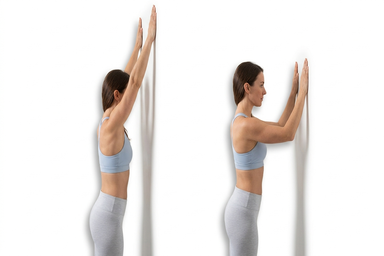
How to
A wall-based shoulder move that trains shoulder control and upper-back posture.
- Stand with your back to a wall and feet a small step out.
- Press your head, upper back, and hips gently into the wall.
- Place your arms on the wall in a goalpost shape.
- Slide your arms up the wall as far as you can control.
- Slide back down to the start and repeat.
- Keep your ribs down.
- Move slowly and stay in control.
- Arching your lower back to reach higher.
- Shrugging your shoulders toward your ears.
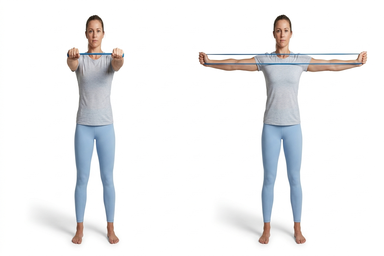
How to
A band upper-back move that trains your rear shoulders and mid-back.
- Stand tall and hold a band at chest height with both hands.
- Start with arms straight and hands shoulder-width apart.
- Pull the band apart until your hands move out to your sides.
- Pause briefly with shoulder blades squeezed together.
- Control the band back to the start and repeat.
- Keep your ribs down.
- Move from your shoulders, not your lower back.
- Shrugging your shoulders toward your ears.
- Arching your back to finish the pull.
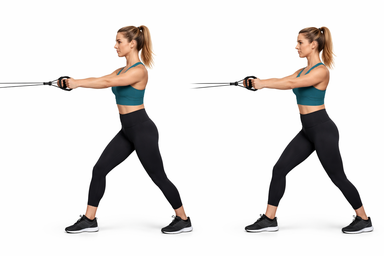
How to
A standing pull that trains your back, shoulders, and arms.
- Stand tall and hold the band at chest height.
- Brace your core and pull your elbows back.
- Squeeze your shoulder blades together.
- Slowly return with control and repeat.
- Keep your chest up
- Pull with your elbows
- Shrugging your shoulders up
- Leaning back to cheat the pull
Circuit B — Upper Back Endurance
Move with control; pause briefly at the top of each rep.
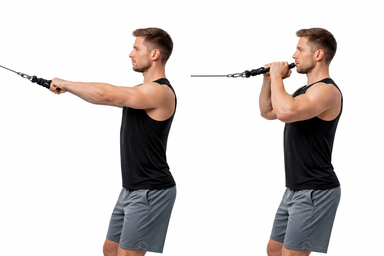
How to
A pulling exercise that trains your upper back and rear shoulders.
- Set a cable or band at face height and hold the handles with both hands.
- Step back with arms straight and palms facing in.
- Pull the handles toward your face, elbows high and wide.
- Squeeze your shoulder blades, then slowly extend your arms.
- Repeat for all reps.
- Keep your ribs down
- Pull elbows back, not down
- Shrugging your shoulders toward your ears
- Leaning back to move the weight
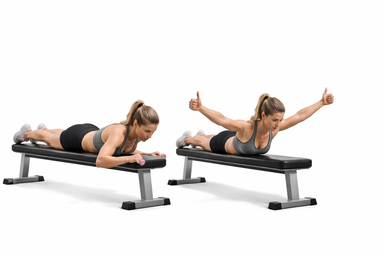
How to
A face-down shoulder raise that trains your upper back and rear shoulders.
- Lie face down with legs long and arms overhead in a Y.
- Set your thumbs up and keep your forehead near the floor.
- Lift your arms a few inches, then lower with control.
- Move your arms out to a T and repeat the lift.
- Continue alternating Y raises and T raises for your reps.
- Squeeze your shoulder blades gently
- Keep your neck long
- Shrugging your shoulders toward your ears
- Lifting your chest high off the floor
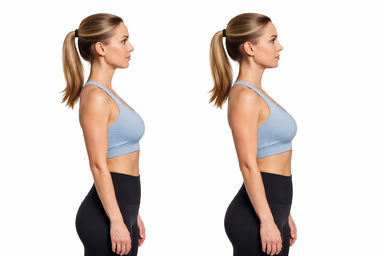
How to
A small neck position hold that trains the front of your neck and helps control head position.
- Sit or stand tall with your eyes looking straight ahead.
- Gently slide your chin straight back, like making a double chin.
- Keep your head level and your jaw relaxed.
- Hold the tuck and breathe slowly.
- Release to neutral, then repeat for the set.
- Move straight back, not down.
- Keep your shoulders relaxed.
- Tilting your head up or down.
- Forcing the tuck or clenching your jaw.
Cool-Down
Downshift breathing and gently open the upper back and lats without forcing range — decompress and lengthen.
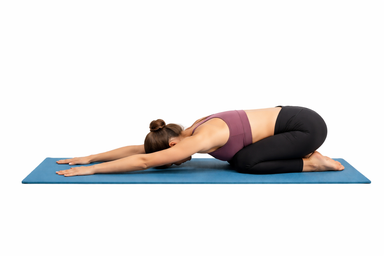
How to
A kneeling rest stretch that relaxes your back, hips, and shoulders while you breathe.
- Kneel with your big toes together and knees apart.
- Sit your hips back toward your heels.
- Reach your arms forward and lower your chest to the floor.
- Rest your forehead down and relax your neck.
- Hold the stretch and breathe slowly.
- Let your hips sink back
- Keep your neck relaxed
- Forcing your hips down
- Holding your breath
How to
A floor stretch that opens your upper back and shoulder while you hold one side at a time.
- Start on all fours with your hands under shoulders and knees under hips.
- Slide one arm under your chest, palm up, and lower your shoulder toward the floor.
- Rest your head down if comfortable, and keep your hips over your knees.
- Hold the stretch and breathe slowly.
- Press into your top hand to return to all fours, then switch sides.
- Keep your hips stacked over your knees
- Breathe into your upper back
- Letting your hips drift far to one side
- Forcing your shoulder lower than comfortable

Scapular Sequencing: Why Order Matters
Cat-Cow and Thread the Needle unlock thoracic rotation before load is introduced, ensuring the mid-traps and rhomboids fire correctly during Band Pull-Aparts and Prone Y-T Raises. Skipping this sequence forces the upper traps to compensate, reinforcing the exact dysfunction you're correcting.

The Postural Collapse Cycle Explained
Chronic upper back pain often stems from a forward-head, protracted-scapula pattern where the serratus anterior and lower trapezius become inhibited under prolonged sitting load. Wall Slides and Face Pulls directly retrain the serratus-trap force couple that keeps your shoulder blades flush against the ribcage where they belong.

Resetting Before Strengthening
Diaphragmatic Breathing isn't filler — it deactivates the overactive cervical accessory muscles that elevate and compress the upper thoracic spine before Band Rows and Chin Tucks demand spinal stability. To personalize, slow your Band Pull-Apart tempo to 3 seconds eccentric; this is where postural motor re-education actually happens.