
Clean & Minimal AI Powered Fitness Routines
Download AppIntermediate Lower Back Extensors
A ~25-minute posterior-chain session to build lower back extensor endurance and control.
Intermediate Lower Back Extensors
A ~25-minute posterior-chain session to build lower back extensor endurance and control.
Warm-Up
Gently mobilize the spine and rehearse bracing before strength work. — Mobility and patterning focus.
How to
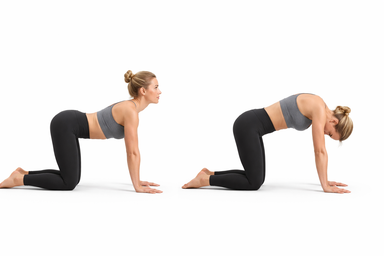
A gentle spine mobility move that alternates rounding and arching your back on hands and knees.
- Start on hands and knees with wrists under shoulders and knees under hips.
- Inhale and drop your belly as you lift your chest and tailbone.
- Exhale and round your back, tucking your chin and tailbone.
- Move slowly between both positions with your breath.
- Move one vertebra at a time.
- Keep your shoulders away from your ears.
- Forcing your neck up or down.
- Rushing through the movement.
How to
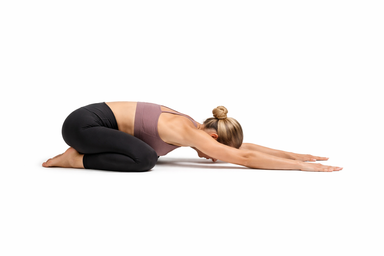
A kneeling rest pose that gently stretches your back, hips, and shoulders.
- Kneel on the floor with your big toes together and knees apart.
- Sit your hips back toward your heels.
- Fold forward and reach your arms in front of you.
- Rest your forehead down and let your chest sink between your thighs.
- Hold the position and breathe slowly.
- Relax your shoulders
- Breathe into your back
- Forcing your hips down
- Holding your breath
How to
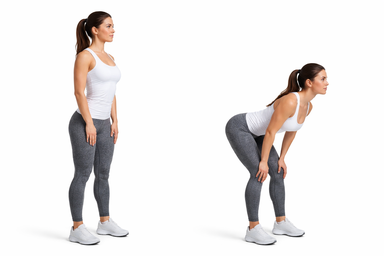
A standing hip hinge that trains your glutes and hamstrings and builds the pattern for deadlifts.
- Stand with feet hip-width apart and knees slightly bent.
- Brace your core and keep your chest open.
- Push your hips back as your torso tips forward.
- Lower until you feel your hamstrings, keeping your back flat.
- Drive your hips forward to stand tall again.
- Move from your hips, not your waist.
- Keep your back long.
- Squatting instead of hinging your hips back.
- Rounding your back as you lower.
Circuit A
Prioritize form: stable trunk, controlled tempo, no rushing.
How to
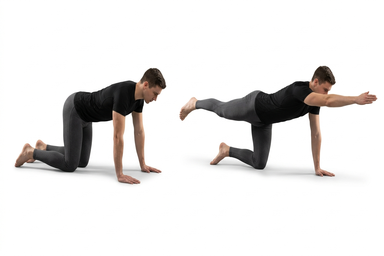
A core stability move from all fours that trains your abs, back, glutes, and balance.
- Start on hands and knees with your hands under shoulders and knees under hips.
- Brace your core and keep your back flat.
- Reach one arm forward and the opposite leg back until they are straight.
- Pause briefly, then bring your hand and knee back under you.
- Repeat on the other side, alternating each rep.
- Keep your hips square
- Move slow and controlled
- Arching or sagging your lower back
- Rotating your hips as you reach
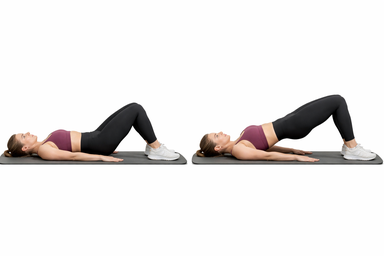
How to
A floor hip lift that trains your glutes and hamstrings with both feet planted.
- Lie on your back with knees bent and feet flat, hip-width apart.
- Brace your core and press your arms lightly into the floor.
- Drive through your heels and lift your hips until your body forms a straight line.
- Squeeze your glutes at the top, then lower with control.
- Repeat for your reps.
- Keep your ribs down
- Drive through your heels
- Arching your lower back at the top
- Pushing through your toes
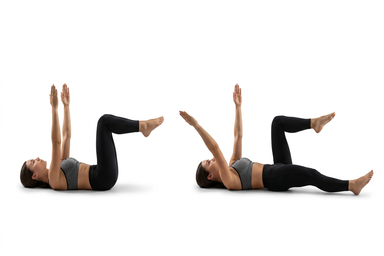
How to
A core move on your back that trains control while you move opposite arm and leg.
- Lie on your back with arms up and knees bent over hips.
- Press your lower back gently toward the floor.
- Lower one arm and the opposite leg with control.
- Return to the start, then repeat on the other side.
- Keep alternating sides for each rep.
- Move slow and stay braced
- Keep your ribs down
- Letting your lower back arch
- Rushing through the reps
Circuit B
Keep hips heavy and glutes engaged; stop short of any low-back pinching.
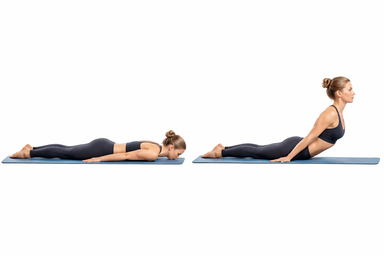
How to
A floor back extension that trains your lower back, glutes, and upper back control.
- Lie face down with legs long and hands by your head or sides.
- Brace your abs and squeeze your glutes.
- Lift your chest a few inches without lifting your feet high.
- Pause briefly at the top.
- Lower with control and repeat.
- Keep your neck long.
- Move slowly and stay controlled.
- Throwing your head back to lift higher.
- Jerking up or over-arching your lower back.
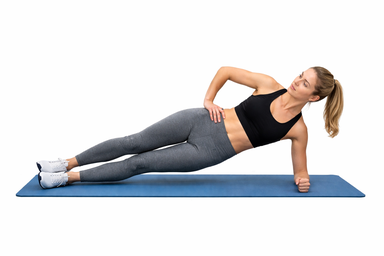
How to
A side hold that trains your obliques, hips, and shoulder stability.
- Lie on one side with your elbow under your shoulder and legs stacked.
- Lift your hips until your body forms a straight line.
- Hold the position and breathe steadily.
- Lower your hips with control.
- Finish your hold, then switch sides.
- Keep your hips stacked
- Press the floor away
- Letting your hips sag
- Rolling your chest toward the floor
Cool-Down
Downshift breathing and restore comfortable spinal motion.
How to
A kneeling rest pose that gently stretches your back, hips, and shoulders.
- Kneel on the floor with your big toes together and knees apart.
- Sit your hips back toward your heels.
- Fold forward and reach your arms in front of you.
- Rest your forehead down and let your chest sink between your thighs.
- Hold the position and breathe slowly.
- Relax your shoulders
- Breathe into your back
- Forcing your hips down
- Holding your breath
How to
A gentle spine mobility move that alternates rounding and arching your back on hands and knees.
- Start on hands and knees with wrists under shoulders and knees under hips.
- Inhale and drop your belly as you lift your chest and tailbone.
- Exhale and round your back, tucking your chin and tailbone.
- Move slowly between both positions with your breath.
- Move one vertebra at a time.
- Keep your shoulders away from your ears.
- Forcing your neck up or down.
- Rushing through the movement.

Posterior Chain Logic: Layer by Layer
Cat-Cow and Hip Hinge prime spinal segmentation before Bird Dog and Prone Back Extension load the erector spinae and multifidus under controlled tension. Dead Bug creates anterior counterbalance, ensuring lumbar extensors develop within a stable, co-contracting core system rather than compensating for weakness elsewhere.

Why Lower Back Endurance Outlasts Strength
The erector spinae and multifidus are predominantly slow-twitch stabilizers — they fail through fatigue before force, which is why most lower back dysfunction appears late in a workout or workday. Glute Bridge directly offloads lumbar compression by training the glutes to share the extension demand your lower back currently carries alone.

Build the Pattern Before You Load It
This session follows a mobility-to-stability-to-strength arc: open the spine, establish neutral position, then reinforce it under progressive muscular demand. To personalize intensity, extend Bird Dog and Side Plank hold durations by 5 seconds each week — tendon and deep stabilizer adaptation responds to time-under-tension more than added load at this stage.