
Clean & Minimal AI Powered Fitness Routines
Download App25-Minute Intermediate Hypothyroidism Routine
A joint-friendly strength + low-impact cardio session to support energy, consistency, and metabolism.
25-Minute Intermediate Hypothyroidism Routine
A joint-friendly strength + low-impact cardio session to support energy, consistency, and metabolism.
Warm-Up
5 minutes. Increase circulation and gently mobilize joints before the main work.
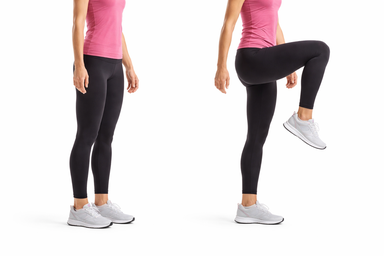
How to
A low-impact cardio move that warms up your legs and hips while raising your heart rate.
- Stand tall with your feet hip-width apart and arms at your sides.
- Lift one knee to hip height as you swing the opposite arm forward.
- Lower that foot, then lift the other knee and switch arms.
- Keep alternating sides at a steady pace.
- Slow down and plant both feet to finish.
- Stand tall with your chest up
- Land softly under your hips
- Leaning back as you lift your knees
- Stomping your feet on each step
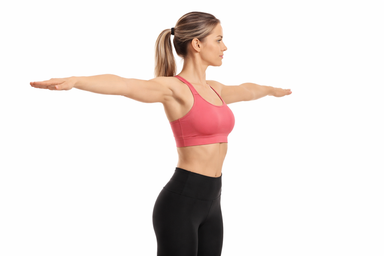
How to
A simple shoulder warm-up that moves both arms in circles and trains shoulder control.
- Stand tall with your feet about hip-width apart.
- Raise both arms out to your sides at shoulder height.
- Make small, controlled circles with both arms.
- Keep circling for the set time, then reverse direction if told.
- Lower your arms to finish.
- Keep your ribs down
- Move smoothly, not fast
- Shrugging your shoulders toward your ears
- Arching your back to keep the arms up
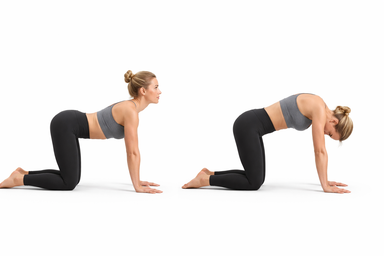
How to
A gentle spine mobility move that alternates rounding and arching your back on hands and knees.
- Start on hands and knees with wrists under shoulders and knees under hips.
- Inhale and drop your belly as you lift your chest and tailbone.
- Exhale and round your back, tucking your chin and tailbone.
- Move slowly between both positions with your breath.
- Move one vertebra at a time.
- Keep your shoulders away from your ears.
- Forcing your neck up or down.
- Rushing through the movement.
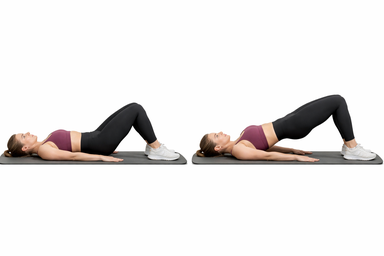
How to
A floor hip lift that trains your glutes and hamstrings with both feet planted.
- Lie on your back with knees bent and feet flat, hip-width apart.
- Brace your core and press your arms lightly into the floor.
- Drive through your heels and lift your hips until your body forms a straight line.
- Squeeze your glutes at the top, then lower with control.
- Repeat for your reps.
- Keep your ribs down
- Drive through your heels
- Arching your lower back at the top
- Pushing through your toes
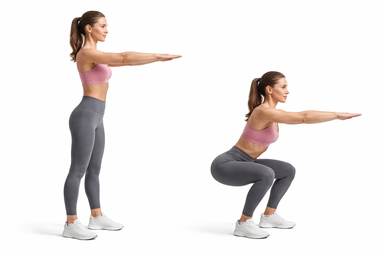
How to
A bodyweight lower-body move that trains your quads, glutes, and hips.
- Stand with feet about shoulder-width apart and toes slightly out.
- Brace your core and keep your chest tall.
- Bend your knees and hips to lower into a squat.
- Push through your feet to stand back up.
- Keep your knees tracking over your toes
- Keep your chest up
- Letting your knees cave in
- Rounding your back as you lower
Main Circuit
17 minutes. Full-body strength with low-impact cardio. Maintain steady effort and clean reps.
How to
A bodyweight lower-body move that trains your quads, glutes, and hips.
- Stand with feet about shoulder-width apart and toes slightly out.
- Brace your core and keep your chest tall.
- Bend your knees and hips to lower into a squat.
- Push through your feet to stand back up.
- Keep your knees tracking over your toes
- Keep your chest up
- Letting your knees cave in
- Rounding your back as you lower
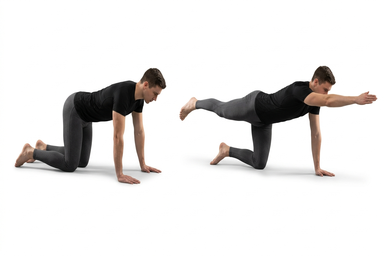
How to
A core stability move from all fours that trains your abs, back, glutes, and balance.
- Start on hands and knees with your hands under shoulders and knees under hips.
- Brace your core and keep your back flat.
- Reach one arm forward and the opposite leg back until they are straight.
- Pause briefly, then bring your hand and knee back under you.
- Repeat on the other side, alternating each rep.
- Keep your hips square
- Move slow and controlled
- Arching or sagging your lower back
- Rotating your hips as you reach
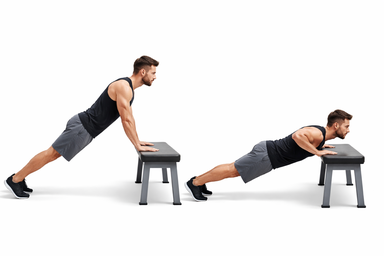
How to
A push-up with your hands elevated. It trains your chest, shoulders, triceps, and core.
- Place your hands on a sturdy elevated surface, slightly wider than shoulders.
- Step your feet back and make a straight line from head to heels.
- Bend your elbows and lower your chest toward the surface.
- Press through your hands to return to the start.
- Repeat for the set.
- Keep your body in one straight line.
- Brace your core as you move.
- Letting your hips sag or pike up.
- Flaring your elbows straight out to the sides.
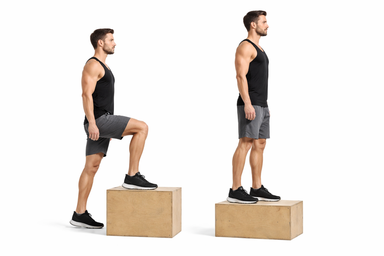
How to
A single-leg climb onto a step that trains your quads, glutes, and balance.
- Stand facing a sturdy step with one foot fully on top.
- Lean slightly forward and drive through the front foot to stand up.
- Bring your back foot onto the step with control.
- Step back down with the same back foot, then lower the front foot.
- Finish your reps, then switch legs.
- Keep your chest tall
- Drive through your whole front foot
- Pushing off too much with the back foot
- Letting your front knee cave inward
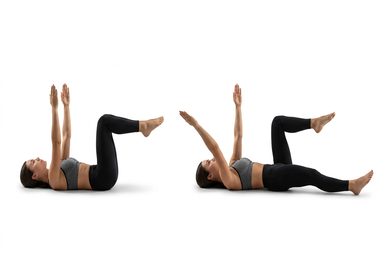
How to
A core move on your back that trains control while you move opposite arm and leg.
- Lie on your back with arms up and knees bent over hips.
- Press your lower back gently toward the floor.
- Lower one arm and the opposite leg with control.
- Return to the start, then repeat on the other side.
- Keep alternating sides for each rep.
- Move slow and stay braced
- Keep your ribs down
- Letting your lower back arch
- Rushing through the reps
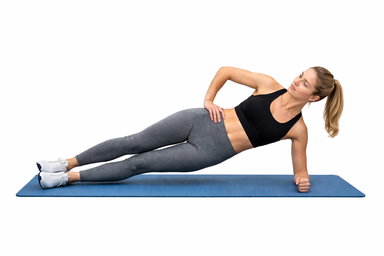
How to
A side hold that trains your obliques, hips, and shoulder stability.
- Lie on one side with your elbow under your shoulder and legs stacked.
- Lift your hips until your body forms a straight line.
- Hold the position and breathe steadily.
- Lower your hips with control.
- Finish your hold, then switch sides.
- Keep your hips stacked
- Press the floor away
- Letting your hips sag
- Rolling your chest toward the floor
Cool-Down
3 minutes. Downshift breathing and gently stretch common tight areas.
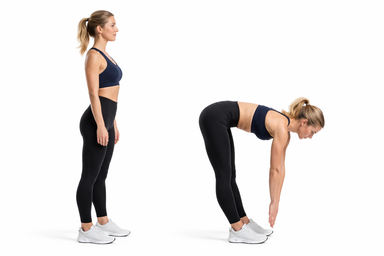
How to
A held stretch for the back of your thigh that targets your hamstrings.
- Sit tall with your target leg straight and toes up.
- Hinge at your hips and reach toward your foot.
- Stop when you feel a gentle stretch behind your thigh.
- Hold the stretch and breathe slowly.
- Release slowly, then switch sides if stretching one leg.
- Keep your back long.
- Hinge from your hips.
- Rounding your back to reach farther.
- Bouncing in the stretch.
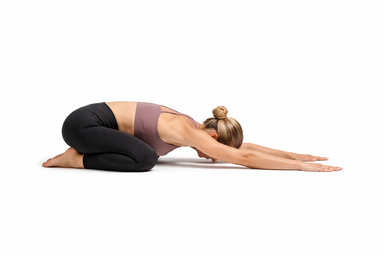
How to
A kneeling rest pose that gently stretches your back, hips, and shoulders.
- Kneel on the floor with your big toes together and knees apart.
- Sit your hips back toward your heels.
- Fold forward and reach your arms in front of you.
- Rest your forehead down and let your chest sink between your thighs.
- Hold the position and breathe slowly.
- Relax your shoulders
- Breathe into your back
- Forcing your hips down
- Holding your breath
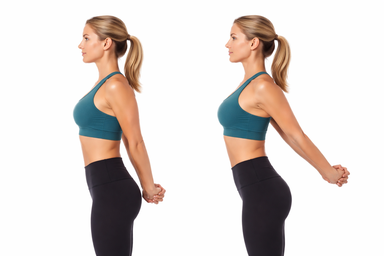
How to
A standing stretch that opens your chest and shoulders with a steady hold.
- Stand tall with your feet hip-width apart.
- Clasp your hands behind your back or hold a towel.
- Gently straighten your arms and lift your chest.
- Hold the stretch and breathe slowly.
- Release your hands and relax your shoulders.
- Keep your ribs down
- Lift through your chest
- Arching your lower back
- Forcing your arms too high

Metabolic Activation Without the Crash
Glute Bridges and Bodyweight Squats recruit the posterior chain and large lower-body motor units, maximizing caloric demand without spiking cortisol — a critical distinction when thyroid function is already taxing adrenal reserves. Step-Ups add unilateral loading that builds lean mass, the single most effective lever for raising resting metabolic rate.

Why Fatigue Hits Differently With Hypothyroidism
Reduced T3/T4 output slows cellular ATP production, meaning your muscles genuinely recover slower than a healthy thyroid baseline — this isn't a motivation problem, it's mitochondrial. The 25-minute cap and low-impact format respect that ceiling, keeping sessions completable on low-energy days so consistency compounds over time.

Stability First, Then Strength
Bird Dog and Dead Bug train deep spinal stabilizers before heavier patterns load the spine, a sequencing choice that protects joints already vulnerable to the connective tissue laxity associated with hypothyroidism. To personalize, track which exercises feel hardest on week one — those are your adaptation targets, and adding one rep per session there drives progressive overload precisely where you