
Clean & Minimal AI Powered Fitness Routines
Download AppIntermediate Sprint Acceleration
A 25-minute session focused on acceleration mechanics, short sprints, and full recovery.
Intermediate Sprint Acceleration
A 25-minute session focused on acceleration mechanics, short sprints, and full recovery.
General Warm-Up
Stay relaxed and easy; nasal breathing if possible.
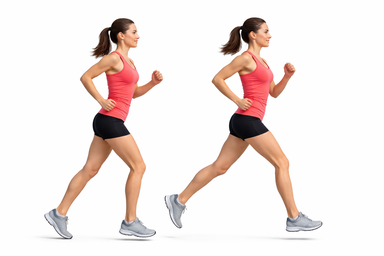
How to
A steady running movement that raises your heart rate and trains your legs and endurance.
- Stand tall with your feet under your hips and arms bent.
- Start with small, quick steps at an easy pace.
- Land softly under your body and keep your chest lifted.
- Swing your arms naturally as your legs move.
- Keep jogging for the planned time or distance.
- Stay light on your feet
- Breathe at a steady rhythm
- Overstriding with your foot far in front
- Hunching your shoulders as you jog
Dynamic Mobility and Drills
Smooth, controlled movements; focus on rhythm and posture.
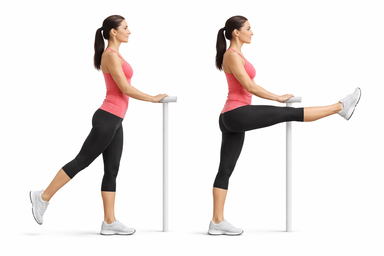
How to
A dynamic leg swing that warms up your hips, hamstrings, and glutes while challenging balance.
- Stand tall and hold a wall or rail for light support if needed.
- Lift one leg slightly off the floor with a soft knee.
- Swing it forward and back with control.
- Set it down, then switch legs on the next rep.
- Keep your torso tall.
- Swing from the hip, not the low back.
- Leaning back as the leg swings forward.
- Forcing the range of motion.
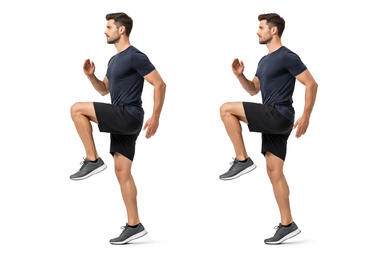
How to
A fast marching or running move that raises each knee to train your legs and raise your heart rate.
- Stand tall with feet under your hips and arms at your sides.
- Drive one knee up toward hip height as the opposite arm swings forward.
- Land softly on the ball of that foot.
- Switch quickly to the other knee and keep alternating.
- Keep a steady rhythm until the set ends.
- Stay tall through your chest
- Land light and quick
- Leaning back as your knees lift
- Stomping your feet into the floor
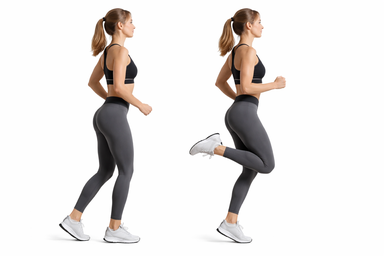
How to
A cardio drill where you jog in place and kick your heels toward your glutes. It warms your legs and raises your heart rate.
- Stand tall with your feet hip-width apart and arms relaxed.
- Jog in place, alternating heels up toward your glutes.
- Pump your arms naturally as your feet move quickly.
- Land softly on the balls of your feet each time.
- Slow down, then stand tall to finish.
- Stay tall through your chest
- Keep the steps light
- Leaning far forward as you kick
- Slapping your feet hard on the floor
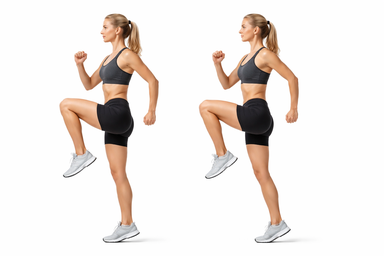
How to
A rhythmic skipping drill that trains coordination, knee drive, and quick foot contact.
- Stand tall with your arms bent at your sides.
- Drive one knee up as you skip off the other foot.
- Land lightly on the ball of your foot under your hips.
- Alternate sides with a quick, steady rhythm.
- Keep moving forward or in place for the set.
- Stay tall through your torso
- Snap your foot down under your hip
- Leaning back as the knee drives up
- Reaching your foot too far in front
How to
A dynamic ankle drill that moves both ankles and warms up your lower legs.
- Stand tall with feet hip-width apart.
- Press through the balls of your feet and lift both heels.
- Pause briefly at the top with control.
- Lower both heels back to the floor.
- Repeat smoothly for your reps.
- Keep your knees softly bent
- Move with control
- Rocking your weight to the outside of your feet
- Letting your heels drop hard
Build-Up Strides
Gradually accelerate to ~85–95% by the end of each stride; walk back to reset.
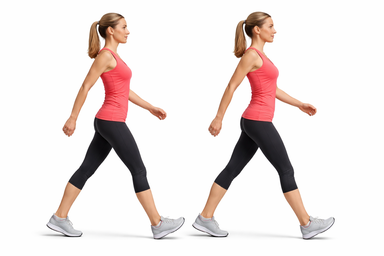
How to
An alternating long step that trains your legs and glutes while building balance and control.
- Stand tall with your feet hip-width apart.
- Step one foot forward into a long, controlled stride.
- Bend both knees slightly and keep your chest up.
- Push through the front foot to return to standing.
- Alternate legs with each rep.
- Keep your front knee over your foot.
- Stay tall through your chest.
- Letting your front knee cave inward.
- Pushing off the back foot too hard.
10 m Starts
Explode for 10 m; focus on pushing hard and keeping a strong forward lean. Walk back and breathe to recover.
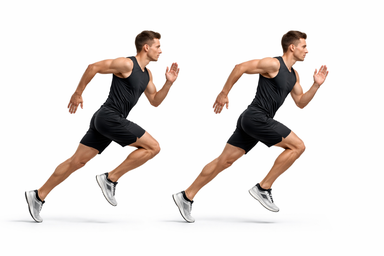
How to
A fast run that trains your legs, hips, and cardio power.
- Stand tall with feet hip-width and eyes forward.
- Lean slightly from your ankles and drive one knee up.
- Push the ground back hard and swing your arms cheek to hip.
- Run fast with quick, powerful steps for the set distance or time.
- Slow down gradually after the sprint.
- Stay tall and relaxed.
- Drive arms straight forward and back.
- Overstriding far in front of your body.
- Tensing your shoulders or jaw.
20 m Accelerations
Accelerate smoothly through 20 m (don't pop upright early). Full recovery between reps.
How to
A fast run that trains your legs, hips, and cardio power.
- Stand tall with feet hip-width and eyes forward.
- Lean slightly from your ankles and drive one knee up.
- Push the ground back hard and swing your arms cheek to hip.
- Run fast with quick, powerful steps for the set distance or time.
- Slow down gradually after the sprint.
- Stay tall and relaxed.
- Drive arms straight forward and back.
- Overstriding far in front of your body.
- Tensing your shoulders or jaw.

Ground Contact & Triple Extension Logic
A-Skips and Ankling directly train the stiffness-to-compliance ratio your ankle and Achilles need for explosive toe-off, while Build-Up Strides prime the neuromuscular recruitment pattern that carries into max-effort Acceleration Sprints. Every drill here isolates a mechanical variable — posture, ground contact time, or limb cycling — before combining them at speed.

The First 10 Meters Are Everything
Acceleration is a distinct biomotor skill from top-end speed, demanding near-horizontal force application and powerful hip extension rather than upright mechanics. Your central nervous system, fast-twitch Type IIx fibers, and ATP-PCr energy system all peak and fatigue within seconds — which is exactly why full recovery between reps isn't optional, it's the adaptation stimulus.

RAMP Protocol Meets Neural Readiness
The warm-up sequences from Easy Jog through High Knees and Butt Kicks follow the RAMP model — Raise, Activate, Mobilize, Potentiate — progressively increasing tissue temperature and motor unit excitability before your CNS is asked to fire at sprint intensity. To personalize, extend your Build-Up Strides by one rep if your first acceleration feels flat or mechanically disconnected.