
Clean & Minimal AI Powered Fitness Routines
Download AppIntermediate Open-Water Swim
A ~25-minute open-water session to build steady endurance, sighting skill, and pacing.
Intermediate Open-Water Swim
A ~25-minute open-water session to build steady endurance, sighting skill, and pacing.
Warm-Up
Settle breathing, find rhythm, and practice light sighting.
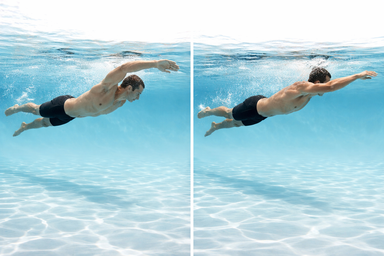
How to
A full-body swim stroke that trains your shoulders, back, core, and legs with steady breathing.
- Start face down in the water with your body long and relaxed.
- Kick lightly from your hips as one arm reaches forward.
- Pull that arm through the water as the other arm recovers over the surface.
- Turn your head to the side to breathe, then return your face to the water.
- Keep alternating arms and breathing smoothly for the set.
- Keep your body long
- Exhale into the water
- Lifting your head to breathe
- Crossing your hand over the center line
Main Set
Build steady endurance with short rests and consistent pacing.
How to
A full-body swim stroke that trains your shoulders, back, core, and legs with steady breathing.
- Start face down in the water with your body long and relaxed.
- Kick lightly from your hips as one arm reaches forward.
- Pull that arm through the water as the other arm recovers over the surface.
- Turn your head to the side to breathe, then return your face to the water.
- Keep alternating arms and breathing smoothly for the set.
- Keep your body long
- Exhale into the water
- Lifting your head to breathe
- Crossing your hand over the center line
Cool-Down
Bring the heart rate down and finish with comfort and control.
How to
A full-body swim stroke that trains your shoulders, back, core, and legs with steady breathing.
- Start face down in the water with your body long and relaxed.
- Kick lightly from your hips as one arm reaches forward.
- Pull that arm through the water as the other arm recovers over the surface.
- Turn your head to the side to breathe, then return your face to the water.
- Keep alternating arms and breathing smoothly for the set.
- Keep your body long
- Exhale into the water
- Lifting your head to breathe
- Crossing your hand over the center line
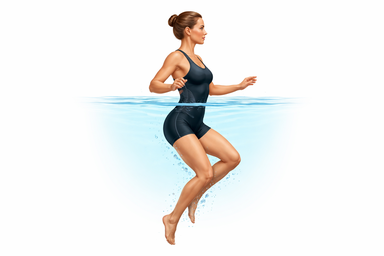
How to
A water-based cardio move that keeps you afloat while training your legs, arms, and core.
- Move to water deep enough that your feet do not touch.
- Keep your chest tall and your head above the surface.
- Scull your hands out and in while kicking your legs steadily.
- Keep a smooth rhythm and breathe normally.
- Slow down, then move to the wall or shallower water to finish.
- Stay tall in the water
- Use steady arms and legs
- Holding your breath
- Kicking hard while your arms stop moving

Freestyle & Buoyancy as Dual Stressors
Freestyle recruits the lats, posterior deltoids, and hip flexors in a continuous alternating pattern, while treading water forces isometric hip abductor and ankle plantarflexion work to maintain vertical buoyancy. Together they train both horizontal propulsion and positional control — two distinct neuromuscular demands open-water swimming requires simultaneously.

Why Open Water Breaks Pool Swimmers
Without lane lines and a fixed black stripe, your vestibular system loses its anchor, forcing your neck extensors and rotator cuff to compensate for sighting lifts every 6–10 strokes. Pacing collapses in open water because there's no wall feedback — your aerobic threshold perception must become your only metronome.

Build the Aerobic Base Before the Engine
This session uses a warm-up, main set, cool-down structure to keep intensity in the aerobic zone, building mitochondrial density in slow-twitch fibers before adding interval work. To personalize it, count your sighting frequency during the main set — if your hips drop after each lift, reduce sighting to every 8 strokes and rebuild hip position first.